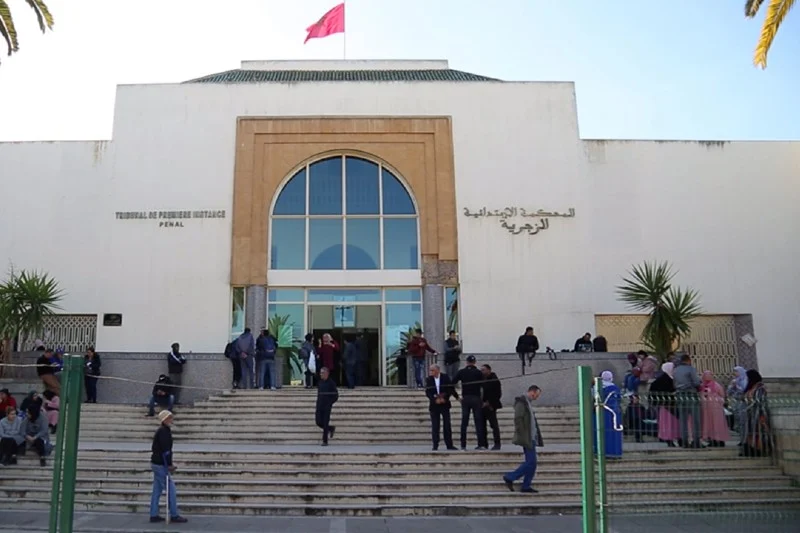
The Ain Sebaa criminal court in Casablanca has placed under deliberation the case of a local authority aide detained during protests linked to Morocco’s emerging “Gen Z movement,” with a verdict expected on Thursday.
The defendant, employed as a moukaddem (local administrative aide) in Ben Slimane province, was arrested during demonstrations that erupted in Casablanca earlier this month.
He faces charges of unauthorized assembly and insulting judicial police officers by providing false statements, according to court documents reviewed by Hespress.
During Tuesday’s hearing in courtroom 8, the defense team argued that the charges were unfounded, stressing that their client neither misled investigators nor disrespected law enforcement.
Attorney Mohamed Lakhdar told the court the defendant truthfully declared himself as a university student, a statement backed by official enrollment documents submitted to the court.
The defense further contended that the accusation of “unauthorized assembly” conflicts with Article 29 of Morocco’s Constitution, which guarantees the right to peaceful protest. Lawyers argued that the 2002 Public Gatherings Decree used to justify such prosecutions remains inconsistent with the constitutional framework established after the 2011 reforms.
“The Constitution enshrines democratic choice, yet outdated legislation still governs public gatherings,” Lakhdar said, calling the case “a reflection of legal gaps between constitutional rights and enforcement practices.”
The defense added that the defendant’s presence in Casablanca was coincidental, claiming he was visiting relatives when the protests occurred. They requested full acquittal, or alternatively, a sentence under alternative penalties considering his employment and social status.
The court has now taken the case under advisement, with the verdict scheduled for Thursday’s session, marking one of the first legal proceedings stemming from the youth-led “Gen Z” demonstrations that have recently shaken Moroccan cities.







add your comment
Terms of publication : Not to offend the writer, people, sacred things, or attack religions or the divine self, and refrain from racist incitement and insults.