
As the United Nations commemorates its 80th anniversary in 2025, Morocco continues to showcase its adeptness in navigating the complexities of international diplomacy with this year’s participation, led by Prime Minister Aziz Akhannouch, and following a substantial year for Moroccan diplomacy.
Through a multifaceted approach encompassing the main speech, bilateral meetings, behind-the-scenes lobbying, and side events, Morocco effectively utilizes the annual event to advance its national interests, particularly concerning the Sahara issue, and cement its regional positioning.
Since its adherence to the international body in 1956, Morocco has strategically utilized the United Nations General Assembly (UNGA) as a platform to advance its foreign policy objectives, particularly concerning its regional positioning and territorial integrity.
The Kingdom’s approach has evolved from a focus on multilateral diplomacy to active engagement in bilateral meetings, behind-the-scenes lobbying, and participation in side events.
Morocco’s engagement with the UNGA has been characterized by a consistent emphasis on territorial integrity, development, and multilateralism.
In 2010, Morocco launched the Atlantic African States Process (AASP), aiming to strengthen cooperation among Atlantic African nations. This initiative has gained momentum over the years, with the 5th Ministerial Meeting held in Praia, Cape Verde, in May 2025, where Morocco’s leadership was commended.
Throughout the 2010s, Morocco’s participation in the UNGA focused on regional stability in the Sahel and North Africa, and called for enhanced international cooperation to combat terrorism and extremism. In addition, the Kingdom allowed focus on global environmental issues on the week-long event sidelines, all while focusing on promoting its autonomy plan for the Sahara, advocating for sustainable development, and reinforcing its role in regional security.
In December 2020, Morocco agreed to normalize diplomatic relations with Israel, a move that was formalized in 2021. This development was highlighted in Morocco’s speeches at the UNGA, emphasizing the importance of peace and stability in the Middle East.
Reaffirming sovereignty and development
The Kingdom’s diplomatic efforts have led to increased support for its positions, as evidenced by the 2025 endorsement of its autonomy plan by the United Kingdom, which followed a series of diplomatic breakthroughs with the Kingdom’s historic European allies, namely Spain, Germany, the Netherlands and France.
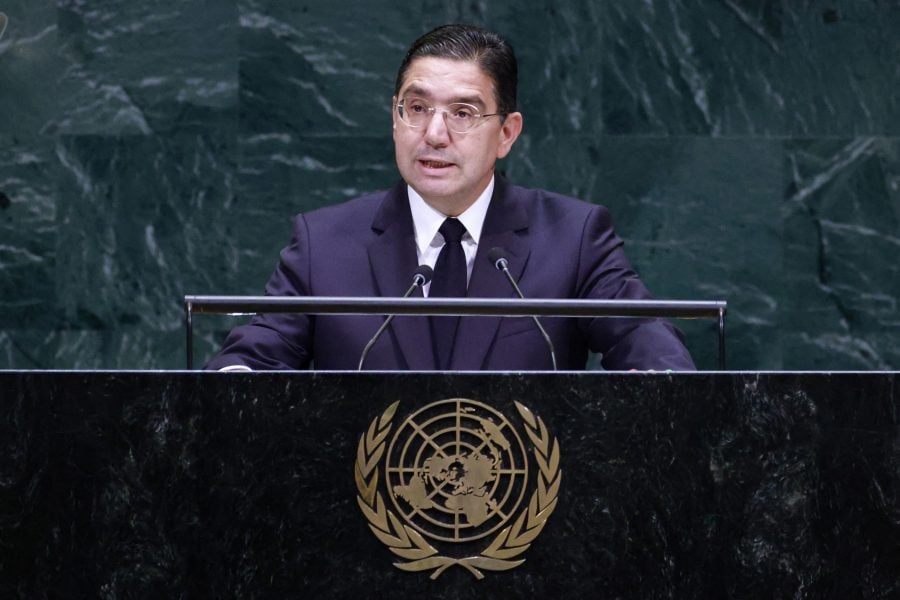
On September 24, 2024, Head of Government Aziz Akhannouch delivered Morocco’s national statement at the UN General Assembly, emphasizing the Kingdom’s commitment to a definitive political solution to the Sahara dispute.
Akhannouch reiterated that any resolution must be based exclusively on Morocco’s autonomy initiative, within the framework of national sovereignty and territorial integrity. He highlighted the development dynamic in the Moroccan Sahara, noting that it is one of the highest at the national level, thanks to large-scale projects carried out under the new development model for the southern provinces.
This message mirrored Morocco’s stance that development and sovereignty go hand in hand, intrinsically linking political and national causes to business.
Advocating for territorial integrity
Morocco, in its quest to reinforce its firm stance regarding its southern territories, has effectively utilized sideline meetings during the UNGA to build and reinforce bilateral relationships.
These meetings have provided opportunities to discuss various issues, including economic cooperation, regional security, and the Sahara file. For instance, in 2024, Foreign Minister Nasser Bourita held discussions with counterparts from Arab, African, and European nations, focusing on enhancing cooperation and mutual interests, while simultaneously pushing for further international investment in the Sahara issue
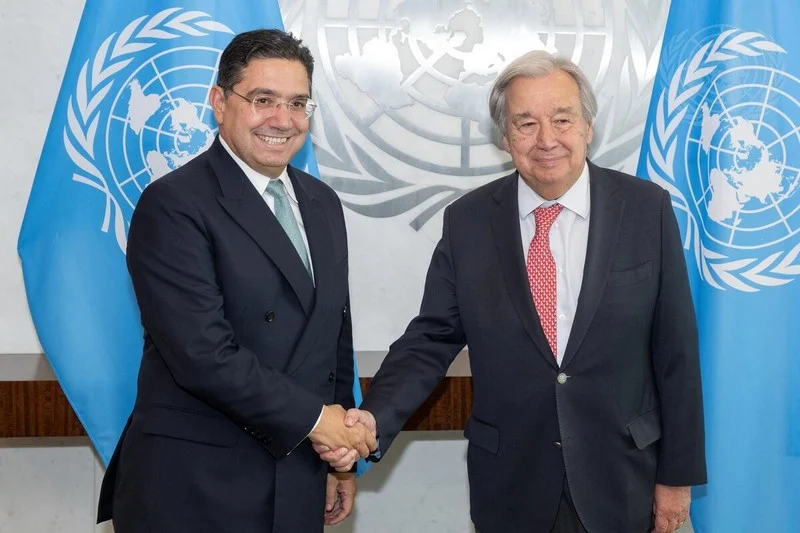
Notably, Bourita met with UN Secretary-General António Guterres to reaffirm Morocco’s commitment to the political process and to discuss the relaunch of the round table negotiations involving all parties, including Algeria.
This year, Bourita held talks in New York on Monday with UN Secretary-General’s Personal Envoy for the Sahara, Staffan de Mistura, at the latter’s request, alongside Morocco’s UN ambassador Omar Hilale, where the diplomats reiterated the Kingdom’s “constant and firm position” for a political solution to the Sahara.
These engagements bear results, as Morocco’s commitment to strengthening ties with key partners and advancing its diplomatic objectives is reflected in increasing international support for the autonomy plan proposal.
A significant aspect of Morocco’s strategy involves behind-the-scenes lobbying to garner support for its autonomy plan. Ambassador Omar Hilale, Morocco’s Permanent Representative to the UN, has actively engaged with representatives from various countries to advocate for Morocco’s position. This includes direct outreach to members of the Security Council and other influential states to underscore the credibility and viability of the autonomy initiative.
Morocco’s efforts have been bolstered by the support of key allies, including the United States, who reaffirmed their backing for Morocco’s sovereignty over the Sahara throughout three consecutive presidential administrations.
Multifaceted strategy
Aside from its territorial integrity, Morocco has also utilized side events at the UNGA to promote its priorities and engage with the international community on issues of mutual interests, as the UNGA provides a platform for Morocco to showcase its initiatives and foster dialogue on critical issues.
In 2025, Morocco’s Minister of Foreign Affairs, Nasser Bourita, participated in a high-level strategic dialogue on migration, outlining the country’s achievements in the field and urging participants to reinforce credible and effective migration governance.
Additionally, Morocco is set to host the 9th Meeting and Ministerial Meeting of the Like-Minded Group for Middle-Income Countries, focusing on pathways for overcoming the multidimensional challenges facing middle-income countries in achieving sustainable development.
These meetings aim to position Morocco as a leader in advocating for the interests of middle-income nations and fostering international cooperation on development issues.
Through a combination of strategic speeches, bilateral engagements, behind-the-scenes lobbying, and active participation in side events, Morocco has effectively leveraged the UNGA to advance its national interests.
By focusing on sovereignty, development, and multilateral cooperation, Morocco has demonstrated how mid-sized powers can navigate global forums to amplify their influence and shape international outcomes.


add your comment
Terms of publication : Not to offend the writer, people, sacred things, or attack religions or the divine self, and refrain from racist incitement and insults.