At the invitation of Morocco’s defence leadership, India’s Defence Minister Rajnath Singh travels to Rabat on September 22-23 for what is set to be his country’s most high-profile defence visit to the Kingdom to date.
The centerpiece: the inauguration of a Tata Advanced Systems manufacturing facility in Berrechid for the WhAP 8×8 armored combat vehicle, an industrial signal that India and Morocco want more than buyer-supplier relations; they want co-development.
Morocco seeks to build its own defence-industrial base and India pushes to expand exports under its “Aatmanirbhar Bharat” self-reliance agenda.
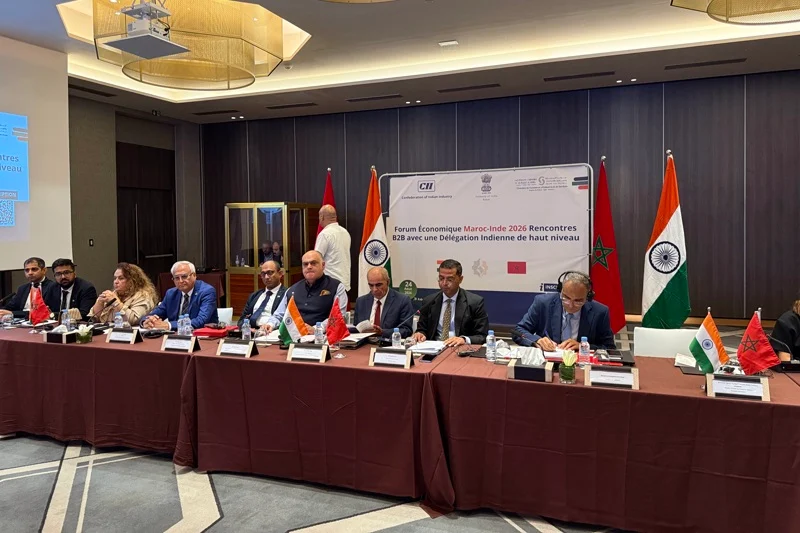
Singh’s program includes bilateral talks with Loudyi as well as a meeting with Industry and Trade Minister Ryad Mezzour, underscoring that this is not only about military cooperation but also industrial integration.
A factory as a signal
The headline deliverable is the inauguration of Tata Advanced Systems’ new manufacturing facility in Berrechid, in the Casablanca-Settat region, which will assemble the WhAP 8×8 armored platform.
The plant, India’s first major defence production site on African soil, is slated to turn out about 400 vehicles over the next three years, with roughly 150 destined for Morocco’s Royal Armed Forces.
According to public filings, the project begins with a local integration rate of around 35 percent and aims to reach 50 percent, employing about 90 people directly and another 250 indirectly.
Beyond vehicles, the facility is expected to serve as a training hub, transferring skills and know-how to Moroccan technicians and engineers.
The WhAP, developed jointly by India’s Defence Research and Development Organisation (DRDO) and Tata — is an 8×8 wheeled armored combat vehicle designed for troop transport and reconnaissance, fitted for modern battlefield conditions. Morocco’s interest signals both a capability upgrade for its armed forces and a bet on long-term industrial value.
An Indian embassy spokesperson in Rabat described the facility as “a milestone in India’s defence cooperation with Morocco, marking the first industrial production of Indian armoured vehicles on African soil and a step toward long-term co-development and technology partnership.”
From trade to co-production
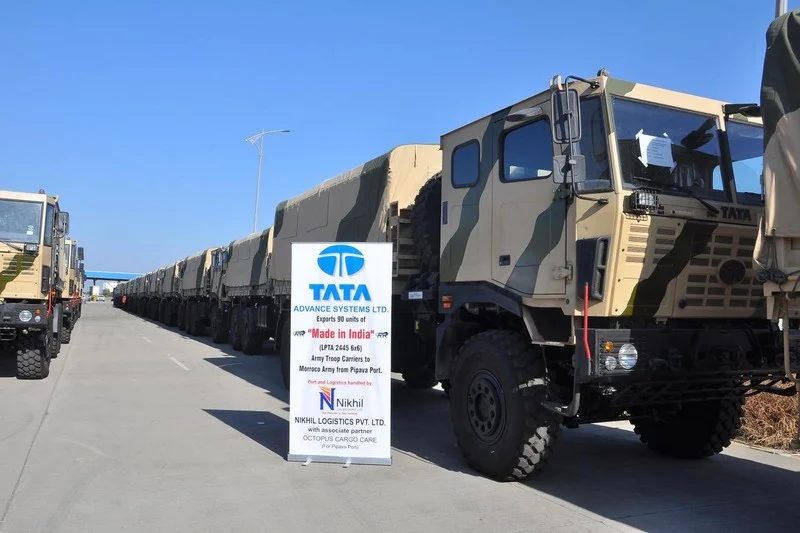
India and Morocco have exchanged defence goods before: Morocco has imported Indian military trucks and explored other platforms.
But Singh’s visit marks a step change. Instead of simple sales, the two countries are now talking about joint ventures, technology partnerships, and supply-chain development.
Discussions in Rabat will also cover training and capacity building, with an eye on creating a pipeline of Moroccan defence engineers. Indian officials present the initiative as part of New Delhi’s broader bid to push beyond traditional buyers and carve out a place in African and Middle Eastern markets.
For Morocco, the timing reflects more than procurement needs. The kingdom has been working to diversify its defence suppliers and reduce reliance on imports, a strategy aligned with its ambition to become a regional production and export hub.
By hosting India’s first African defence factory, Rabat signals to Europe and the United States that it has alternative partners and to African neighbors that it can anchor supply chains.
For India, the calculus is geopolitical as well as economic. Expanding a footprint in North Africa complements New Delhi’s growing ties with the Gulf and offers leverage in broader Indo-African relations. It also answers Prime Minister Narendra Modi’s call to grow defence exports fivefold by the end of the decade.
Challenges ahead
Still, the partnership faces hurdles. Building a robust defence supply chain in Morocco will require sustained political support, predictable financing, and reliable logistics.
Quality control in armored vehicle production is stringent, and meeting NATO-compatible standards , which Morocco’s armed forces seek, will test the new plant.
The broader context is a shifting African defence market. Turkey has aggressively expanded drone and armored vehicle exports into North Africa, while European suppliers remain active in the Maghreb.







add your comment
Terms of publication : Not to offend the writer, people, sacred things, or attack religions or the divine self, and refrain from racist incitement and insults.