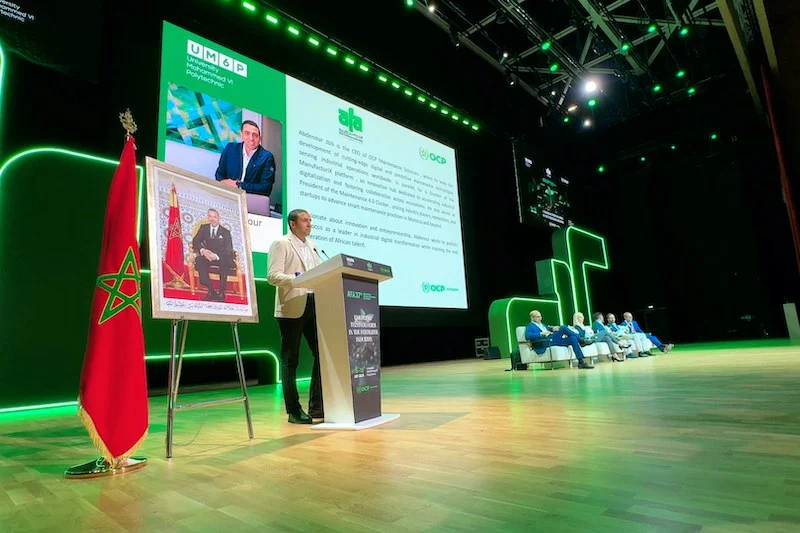
OCP Maintenance Solutions, a subsidiary of the Office Chérifien des Phosphates (OCP) Group, is leveraging artificial intelligence to shift from reactive to predictive maintenance in industrial facilities, the company’s CEO said Tuesday.
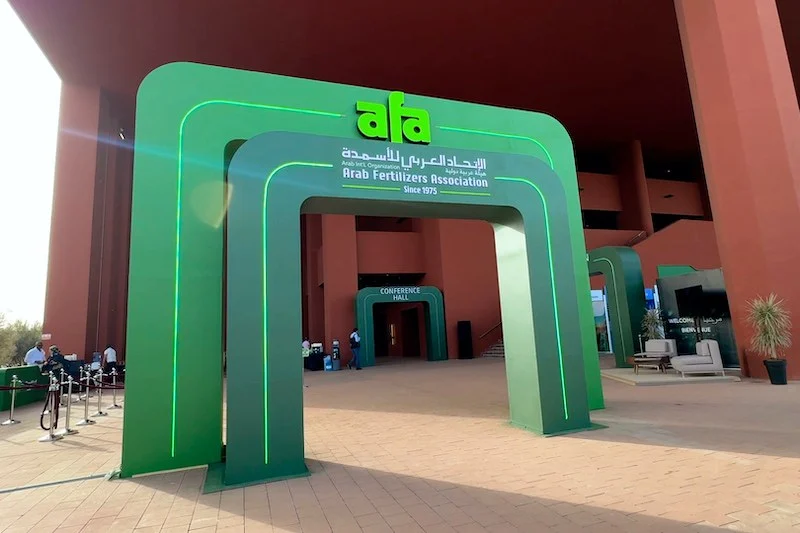
Abdelnour Jbili told attendees at the 37th Annual Technical Conference of the Arab Fertilizer Association that AI is enabling what he described as condition-based maintenance, moving beyond traditional preventive approaches.
“Most maintenance today is reactive. The goal is to make it more preventive, and now we are moving toward condition-based maintenance,” Jbili said. He emphasized that AI at OCP Maintenance Solutions combines both software intelligence and “Humanware,” the expertise of skilled engineers integrated with smart platforms.
Jbili stressed that predictive or prescriptive maintenance should be implemented carefully, beginning with small pilot projects to demonstrate effectiveness before scaling up across facilities. He also warned against using operational safety sensors for predictive maintenance, noting that specialized sensors are required to accurately monitor equipment condition.
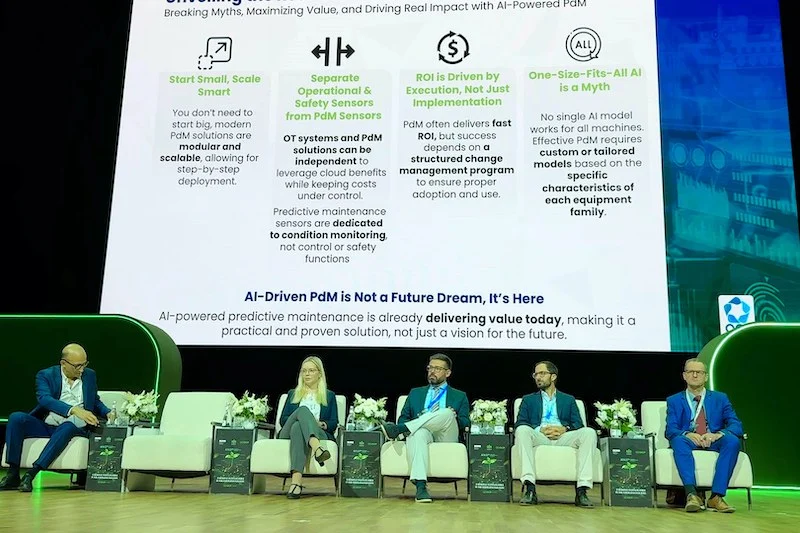
“The return on investment comes from execution, not mere application,” Jbili said, citing the high costs of unscheduled plant stoppages. “Even installing a few sensors can justify the investment, but successful implementation depends on training staff to interpret data and integrate it into daily tasks.”
He cautioned that no single predictive algorithm can solve all maintenance problems, emphasizing the need for tailored models adapted to each machine and context.
Jbili outlined a multi-level approach that starts with data collection across platforms, followed by diagnostic intelligence, failure prediction, and prescriptive maintenance recommendations based on historical failures.
In 2020, OCP Maintenance Solutions introduced a “Bionic Approach” that combines historical data with expert knowledge to train algorithms, later enhanced with a “Turbo-Bionic Approach” that integrates data from similar equipment across their platform for more precise predictions.
The initiatives also include monitoring industrial oils online to detect contamination or viscosity changes, allowing proactive interventions rather than scheduled, arbitrary maintenance.
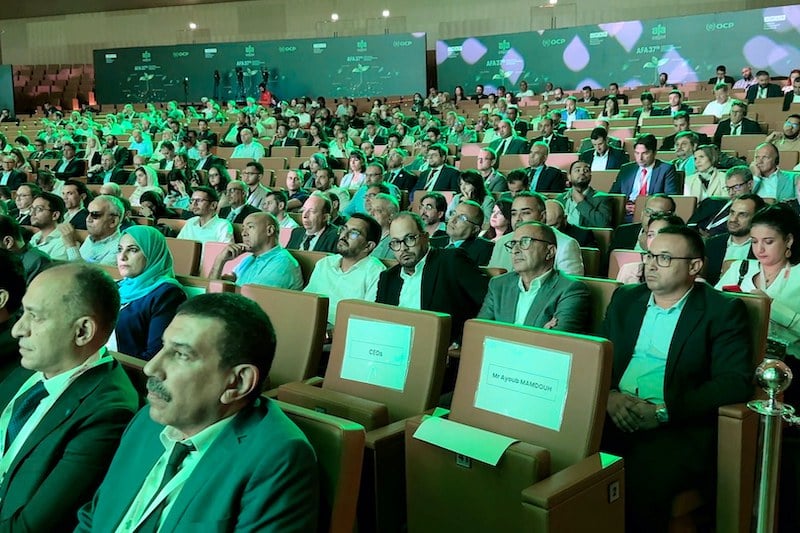
Training has been a cornerstone of the strategy, Jbili said, noting that the company has cultivated highly qualified maintenance experts in Africa and the Middle East, including the region’s first female Level-4 certified vibration specialist in 2019.
“Our goal is not only to solve plant issues but also to make the lives of maintenance workers easier,” he said.




add your comment
Terms of publication : Not to offend the writer, people, sacred things, or attack religions or the divine self, and refrain from racist incitement and insults.