
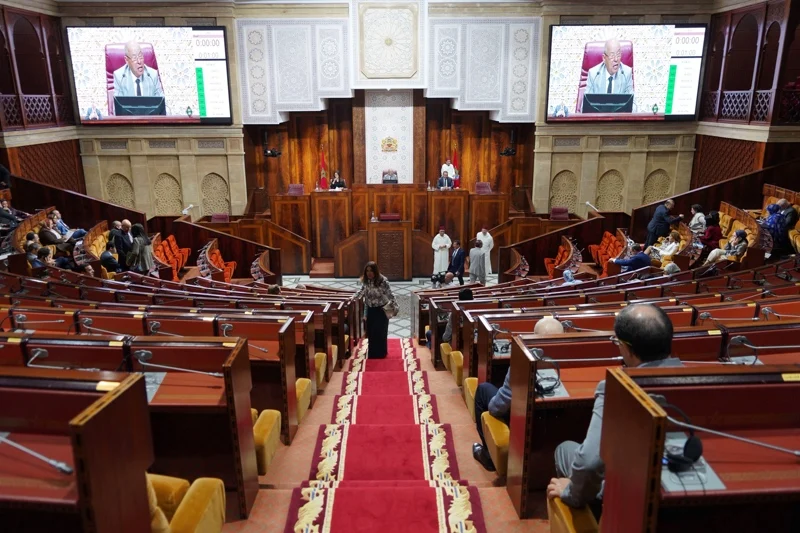
A Moroccan study has found that the country’s women’s quota system in legislative elections has succeeded in raising female representation in parliament but failed to produce a strong political elite of women capable of winning competitive local constituencies.
Published in the latest issue of Scientific Readings in Research and Studies, the paper — titled “The Question of Achieving Gender Parity in the House of Representatives after Nearly a Decade and a Half of Implementing the 2011 Constitution” — argues that while the quota system has achieved numerical progress, deeper political and cultural barriers continue to limit women’s influence.
Since Morocco introduced the quota system in 2002, the number of women in the House of Representatives has climbed from 35 to 96 by the 2021 elections. But the number of women elected directly through local constituencies has remained low, peaking at 10 in 2016 and dropping to just six in the most recent vote.
“After nearly two decades of applying the quota system, the situation regarding women’s election to local seats has not changed,” said the study’s author, a doctoral candidate at the Faculty of Legal Sciences in Kenitra. “The mechanism has not contributed even partially to changing it.”
A key obstacle, the study found, is a legal provision barring women elected through the national or regional lists from running again via the same system. As a result, experienced female lawmakers are forced to contest highly competitive local races or face exclusion by their parties, which often sideline them in candidate selection.
“This effectively leads to the termination of their parliamentary careers and the wastage of political experience they have acquired,” the researcher wrote, calling Article 5 of the organic law on the House of Representatives “an insurmountable barrier” that undermines equality while male lawmakers face no such limits.
Beyond legal hurdles, the study identified political parties’ reluctance to nominate women in winnable districts, systemic problems in the electoral process, and what it called “a climate marked by corrupt money and negative practices.” It also highlighted enduring cultural expectations that tie women primarily to household roles, creating a “double burden” for those seeking political careers.
The findings suggest that while quotas have improved women’s parliamentary presence on paper, Morocco’s path to genuine gender parity in politics will require broader reforms targeting party structures, electoral practices and social norms.




add your comment
Terms of publication : Not to offend the writer, people, sacred things, or attack religions or the divine self, and refrain from racist incitement and insults.