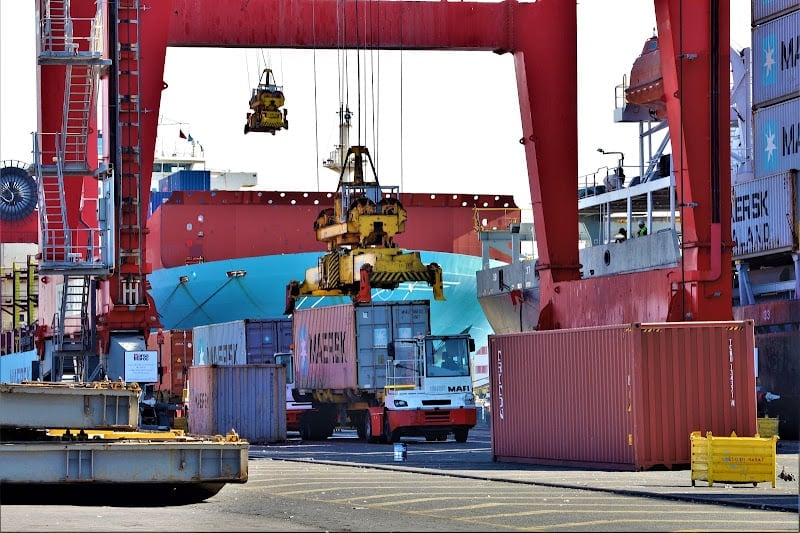
Morocco emerged as the leading African importer of Turkish goods in the first half of 2025, with total imports valued at $1.8 billion, according to recent data from the Turkish Exporters Assembly (TIM). This milestone is credited to improved bilateral relations between Rabat and Ankara.
Citing the figures, economic news agency Ecofin reported that Turkey’s overall exports to Africa reached $10 billion during the same period. Egypt ranked second with $1.6 billion in imports, followed by Libya ($1.3 billion), Tunisia ($554.1 million), South Africa ($303.5 million), and Nigeria ($242.3 million).
Remarkably, Morocco’s imports from Turkey in the first half of 2025 match the country’s total annual imports from Turkey in 2020. These figures have steadily increased over the past five years, peaking at $3.9 billion in 2024.
Trade Deficit Persists Despite Protective Measures
Despite implementing protective tariffs, up to 90% on certain Turkish goods, under a revised 2020 free trade agreement, Morocco has been unable to curb its growing trade deficit with Turkey.
According to economic analyst and university professor Badr Zaher Al Azraq, this imbalance is not unique to Turkish trade. “Morocco’s trade deficit extends to most of its free trade partners, including Egypt, Jordan, and the United States,” he explained.
Al Azraq highlighted stark disparities: Morocco exports just $5 million worth of goods annually to Egypt while importing $500 million, and sends about $500 million to the U.S. compared to $5 billion in American imports.
He called for a comprehensive national study to identify structural flaws in Morocco’s trade dynamics and emphasized several root causes. Among them: Moroccan businesses’ heavy reliance on European markets, limited exploration of alternative markets like Turkey, Egypt, and the U.S., and underperforming incentive schemes aimed at boosting exports.
He also pointed to the lack of robust Moroccan shipping lines and the dominance of small and medium enterprises (SMEs) that lack the capacity to enter distant markets.
Focus on Competitiveness, Not Protectionism
Youssef El Karoui Filali, president of the Moroccan Center for Governance and Management, emphasized the high domestic demand for Turkish goods. “Many Moroccan businesses and consumers prefer Turkish products,” he noted.
To mitigate the trade imbalance, Filali advocated for boosting the competitiveness of Moroccan products in the Turkish market rather than relying on customs duties, which ultimately burden consumers.
“Achieving trade balance requires improving the appeal and market penetration of Moroccan goods in Turkey,” he said. “Protective tariffs may slow down some imports, but they won’t stop companies from sourcing what they need. In the end, it’s Moroccan consumers who pay the price.”








add your comment
Terms of publication : Not to offend the writer, people, sacred things, or attack religions or the divine self, and refrain from racist incitement and insults.