
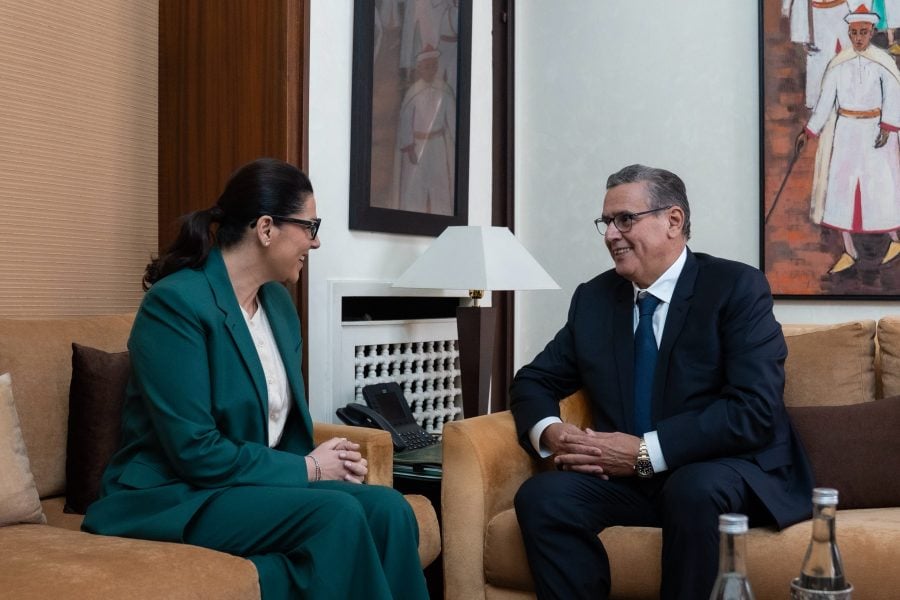
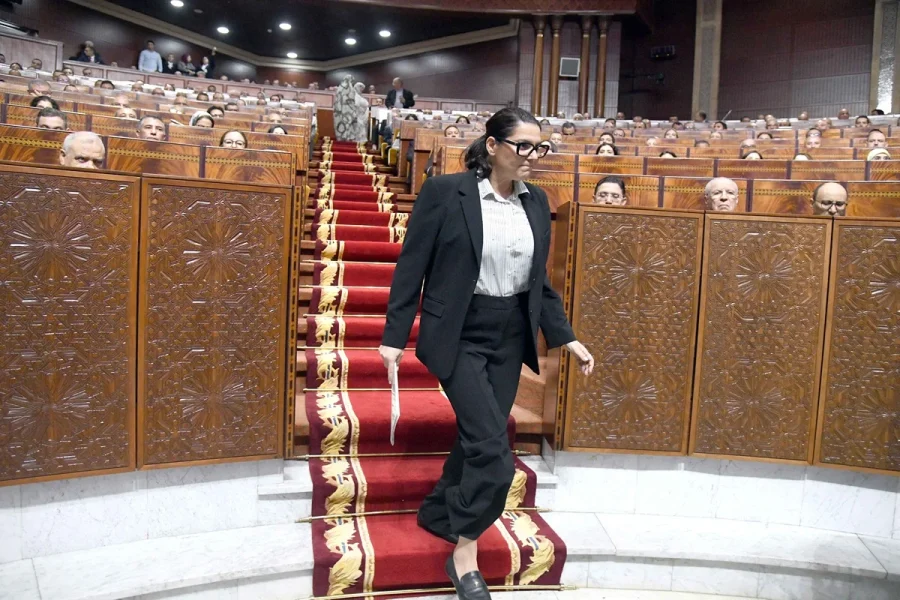
Moroccan Prime Minister Aziz Akhannouch on Tuesday presented a sweeping overview of his government’s economic and financial performance, highlighting what he described as a successful effort to restore fiscal balance, boost public revenues and expand social programs, despite inheriting what he called a “difficult legacy” marked by the fallout of the COVID-19 pandemic.
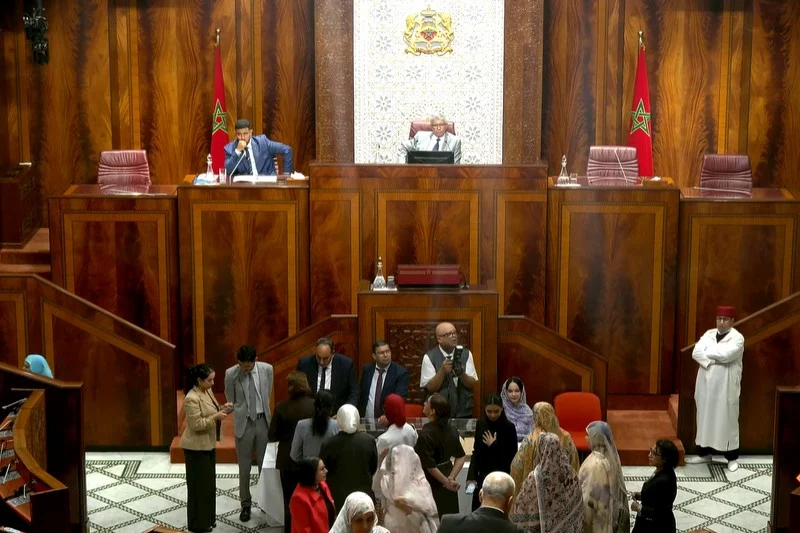
Speaking during a monthly session in Parliament focused on economic and financial policy, Akhannouch said Morocco’s public finances were now on “the right track,” thanks to structural reforms aimed at strengthening tax systems, health insurance coverage, and public investment.
Tax Revenue Soars Without Increasing Burden
The head of government reported that tax revenues jumped from approximately 199 billion dirhams in 2020 to nearly 300 billion dirhams in 2024 — an increase of more than 11% annually — without raising the overall tax burden.
He credited the increase to a gradual rollout of Law No. 69.19 on tax reform, including the restructuring of corporate taxes and value-added tax (VAT). The VAT reform is expected to consolidate rates to just two standard levels — 10% and 20% — by 2026.
Further reforms targeting income tax will be implemented in 2025, Akhannouch said, as part of a national social dialogue agreement signed in April 2024 aimed at improving salaries for public and private sector workers, as well as pensioners.
Health Coverage Expanded to Over 88% of Population
On the social front, Akhannouch touted the government’s efforts to broaden access to health care. As of June 2025, more than 11.4 million Moroccans — over 4 million low-income families — are now covered under the country’s mandatory basic health insurance plan, up from 42.2% prior to the program’s expansion.
“These families now benefit from free medical treatment and hospitalization in public hospitals, as well as the same benefits offered by private health providers under the National Social Security Fund,” he said.
The state has allocated nearly 9.5 billion dirhams annually to subsidize insurance premiums for low-income families.
Public Investment, Employment Support on the Rise
To stimulate economic growth, Akhannouch said public investment will grow to 340 billion dirhams by 2025, up from 230 billion dirhams in 2021. He cited this increase as crucial to the rollout of major infrastructure projects and sectoral strategies.
The government has also launched a new national investment charter, offering financial incentives for job creation, reducing regional disparities, and targeting strategic sectors.
Akhannouch said reforms under the charter have already surpassed past benchmarks, noting that only 386 investment projects had been approved between 2012 and mid-2021 — an average of 39 per year.
Education and Health Budgets Receive Major Boost
The prime minister said education spending would exceed 85 billion dirhams in 2025, with an additional 9.5 billion dirhams allocated annually through 2027 to fund reforms under Morocco’s 2022–2026 education roadmap.
The health budget has also seen a 65% increase since 2021, rising from 19.7 billion dirhams to 32.6 billion dirhams in 2025.
Wage Increases for Over 4 Million Workers
Akhannouch highlighted the government’s recent wage agreements with labor unions, which will provide pay raises for more than 4.25 million citizens, including 1.25 million public employees and 3 million private-sector workers. The total cost of the wage hikes is projected to exceed 45 billion dirhams by 2026.
Recovery from COVID-19 and Economic Turmoil
The prime minister acknowledged that his administration began under challenging circumstances, citing a 7.2% economic contraction in 2020, the loss of more than 430,000 jobs, and a budget deficit of 7.1%. Morocco was also forced to draw $3 billion from its Precautionary and Liquidity Line to stabilize the economy.
He also pointed to a downgrade in Morocco’s credit rating in 2021 and back-to-back years of drought, which slashed agricultural output and eliminated over 400,000 jobs in the farming and forestry sectors across 2022 and 2023.
Despite these headwinds, Akhannouch insisted that the reforms implemented by his government were essential to modernizing the Moroccan economy, creating opportunities for youth, and ensuring long-term fiscal and social stability.
“This is just one step in the developmental and modernizing path led by the King,” Akhannouch said, pledging to continue building “a modern economy rooted in economic efficiency and social justice.”




the same BLA BLA BLA , nothing changes