
A growing number of Moroccan importers trading with African countries have expressed frustration over intensified manual customs inspections at the Guerguerat border crossing with Mauritania, claiming the delays are driving up transportation costs and risking the spoilage of perishable goods.
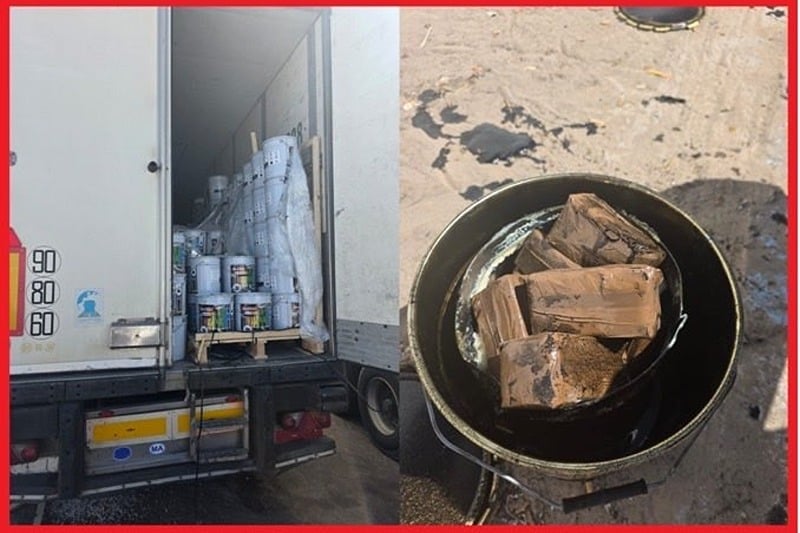
Despite the presence of advanced cargo scanning equipment, Moroccan customs authorities have reportedly stepped up hand-inspections of trucks arriving from sub-Saharan Africa. Importers say the process often leaves freight vehicles idling for hours, with costly consequences for logistics and supply chains.
Speaking to Hespress AR, traders warned that these repeated inspections not only increase operational expenses, including labor and machinery rentals to manually unload and reload goods, but also jeopardize the quality of sensitive goods, particularly those requiring cold storage or special handling conditions.
“Unnecessary, Costly and Time-Consuming”
Mohamed Zemrani, president of the Moroccan Association of Exporters to Africa and Abroad, criticized the reliance on manual inspections despite the presence of high-performance scanners at the border post.
“It’s unclear what benefit is gained from these redundant inspections,” Zemrani said. “They paralyze truck movement, cost time and money, and frequently result in the spoilage of perishable items. Truck owners must pay over MAD 2,000 to laborers and an additional MAD 2,000 to crane operators to assist with offloading and reloading.”
Zemrani added that industry representatives had previously contacted authorities to address the issue, offering even to fund loading equipment for customs use. “Yet our proposals were met with silence,” he lamented.
He also pointed to the lack of cold storage infrastructure at Guerguerat. “Products needing special preservation are often left on the ground, in poor conditions, for hours while awaiting inspection,” he noted. “That severely affects their quality and shelf life.”
Customs Respond: “Security Takes Priority”
In response, a senior customs official at Guerguerat told Hespress AR that manual inspections are applied selectively, based on risk analysis involving cargo origin, type, and the operator’s past compliance record. “Additional inspections are triggered when suspicions arise or intelligence is received,” the source said.
The official stressed that customs operations prioritize security and the fight against smuggling, particularly narcotics. “Our agents are fulfilling their legal duties to protect national economic interests and safeguard Moroccan consumers.”
He added that most travelers and goods crossing the border undergo advanced scanning, with a large truck scanner for cargo and a smaller unit for passenger luggage. “We are constantly working to balance trade facilitation with national security.”
Strategic but Strained Trade Hub
Guerguerat remains Morocco’s sole overland commercial gateway to sub-Saharan Africa, playing a crucial role in regional trade. However, industry insiders have long argued that its logistical infrastructure is insufficient for its growing importance.
“There’s a clear need to enhance the site’s capabilities,” said one source, citing the absence of basic logistical facilities, such as storage warehouses and properly equipped unloading bays. “This crossing is the lifeline between Morocco and Africa — it deserves investment that matches its strategic role.”
Calls for upgrades are growing louder as Morocco continues to deepen trade ties across the continent under the African Continental Free Trade Area (AfCFTA). For now, importers say, streamlining customs procedures and upgrading critical infrastructure at Guerguerat are essential to unlock the full potential of Morocco-Africa commerce.





add your comment
Terms of publication : Not to offend the writer, people, sacred things, or attack religions or the divine self, and refrain from racist incitement and insults.