
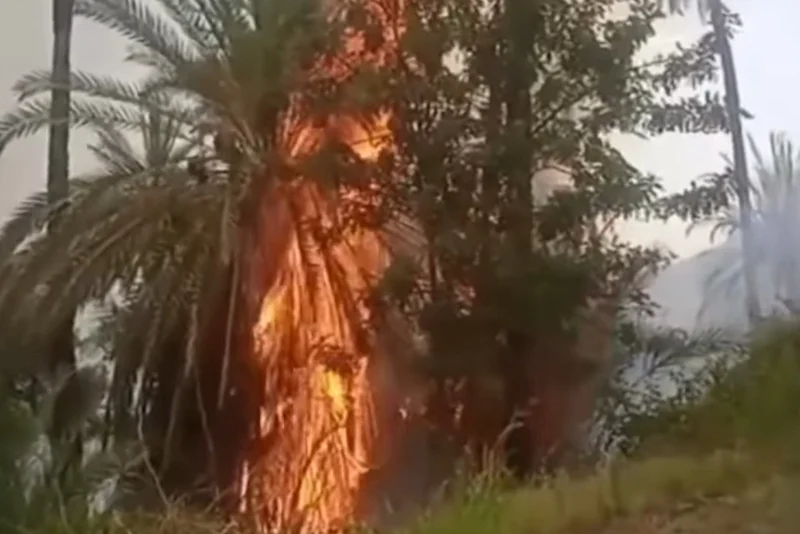
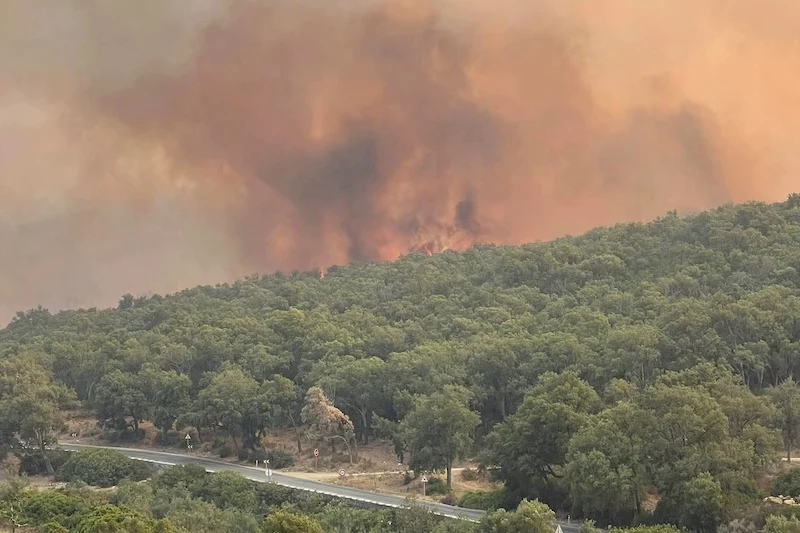
A massive fire has ravaged approximately 15 hectares of agricultural land in the Tarqa Ntouchka oasis, located deep in the mountainous district of Chtouka Aït Baha, destroying vast swaths of vegetation, including date palms, olive trees, banana plants, avocado trees, and other crops.
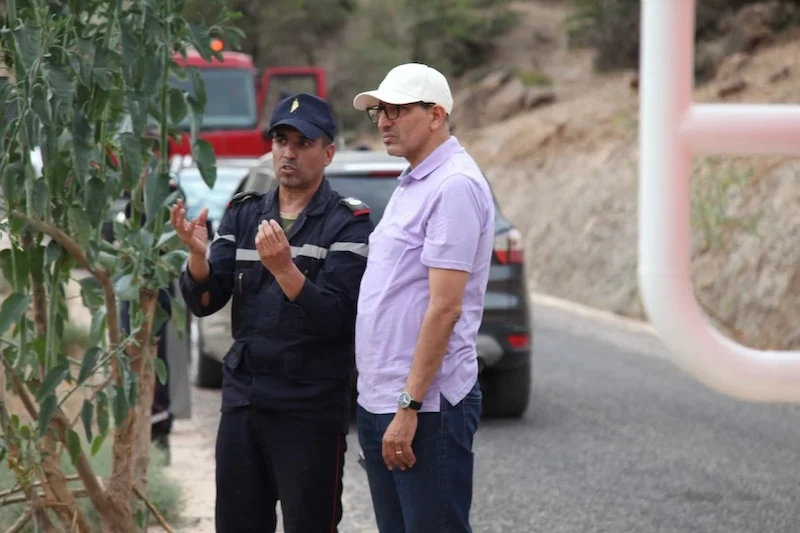
The blaze broke out Sunday afternoon, prompting an immediate response from local authorities, including Governor Mohamed Salem Sabti, security services, and reinforced firefighting teams from the Civil Protection unit. These teams were supported by local residents and community leaders in the effort to contain and extinguish the flames.
By Monday, authorities reported that the fire had been successfully brought under control, thanks to intensive joint operations involving civil protection crews, forestry officials, and local government forces. Ground teams and logistical support were fully mobilized to prevent the fire from spreading further across the oasis.
Hassan Zim, a local civil society activist, voiced concern over the recurring nature of such blazes in the area. Speaking to Hespress AR, he acknowledged the readiness of civil protection services but criticized the lack of preventive measures from the Ministry of Agriculture and Rural Development.
“This disaster once again highlights the shortcomings in the oasis rehabilitation program,” said Zim, calling for better awareness campaigns, volunteer training, and provision of fire suppression equipment for local actors. He emphasized the need for proactive summer preparedness, particularly as rising temperatures have become a seasonal norm in the region.
Zim also decried the absence of effective civil associations tasked with advocating for sustainable solutions to recurring fires. “These organizations should have lobbied for essential risk-reduction projects—like fencing the oasis, developing internal access routes, pruning dry branches, and restoring irrigation water to the excluded parts of the oasis, neglected for over 20 years,” he said.
The Tarqa Ntouchka oasis is a key source of subsistence farming for local residents. Zim called for compensation measures for farmers whose land and livelihoods were affected. He urged the government to provide financial and technical support, tackle the growing wild boar threat, and equip farmers with fire control tools, following the example of neighboring Tata province.
He concluded by warning against “continued misuse of public funds on ineffective initiatives,” saying the repeated devastation points to a need for a fundamental rethink of the region’s agricultural and environmental risk strategy.





add your comment
Terms of publication : Not to offend the writer, people, sacred things, or attack religions or the divine self, and refrain from racist incitement and insults.