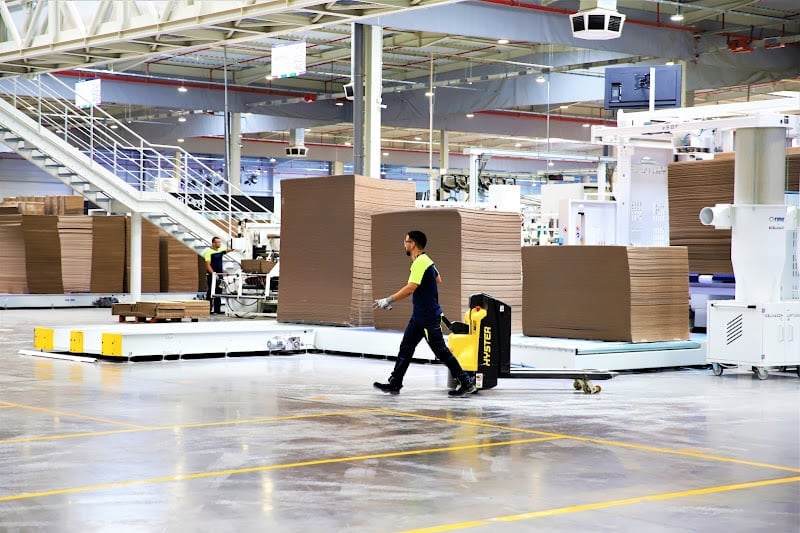
Morocco is quickly turning into a major platform for manufacturing and exports that connects Africa to Europe, according to a report by Germany Trade & Invest (GTAI), which is part of Germany’s finance ministry.
The report says the country has gone beyond being just an alternative investment spot, it’s now a key player in European supply chains.
Thanks to its strategic location close to Europe, affordable production costs, and a skilled workforce, Morocco has been attracting more and more international companies.
Free trade deals with the European Union, the U.S., and other countries also help make the country an appealing choice for investors.
One of the standout developments is Morocco’s push into the electric battery industry. In recent years, six production facilities have been launched by Chinese companies.
Among them is a huge project near Kenitra led by Gotion High-Tech, which plans to build a factory with a capacity of 100 gigawatt-hours. This plant will mainly supply batteries to Volkswagen, which owns 30% of the project.
Other companies from Korea and Canada, like LG Energy Solution, have started investing in extracting raw materials such as lithium hydroxide, reinforcing Morocco’s position as a key supplier of essential materials for the global shift to clean energy.
Between 2022 and 2024, Morocco saw 79 new foreign direct investment projects, not counting expansions. This growing interest shows that global businesses trust Morocco’s economy.
Today, over 230 foreign firms are operating in Morocco’s car manufacturing sector, including big names like Faurecia, Bosch-Rexroth, and Leoni. In aerospace, about 150 companies, such as Germany’s Masterflex and Böllhoff, have set up shop.
According to the report, Morocco’s advanced logistics, big ports, modern airports, and a high-speed rail line, make it an important link in European supply networks, especially for car parts and electronics.
Special industrial zones and Casablanca Finance City are also drawing in big financial and industrial groups, including Germany’s Commerzbank.
Despite this progress, the GTAI report says Morocco still needs to attract more foreign investors to create jobs and deepen industrial integration.
The country’s unemployment rate has reached 13%, so the government has started legal and tax reforms.
These include updating the investment charter and offering tax breaks, grants, and training support for companies.






add your comment
Terms of publication : Not to offend the writer, people, sacred things, or attack religions or the divine self, and refrain from racist incitement and insults.