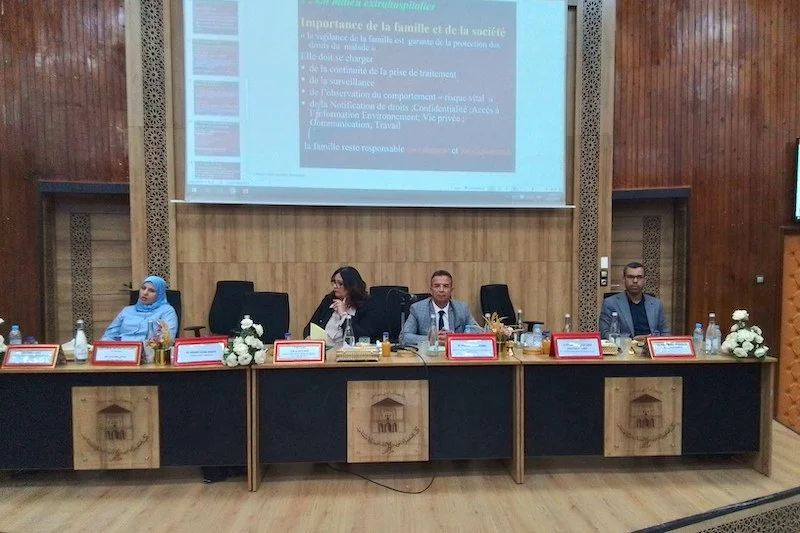
Legal scholars, medical professionals, and ethicists are calling on Morocco to confront complex bioethical issues head-on, starting with the contentious question of the right to die.
The term, widely debated globally, refers to a patient’s legal and moral ability to choose to end their life in the context of terminal illness or unbearable suffering, often linked to assisted dying or euthanasia.
While currently absent from Moroccan law, experts argue it can no longer be ignored.
The issue took center stage at an international symposium held Saturday at the Faculty of Legal, Economic and Social Sciences in Marrakech.
Under the theme “Health Systems in Morocco: Legal and Ethical Crossroads,” the event called for a serious public debate on sensitive topics such as euthanasia, genetic engineering, and artificial reproduction, while grounding discussions in Morocco’s religious and cultural specificities.
The forum recommended strengthening the constitutional and legal framework of the right to health, including a framework law clearly defining the obligations of the state, public institutions, and the private sector.
Legal accountability for medical negligence, ethical regulation of new technologies like AI and telemedicine, and robust protection of health data were also highlighted.
Panelists advocated for an independent national authority on health ethics that brings together legal experts, physicians, philosophers, and human rights advocates. They also urged integrating bioethics and health law into university curricula, increasing collaboration between medical and law faculties, and funding research that links law, ethics, and healthcare outcomes.
In a broader sense, the discussions revealed urgent gaps in Morocco’s health system: unequal access, outdated legislation, and limited institutional safeguards for patients’ rights.
By calling for public, interdisciplinary dialogue, participants argued that Morocco must not only modernize its laws, but also humanize its healthcare by making dignity, autonomy, and ethical oversight central pillars of reform.






add your comment
Terms of publication : Not to offend the writer, people, sacred things, or attack religions or the divine self, and refrain from racist incitement and insults.