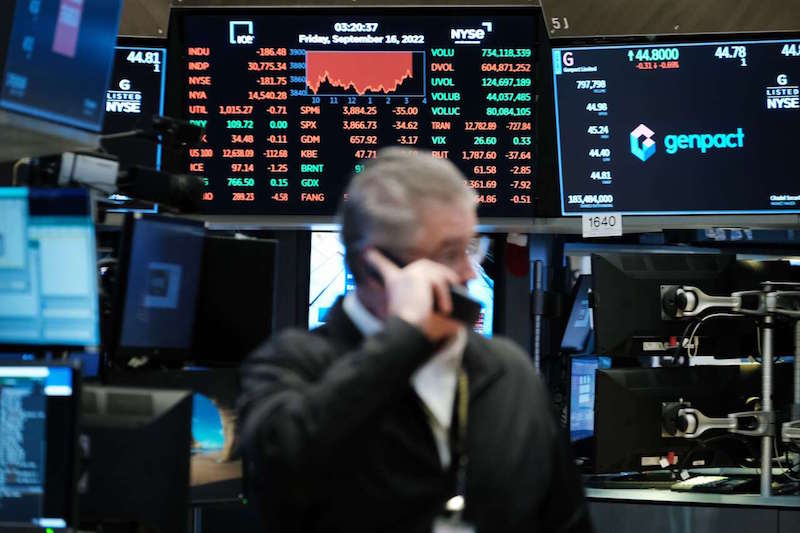
A wave of Israeli airstrikes on strategic military and nuclear sites in Iran triggered sharp fluctuations in global financial markets Friday, as investors rushed to safe-haven assets amid mounting fears of a wider war in the Gulf region.
The attacks, described by analysts as unprecedented in scale, sent oil prices surging and global equity markets tumbling. The crisis reignited geopolitical volatility in an already fragile post-pandemic world economy still grappling with fallout from the Russia-Ukraine war.
Oil Prices Soar, Markets Fall
In early trading, U.S. crude jumped $3.93 (5.8%) to $71.97 a barrel, while Brent crude rose $3.82 to nearly $74. The attacks pushed investors to flee riskier assets, sending Asian stock indices downward: Japan’s Nikkei 225 fell 0.9% to 37,943.25, South Korea’s Kospi dropped to 2,894.62, and Hong Kong’s Hang Seng index declined to 23,831.48. China’s Shanghai Composite also slid 0.7%.
Wall Street opened in the red as well, with major U.S. indices down by nearly 2%, and the dollar facing strong volatility. Demand surged for gold and sovereign bonds, underscoring the return to traditional safe havens.
The escalation came as Iran vowed “devastating consequences” following the strikes, heightening fears of a broader conflict in the Gulf—a region vital to global oil supply and trade.
Investors on Edge
“The attacks have introduced a new layer of uncertainty,” said Nabil Bouabrahimi, professor of international economics at Ibn Tofail University. “The stakes for the global economy are very high. We’re now seeing market responses that outstrip even the disruptions caused by Trump-era tariffs.”
Bouabrahimi warned that extended conflict could disrupt global supply chains already weakened by pandemic aftershocks and geopolitical tensions. “Maritime routes like the Strait of Hormuz, the Red Sea, and the Suez Canal carry about 90% of global trade. If they’re compromised, transport costs will rise dramatically, leading to shortages and inflation.”
He added that a prolonged conflict could mirror or even exceed the economic fallout of the Ukraine war, stating that investors were reacting by offloading equities and seeking refuge in commodities like gold.
Fears of a Prolonged War
Echoing these concerns, economist Badr Zahir El Azraq said markets were reacting to fears of a drawn-out regional war. “A conflict involving Iran and Gulf countries could severely disrupt global oil flows. If Iran closes the Strait of Hormuz, oil prices could spike drastically,” he said.
El Azraq noted that the situation remains fluid, with the economic impact largely hinging on the nature of Iran’s response. “Should Tehran retaliate forcefully, we could see prolonged market instability, higher energy prices, and broader global economic repercussions.”
He added that non-oil producing countries like Morocco, which imports over 90% of its energy, may face steep costs. “Higher global prices would directly affect domestic energy bills, inflation, and the trade balance,” El Azraq warned.
Global Stability at Risk
Economists agree that the crisis could derail fragile global recovery efforts. Bouabrahimi noted that both the UN Security Council and institutions like the World Bank are vested in global economic stability, which is now in jeopardy.
“There’s a systemic shock unfolding. If current tensions escalate, it won’t just be a Middle East issue—it will become a global economic crisis,” Bouabrahimi said, urging world powers to prioritize de-escalation.
As markets brace for the fallout, all eyes remain on Tehran and the extent of its counterattack, which could determine the trajectory of energy markets, international trade, and investor confidence in the weeks to come.







add your comment
Terms of publication : Not to offend the writer, people, sacred things, or attack religions or the divine self, and refrain from racist incitement and insults.