
A recent report in the Daily Signal by U.S. security expert Robert Greenway—head of the Allison Center for National Security and former intelligence officer— argues that Congressman Joe Wilson’s push to “designate the Algeria-backed Polisario Front as a terrorist group is a litmus test of Washington’s willingness to confront terror proxies along NATO’s southern flank.”
The report, co-authored by researcher Amine Goulidi, a visiting fellow at the Shelby Cullom Davis Institute, noted that Polisario fighters operate Iranian-made drones, share desert routes with Russian proxies’ supply convoys, and tax smuggling routes that fund jihadists in the Sahel—all within missile range of the strategically vital Strait of Gibraltar.
They referred to a previous time when America ignored this threat, explaining that in 1988, Polisario missiles brought down two U.S. Agency for International Development aircraft, killing 5 Americans, and the U.S. failed to respond with sanctions.
Wilson’s proposed bill now forces Washington to choose whether to continue its long-standing leniency or finally recognize the Polisario Front as the proxy threat it has become.
Since the 1988 incident, the strategic landscape has shifted dramatically, the same source said, noting that in 2020, the Polisario Front unilaterally abandoned the U.N.-brokered ceasefire agreement signed in 1991, declared the region a “zone of war,” resumed rocket attacks along Morocco’s 1,700-kilometer security berm, and threatened foreign consulates, airlines, and companies as “legitimate targets.”
The report underscores that these threats are enabled by Algeria’s protection and reinforced by three converging forces, namely Iranian military support, expanding Russian influence, and a trans-Sahel illicit economy that increasingly intersects with jihadist financing networks.
It stresses that the Polisario’s strength rests largely on the safe haven it enjoys in Algeria. From camps near Tindouf, the group’s political leadership and major combat units operate beyond the reach of Moroccan forces and international monitors.
This sanctuary allows “Polisario to stockpile ordnance, experiment with new systems, and cultivate external sponsors at minimal risk,” it said.
Algeria’s military aid and state funding, the report adds, cover everything from Washington lobbying budgets to earmarked funds—resources without which the group couldn’t sustain its current level of operations.
While the Polisario is believed to have around 8,000 active fighters, defense analysts warn that the Algerian camps could mobilize up to 40,000. This broader manpower pool, he notes, is one that Polisario commanders can draw on and which jihadist recruiters have already probed.
Greenway highlighted growing evidence of Iranian support for the Polisario Front, tracing the relationship back to the 1980s when its fighters were photographed holding images of Ayatollah Khomeini in an appeal for revolutionary backing.
Since then, he highlighted, Iran has shifted from training to supplying equipment. In 2022, the so-called Polisario Interior Minister claimed fighters were being trained to assemble and operate armed drones.
Regional media linked Iranian-style munitions to deadly 2023 strikes in Samara, while Western intelligence revealed Polisario’s envoy pledging to “flare resistance in the Sahara following Hamas’s October 7 attack once additional funds and technology arrived.”
Regarding Moscow, the report claims it has been quietly and persistently engaging with the Polisario, noting their regular participation in Kremlin-backed events led by Alexander Ionov, who was charged in the U.S. for running Russian influence operations.
Although there’s no direct proof of arms transfers or military coordination, it said that Wagner Group convoys in Mali and Niger use desert routes controlled by Polisario smugglers, offering Moscow a potential logistical link.
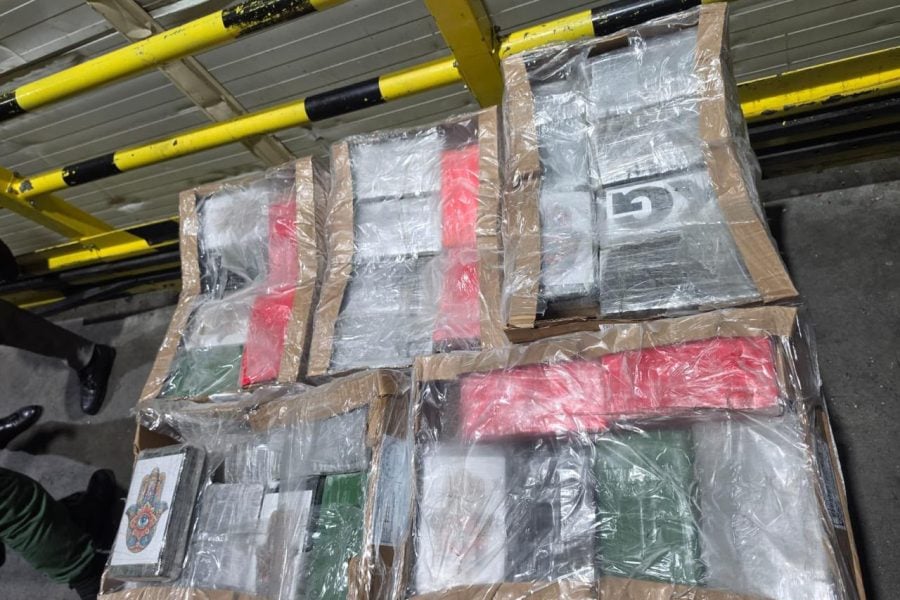
Polisario also plays a central role in the Sahel’s illicit economy, trafficking drugs and weapons while funding jihadist groups like Al-Qaeda in the Islamic Maghreb.
The report notes that while the Trump administration recognized Morocco’s autonomy plan as the only feasible solution for the Sahara, this diplomatic track must be backed by a security policy acknowledging the armed Polisario network’s links to Iran, Russian proxies, and Sahel-wide terrorist and contraband networks.
Citing the Houthis in Yemen as a warning, the report urges Washington not to let North Africa follow a similar path and calls for designating the Polisario as a “global terrorist organization” under Executive Order 13224.
This would “enable the U.S. government to impose sanctions, freeze assets, restrict travel, and signal that emerging threats will be met before they metastasize,” concluded the report.




add your comment
Terms of publication : Not to offend the writer, people, sacred things, or attack religions or the divine self, and refrain from racist incitement and insults.