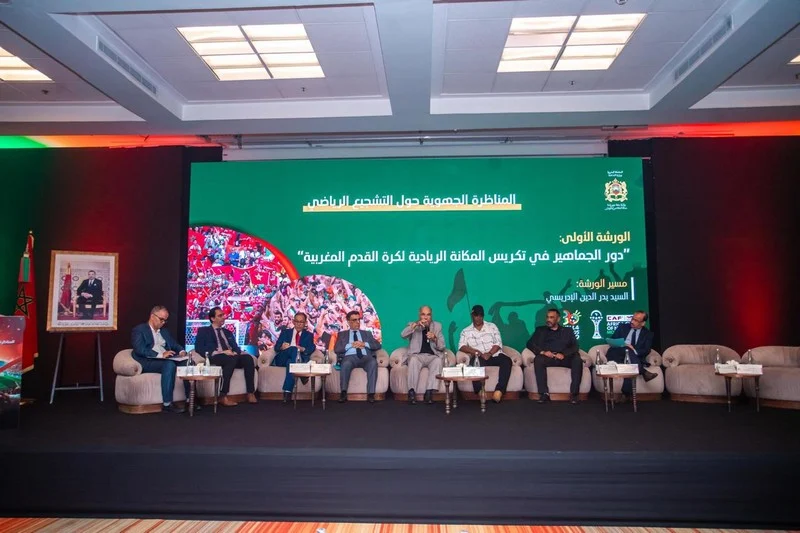
Held in Agadir, the conference brought together government officials, sports clubs, fan associations, and media professionals to address key issues surrounding supporter culture, particularly in football. It sought to reinforce the relationship between fans, teams, public authorities, and other stakeholders while promoting safe, inclusive, and celebratory sporting environments.
Two major workshops tackled the challenges and opportunities of fan support, with a special focus on capitalizing on the positive image of Moroccan fans during the 2022 FIFA World Cup in Qatar. Discussions also touched on the potential of sports tourism, the role of media in fostering positive fan culture, and the legal boundaries of free expression versus public order in stadiums.
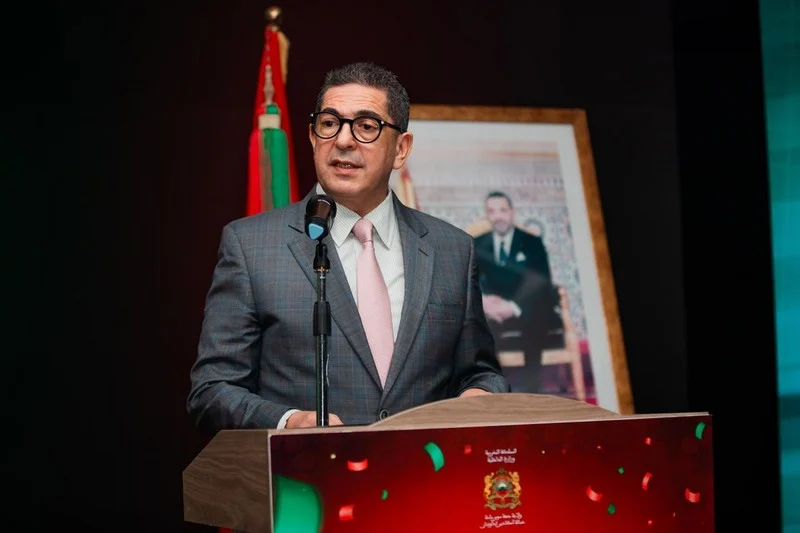
Said Amzazi, Governor of the Souss-Massa region, emphasized the broader role of sports, especially football, as tools for social mobility, community pride, and national identity. “Sport is a powerful vehicle to strengthen youth resilience against violence, extremism, and marginalization,” Amzazi said, while calling for a collective effort to draft a comprehensive sports support charter that upholds safety, legality, and Moroccan values of tolerance and fraternity.
The conference also highlighted the need to address systemic issues beyond infrastructure, including reforms to legal frameworks and efforts to curb negative behaviors. Amzazi stressed the importance of inclusive dialogue that incorporates the voices of fans as key actors in the country’s sporting future.
Opening the event, Ahmed Boulhabach, Director of the Private Security Academy, outlined key safety measures for sports events, underscoring the vital role of effective security planning in enhancing stadium hospitality and ensuring fan safety.
The event is part of Morocco’s broader push to modernize its sports sector ahead of co-hosting the 2030 FIFA World Cup, with a strong emphasis on civic engagement, regional development, and international visibility.


add your comment
Terms of publication : Not to offend the writer, people, sacred things, or attack religions or the divine self, and refrain from racist incitement and insults.