
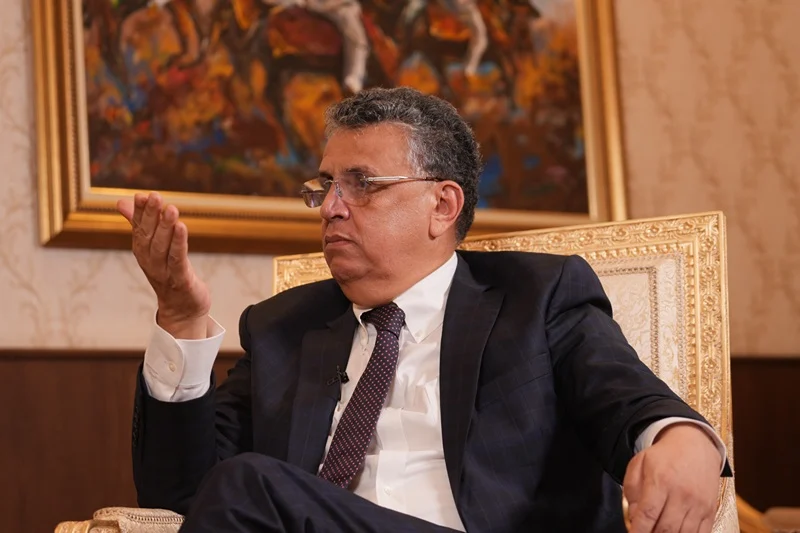
Moroccan Minister of Justice Abdellatif Ouahbi on Thursday described the new law on alternative sentences as a “very positive” step in the development of the national penal system.
Speaking after a high-level meeting chaired by Prime Minister Aziz Akhannouch in Rabat, Ouahbi emphasized that Law 43.22, which comes into force this August, marks a significant advancement in aligning Morocco’s justice system with modern standards of human rights and public liberties.
The meeting brought together all relevant government stakeholders involved in implementing the new law. Ouahbi noted that the Prime Minister’s office has ensured the allocation of necessary technical, financial, and human resources to facilitate its rollout.
Discussions during the session also covered the means being mobilized, the roles of governmental and non-governmental actors, and the complementary legislative texts that will be enacted.
Law 43.22 aims to modernize the Moroccan penal code by introducing alternative forms of punishment to incarceration, particularly in cases where prison sentences do not exceed five years and where there is no repeat offense with proven lack of deterrence.
The law is part of a broader strategy to reduce prison overcrowding, optimize state spending on the penal system, and support the rehabilitation and reintegration of offenders into society.
The alternative penalties outlined in the legislation include four main types: community service, electronic monitoring, restrictions on certain rights or the imposition of preventive, educational or therapeutic measures, and fines calculated on a per-day basis.
These measures are expected to both ease pressure on the prison system and contribute to more humane and constructive approaches to justice.








add your comment
Terms of publication : Not to offend the writer, people, sacred things, or attack religions or the divine self, and refrain from racist incitement and insults.