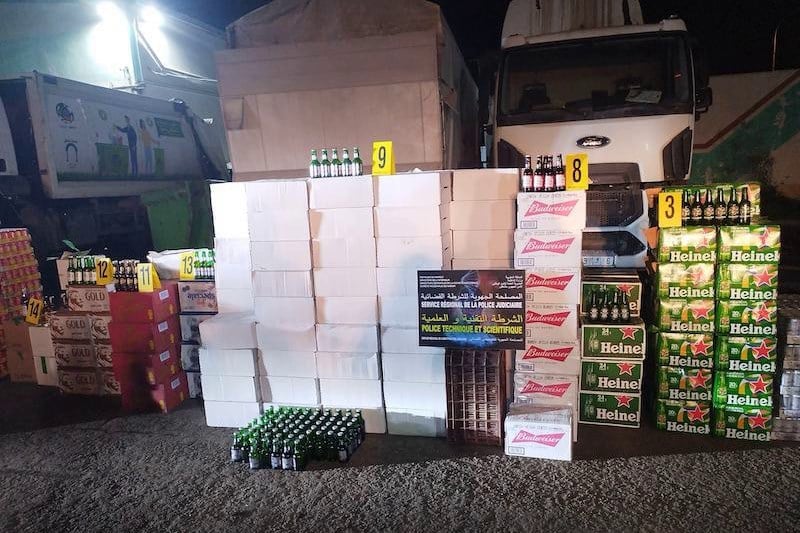
The National Customs Brigade has launched an extensive operation targeting networks involved in the “laundering” of smuggled alcohol and falsifying its tax labels for resale in licensed bars and nightclubs across Casablanca, Marrakech, Agadir, Meknes, and Tangier.
According to well-informed Hespress AR sources, these networks have been trafficking alcohol from abroad through illegal channels, then altering its documentation and affixing counterfeit tax stamps to make it appear legitimate.
Initial investigations by customs enforcement have uncovered a complex distribution and storage network operating in major cities. Intelligence reports have led authorities to identify key intermediaries and pinpoint warehouses located in residential areas and near major highways.
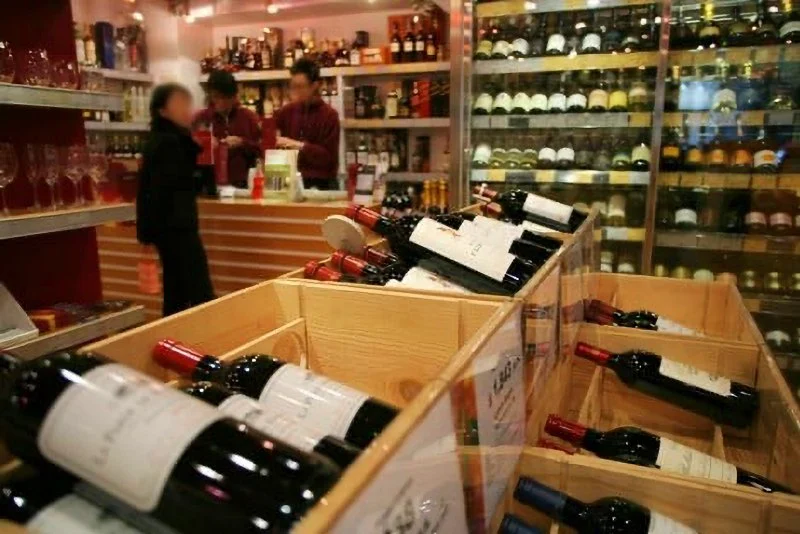
Smuggled bottles were being sold as authentic duty-free imports at significantly lower prices—sometimes less than half the market rate—making them highly attractive to bar and nightclub owners seeking higher profit margins.
Sources confirmed that authorities are particularly focused on licensed retail points where large quantities of smuggled alcohol have recently surfaced.
Investigations suggest that some of these shipments entered Morocco through the Guerguerat border crossing with Mauritania, concealed within legally imported goods.
Customs officers, in coordination with the Ministry of Interior, National Security, and the Royal Gendarmerie, are closely monitoring suspicious shipments and storage activities ahead of an expected surge in alcohol demand after Ramadan, particularly in tourist-heavy cities.
Meanwhile, Morocco’s 2025 Finance Law reflects the government’s efforts to secure stable tax revenues from alcohol consumption by increasing fixed excise duties. The budget aims to collect 2.74 billion dirhams ($270 million) in alcohol and beer taxes next year, up from 2.01 billion dirhams ($198 million) in 2024.
As part of the crackdown, customs authorities are now scrutinizing invoices and supply chains at licensed retail locations and major border points, particularly Casablanca’s Mohammed V Airport and Marrakech Menara Airport, where smuggling loopholes may exist.
Inspectors are also testing samples of seized alcohol to verify the authenticity of tax stamps, assess product quality, and ensure safety standards, following reports of improper storage and distribution conditions.





add your comment
Terms of publication : Not to offend the writer, people, sacred things, or attack religions or the divine self, and refrain from racist incitement and insults.