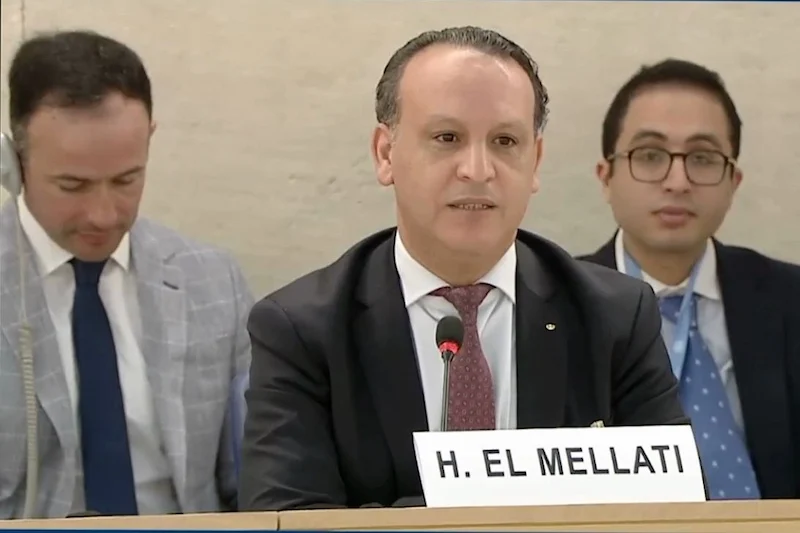
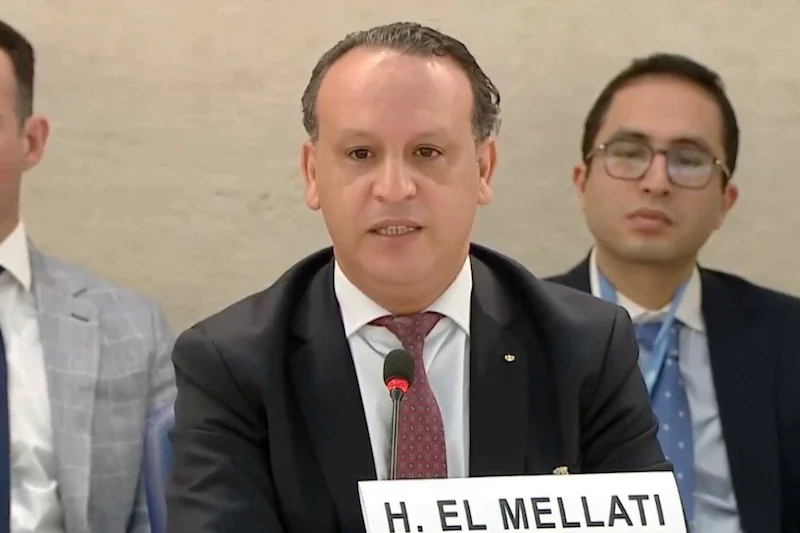
At a high-level panel during the 58th session of the UN Human Rights Council in Geneva, Hicham El Mallati, Director of Criminal Affairs, Pardons, and Crime Monitoring at Morocco’s Ministry of Justice, outlined the country’s evolving stance on the death penalty.
He highlighted Morocco’s significant legislative and judicial shift since the country effectively halted executions in 1993.
El Mallati emphasized that the debate over capital punishment remains polarized between supporters and opponents. However, he noted that Morocco has taken gradual but clear steps toward abolition.
Decline in Death Penalty Cases
According to El Mallati, only 86 individuals are currently on death row in Morocco, including one woman, representing a mere 0.1% of the total prison population. He stated that approximately 80% of these cases involve serious public crimes, while the remaining 20% pertain to terrorism-related offenses.
Moroccan courts issue an average of eight to nine death sentences per year, but in 22 appellate districts, no capital punishment rulings are recorded annually. Most death sentences are concentrated in Casablanca and Rabat, where specialized courts handle terrorism and high-profile criminal cases.
Judicial Safeguards and Clemency Initiatives
El Mallati highlighted Morocco’s best practices in handling capital punishment cases, including mandatory judicial investigations for all such cases and automatic multi-level appeals. Additionally, the Public Prosecution Office routinely submits clemency requests for death row inmates. Since 2000, more than 160 individuals sentenced to death have benefited from royal pardons initiated by the prosecution.
Legislative Reforms to Limit Capital Punishment
The Moroccan government has progressively reduced the scope of the death penalty. In military law, the number of offenses punishable by death has been cut from 16 to five. Meanwhile, the proposed amendments to the penal code would further reduce the number of capital offenses to just two, pending legislative approval.
A new criminal procedure law, currently under parliamentary review, introduces further safeguards, such as requiring unanimous agreement among all judges in a court to issue a death sentence.
International Commitments and Human Rights Engagement
Morocco has signed approximately 90 bilateral agreements related to judicial cooperation, incorporating provisions to replace capital punishment with fixed prison terms or to ensure that executions will not be carried out.
On the international stage, Morocco has ratified the International Covenant on Civil and Political Rights without any reservations regarding Article 6, which governs the death penalty. Furthermore, Morocco has supported UN Resolution 77/2002, which urges nations to reduce the scope of capital punishment, implement moratoriums, and increase transparency in its application.
A major turning point came on December 17, when Morocco voted in favor of a UN resolution calling for a global moratorium on executions—an essential step toward full abolition.
Future Prospects
El Mallati concluded by stressing that while Morocco has not yet formally abolished the death penalty, the nation continues to move in that direction through legislative and judicial reforms. He underscored that ongoing dialogue and legal measures should pave the way for a final decision on capital punishment in the country.
With Morocco’s recent vote at the UN and continued policy shifts, it appears increasingly likely that the country is preparing to fully eliminate the death penalty in the near future.







add your comment
Terms of publication : Not to offend the writer, people, sacred things, or attack religions or the divine self, and refrain from racist incitement and insults.