Two months have passed since King Mohammed VI’s directives on restructuring the institutions responsible for the Moroccan diaspora, which aimed to address the overlapping responsibilities and fragmentation among these organizations.
However, civil society groups representing Moroccans abroad have noticed that the implementation of these directives isn’t moving forward. Many argue that official efforts in this regard are either invisible or, for the most part, non-existent.
In a statement to Hespress AR, the organizations noted that “this delay emphasizes the need for a genuine commitment to implementing the King’s directives.”
They worry that “without proper action, this process could face the same fate as Article 17 of the Constitution, which aimed to grant political rights to Moroccans abroad but has, in practice, remained stalled for over a decade since the 2011 Constitution was introduced.”
These organizations also “have growing questions about the restructuring of diaspora institutions and propose ways to improve the reform.”
In this regard, Yahya Matwat, president of the Moroccan-Italian Space for Solidarity, noted that two months have passed since the King’s directives to restructure diaspora institutions, yet there has been no official effort to engage with civil society or Moroccans abroad.”
In a statement to Hespress Ar, he said, “it’s essential for the government to take real action and move quickly to implement the new law for the Council of the Moroccan Community and the Mohammed VI Foundation for Moroccans Abroad.”
Matwat noted that “civil society groups representing the Moroccan diaspora are already discussing how to contribute to the reforms called for by King Mohammed VI,” emphasizing, that “these organizations must be included in the process through consultative meetings to share their ideas.”
He added, “at the very least, the government needs to engage with Moroccan associations to clarify these reforms. For instance, it’s unclear exactly who is meant by the competencies that the Mohammed VI Foundation will be responsible for mobilizing. Are we talking about major investors in Morocco, or athletes, or artists?”
Matwat explained that there is still confusion about the roles and powers of the Mohammed VI Foundation, and whether they will overlap with those of the Council of the Moroccan Community,” emphasizing that during the ministry for the diaspora, Moroccans abroad faced this issue, often being redirected between the two bodies.
He explained, “many want these institutions to be free from political influence, and appointments shouldn’t be based on political representation. Civil society wants to bring this to the government and parliament before the reforms are implemented.”
The president also emphasized the need to “coordinate consular services with the Ministry of Foreign Affairs to arrange meetings between Moroccan officials and Moroccans abroad, ensuring their involvement in the restructuring process.”
He stressed that “both Moroccan institutions and political parties must show the same genuine commitment as the King to improving the diaspora’s situation.”
Mohamed Hassan Al Watiq, president of the Moroccan-Libyan Friendship Association, noted, “the Moroccan community here doesn’t have any legal body to represent them and present their ideas on the restructuring of diaspora institutions.”
However, he stressed, “that shouldn’t stop coordination between the Moroccan consulate in Libya and official bodies to engage with Moroccan citizens, explain the upcoming reforms, and hear their suggestions.”
In a statement to Hespress AR, Al Watiq explained, “Moroccans in Libya aren’t fully accessing their rights in social security, legal aid, and judicial support as they should.”
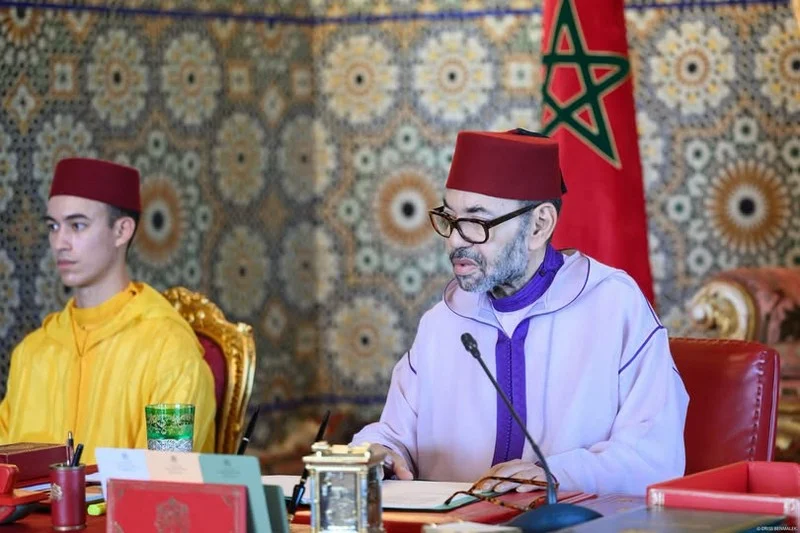
In his speech marking the 49th anniversary of the Green March, the King gave instructions for the establishment of the Council of the Moroccan Community Abroad, an independent constitutional body tasked with serving as a platform for reflection, proposing ideas, and representing the diverse segments of the diaspora. He also called for the creation of the Mohammed VI Foundation for Moroccans Abroad, which will serve as the executive arm for public policy in this area.






add your comment
Terms of publication : Not to offend the writer, people, sacred things, or attack religions or the divine self, and refrain from racist incitement and insults.