
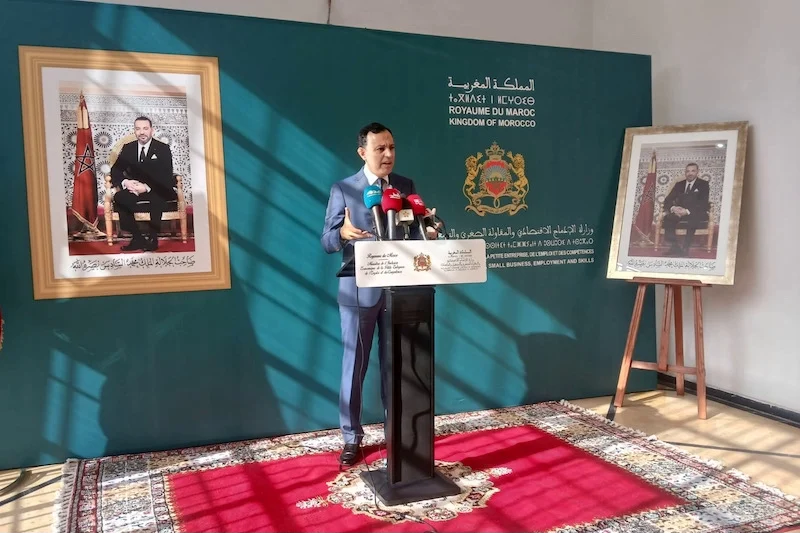
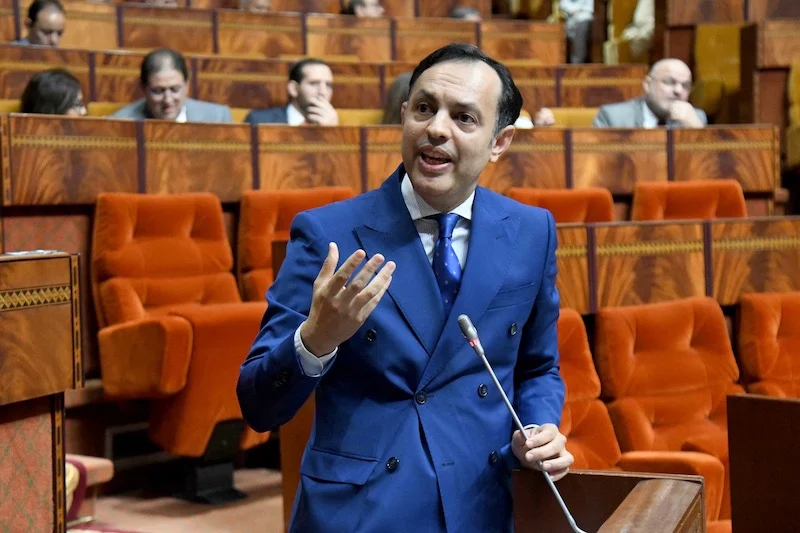
Two-thirds of the unemployed in Morocco—approximately 900,000 individuals—lack formal qualifications, Minister for Economic Integration Younes Sekouri disclosed during a heated session in the House of Representatives on Monday.
These individuals had previously been excluded from government programs aimed at alleviating unemployment, said Sekouri.
“We are dealing with a cumulative problem, as we previously identified one million unemployed.”
Sekouri acknowledged that rural areas contribute significantly to Morocco’s unemployment problem.
“Unemployment rates in rural areas are a major factor in national unemployment,” he said.
“We need targeted measures in the agricultural sector.” He highlighted three key strategies for addressing unemployment: vocational training, professional internships, and active employment programs.
Some are already in force, he said, including 67 vocational training centers, 55 of which focus on agriculture, and 12 run by the Office for Vocational Training and Employment Promotion.
22 mobile training units are reaching around 3,000 people, and there are 139 boarding schools for students. Sekouri also mentioned the Tadaruj program, which aims to integrate 100,000 individuals, as well as a new rural employment program with a budget of one billion dirhams that will be launched this year.
“Under the 2025 Finance Law, the government has allocated 14 billion dirhams, part of which will support small and medium-sized enterprises to increase employment, while another portion will specifically target rural areas,” he said.
Sekouri reported significant progress from government programs, particularly the “Integration” and “Incentive” initiatives. Together, these two programs have integrated over 140,000 people into the workforce.
Sekouri acknowledged that while these programs are making a difference, they are insufficient to address the full scale of the unemployment crisis, particularly in rural and remote areas.
“Two-thirds of the unemployed lack diplomas, and these areas often suffer from a lack of investment,” he explained.
In response, the government has allocated 14 billion dirhams in 2024 to be distributed across four key areas aimed at reducing unemployment.
When asked about measures for reducing unemployment in border regions, including the eastern region, Sekouri emphasized that a tailored approach is necessary. “In some areas, investments exist, but local people are not employed by them. While everyone is equal under the law, it is not reasonable for investments provided by the government or regional authorities to bypass the local population,” he said.
Sekouri also praised the introduction of employment subsidies for small and medium-sized enterprises (SMEs).
“We had to support employers in paying decent wages to their employees. In just a few months, 22,000 workers benefited from this subsidy, with around 1,900 companies participating, each receiving 1,500 dirhams per employee,” he explained. However, he acknowledged that budget constraints have limited the scope of this initiative.
Sekouri outlined plans to restructure ANAPEC, allocating one billion dirhams to enhance its ability to create job opportunities for individuals without diplomas.
This restructuring is part of the broader government strategy to integrate 200,000 people annually from the total pool of 1.6 million unemployed.
He also noted that 60,000 jobs were lost last year in sectors linked to agriculture, which is traditionally a major job creator. “Employment issues are essentially addressed through three main factors: investment, active employment programs, and vocational training,” Sekouri said.
During the session, Sekouri faced direct questions from lawmakers, especially from the eastern region, which has one of the highest unemployment rates in the country.
One parliamentarian accused the government of focusing more on hiring than on creating sustainable employment, pointing out the ongoing migration of local workers in search of better opportunities.
This concern was echoed by several MPs from the majority, who also raised alarms about the worsening unemployment situation in their constituencies.






add your comment
Terms of publication : Not to offend the writer, people, sacred things, or attack religions or the divine self, and refrain from racist incitement and insults.