
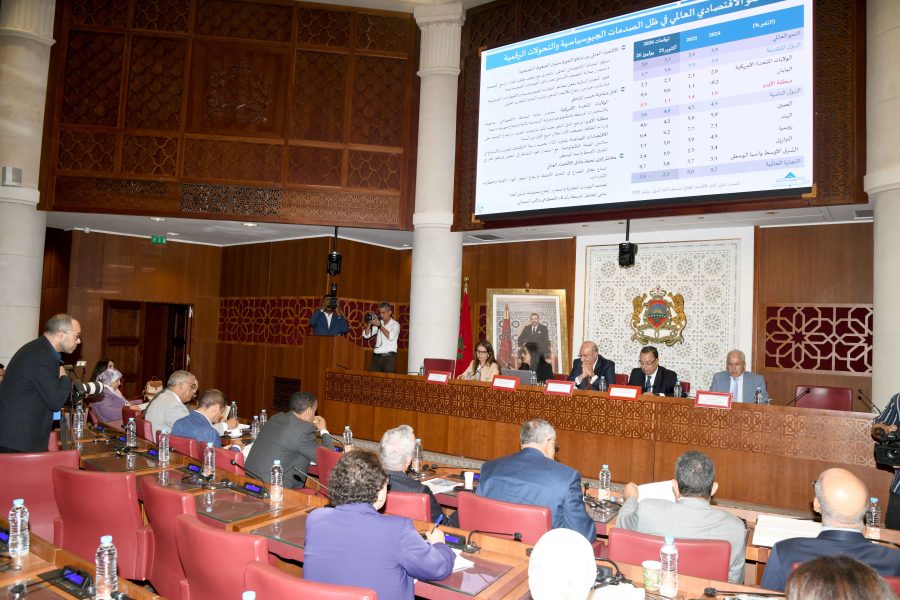
231 amendments to the first part of the 2025 Finance Bill (PLF) were presented today to the Finance, Economic Development, and Planning Committee of the House of Councillors.
The report, presented on Wednesday during a plenary session, revealed that 66 amendments were accepted, 55 were rejected, and 110 were withdrawn.
The proposed amendments primarily focused on the fiscal section, with 177 amendments, followed by the customs section (27 amendments) and 27 other diverse amendments.
The committee began reviewing the first part of the 2025 PLF on November 19, holding seven meetings.
The first part of the bill was adopted by 12 members, with 2 votes against and 1 abstention.
During the general discussion, speakers highlighted the international context of uncertainty, geopolitical tensions, and disruptions, which have led to rising global inflation, higher commodity prices, and disruptions to production chains.
They also discussed the challenging national context, marked by low cereal production due to successive droughts, the impact of the Covid-19 crisis, soaring energy prices, and the aftermath of the Al Haouz earthquake and floods in southeastern Morocco.
The report notes that debates revealed differences over key assumptions in the 2025 PLF, such as growth rate, inflation, budget deficit, butane price, foreign demand (excluding phosphates), and cereal production.
Some viewed these assumptions as optimistic but achievable despite global uncertainty and climate challenges, while others deemed them unrealistic and overly optimistic, contradicting national and international reports.
On the financial front, the report emphasized that the project aims to strengthen national financial sovereignty and continues the reform of public establishments and enterprises (EEP).
It also calls for a reevaluation of fiscal and monetary policies, warning that excessive reliance on debt to finance large-scale projects could increase the budget deficit—projected at 4.5% of GDP in 2025—and raise public debt to 75% of GDP.






add your comment
Terms of publication : Not to offend the writer, people, sacred things, or attack religions or the divine self, and refrain from racist incitement and insults.