Algeria’s recent efforts to leverage the Palestinian issue in the context of the Moroccan Sahara dispute have drawn sharp criticism, as Morocco continues to assert its role as a defender of Palestinian rights while advancing its position on the international stage.
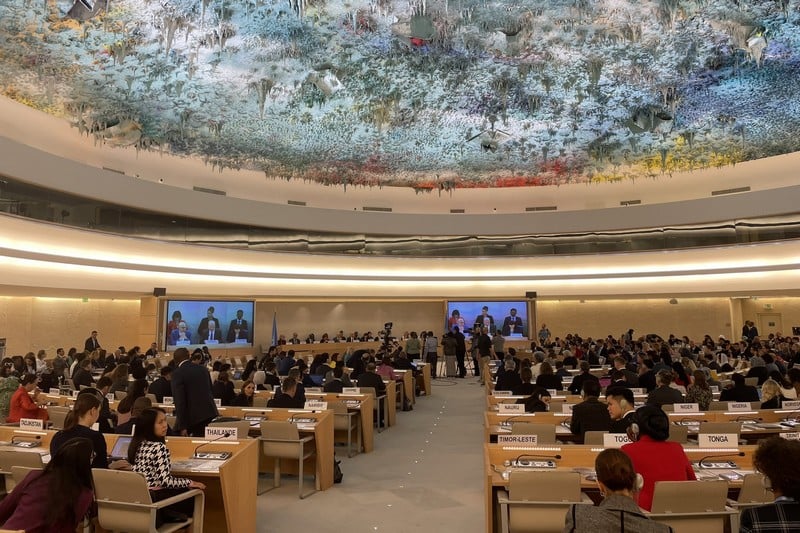
The controversy emerged during the 57th regular session of the Human Rights Council (HRC) at the United Nations in Geneva, where Algeria and South Africa organized a seminar on “occupation and the right to self-determination.” The seminar drew criticism for its attempts to compare the Moroccan Sahara conflict with the Israeli occupation of Palestinian territories.
The event, part of the so-called “Friends of the Sahara” group, sought to exploit the Palestinian cause to further its agenda against Morocco. However, the session faced significant backlash from Moroccan and Palestinian representatives alike.
Aicha Douaihi, a Moroccan human rights activist and president of the Geneva International Observatory for Human Rights, condemned the comparative approach, stating, “This approach is completely unsound, and such comparisons cannot be made, as they differ in basis, content, and form.”
Douaihi criticized the meeting as a politicization of the Palestinian issue, diverging from the focus that should have been maintained within the Human Rights Council.
The Moroccan government, under the chairmanship of the Al-Quds Committee, has been lauded for its steadfast defense of Palestinian rights. Nasser Bourita, Morocco’s Minister of Foreign Affairs, criticized the politicization of human rights issues at the HRC, asserting that “the Human Rights Council, which was created to limit politicization, selectivity, and double standards, is witnessing an attempt to distort issues from their objectives to serve unrelated agendas.”
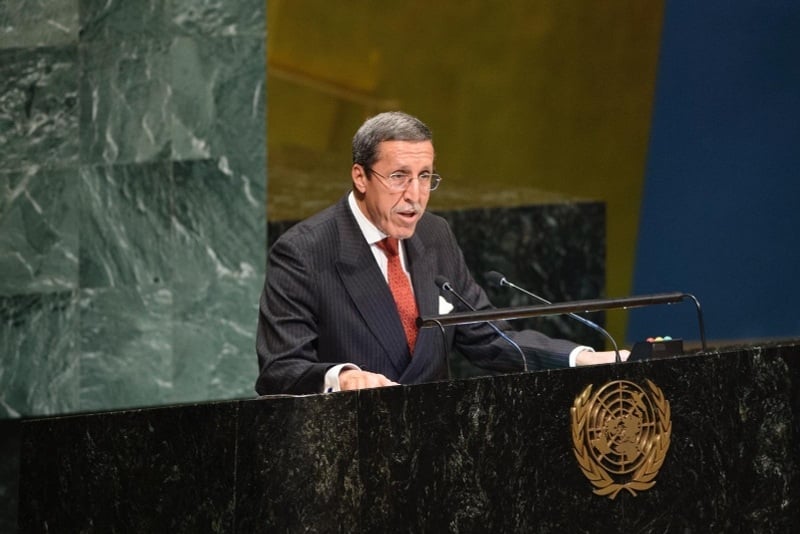
Omar Zniber, Morocco’s Ambassador and Permanent Representative to the United Nations Office in Geneva and the current President of the HRC, further exposed the shortcomings of the seminar. In an interview with Hespress, Zniber detailed how the “Geneva Sahara Support Group,” led by Algeria and South Africa, misled participants by initially presenting the seminar as a discussion on Palestinian developments.
According to Zniber, attendees, including the Palestinian ambassador, were dismayed to find the discussion had shifted to the Moroccan Sahara issue, leading to their departure in protest.
Zniber underscored that such workshops organized by Morocco’s adversaries are ineffective and lack impact on the Council’s work. He noted that these sessions, which have been a recurring feature for years, attempt to exploit the HRC as a platform for their agendas but fail to achieve significant outcomes.
“These workshops have been organized for decades to exploit the Council, but those concerned have failed miserably,” Zniber said.
Moreover, Zniber criticized some countries behind the seminar for their own human rights violations, pointing out that Morocco has made significant strides in developing its human rights institutions. He emphasized that the Sahara issue has not been on the HRC’s agenda or in its resolutions and reports for years, highlighting the disconnect between the seminar’s claims and the realities of international diplomacy.
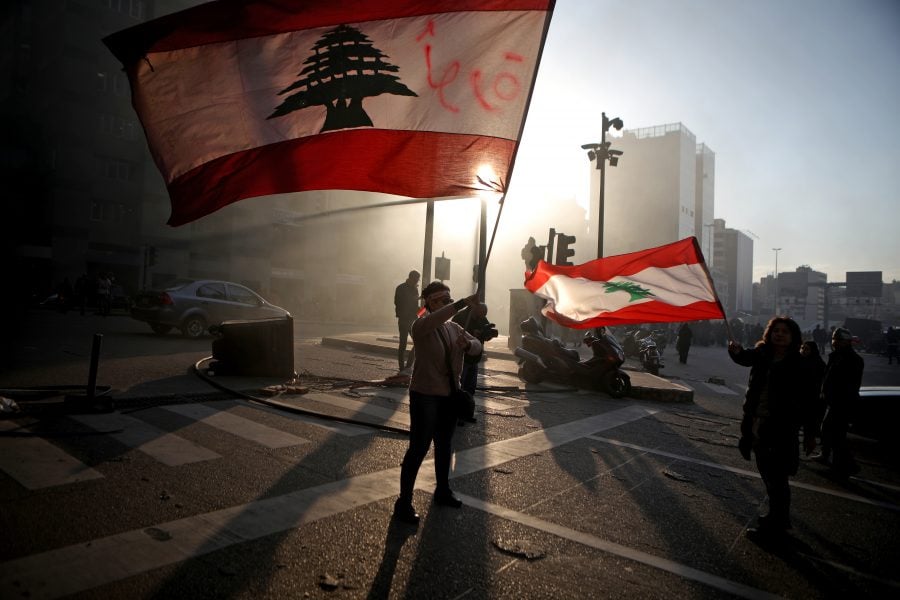
In contrast to the contentious seminar, Morocco has maintained a position of strong support for the Palestinian cause, evident in the mass demonstrations within Morocco against Israeli actions in Gaza.
This stands in stark contrast to Algeria, which has reportedly banned solidarity marches in its own streets, raising questions about its genuine commitment to the Palestinian issue.
Morocco continues to navigate such Algerian international hostilities, while maintaining its role in defending Palestinian rights and advancing its own diplomatic interests, most notably its territorial integrity, which remains the corner stone of its foreign policy.



– **Settlements and Migration**: One of the key differences is that the Israeli-Palestinian conflict involves the building of Jewish settlements on occupied Palestinian land, which has led to the displacement of Palestinians and demographic changes in the region. In Western Sahara, there is no similar process of settlement building, nor forced displacement or migration of Moroccan people to new lands. Morocco aims to develop the region and improve its infrastructure.
– **Armed Resistance**: The Palestinian issue is characterized by the presence of armed resistance and movements such as Hamas and Islamic Jihad, which oppose the Israeli occupation. In Western Sahara, there is no active resistance comparable to the Moroccan presence, and the violent actions or resistance carried out by the Polisario Front have significantly diminished in recent decades.
– **International Recognition**: In the case of Western Sahara, there is increasing recognition