
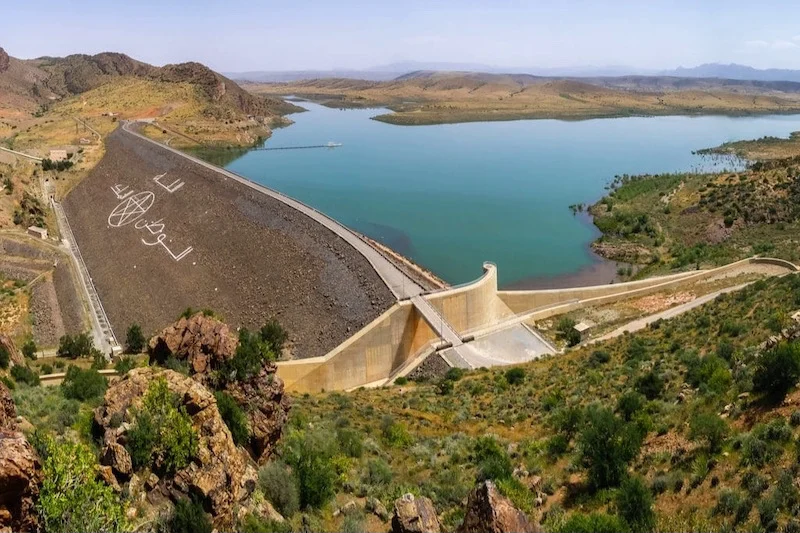
Morocco has launched an ambitious project to construct 16 new dams, aiming to increase the country’s water storage capacity by 5 billion cubic meters.
This initiative highlights the severe water shortage Morocco currently faces. Nizar Baraka, Minister of Water and Equipment, reported that only 600 cubic meters of water is available per capita, with 51% of these resources concentrated in just 7% of the country’s twelve regions.
The large-scale project, costing billions of dirhams, underscores the critical role of dams in Morocco’s economic and social development. The new dams are designed to secure a stable water supply during droughts, support industrial activity, and meet domestic needs.
Strategically located across various regions, the dams will also sustain agricultural irrigation. Agriculture, which contributes 14% to the national GDP, has been severely impacted by a sixth consecutive year of drought.
Key projects include the Kheng Grou dam in Figuig province, expected to be completed by 2026 with a capacity of 1.07 billion cubic meters. In Taounate province, the Ratba dam, with a planned capacity of 1.009 billion cubic meters, is scheduled for completion by 2028.
Additionally, the storage capacity of the Mohammed V dam, located between Taourirt and Nador, will be increased to 980 million cubic meters. The Targa Ou Madi dam in Guercif will reach a capacity of 287 million cubic meters, while the Mokhtar Soussi dam in Taroudant province will expand to 280 million cubic meters. All three projects are set to be finished by 2026, with a combined investment of 4.929 billion dirhams.
Currently, Morocco’s existing dams are filled to only 27.52% of their capacity, with some, including the Al Massira dam, the country’s second-largest, approaching near depletion.








add your comment
Terms of publication : Not to offend the writer, people, sacred things, or attack religions or the divine self, and refrain from racist incitement and insults.