
Hassan El Hemer has made it his job to scavenge leftover wood from dying olive trees in Kalaat Sraghna, Morocco’s top olive-producing region hit hardest by drought- for the farmers, the wood is trash, but for him, it’s a market he’s one of the few in Morocco to tap into.
El Hemer is in the business of biochar, a charcoal-like product made from transforming waste wood through a process called pyrolysis.
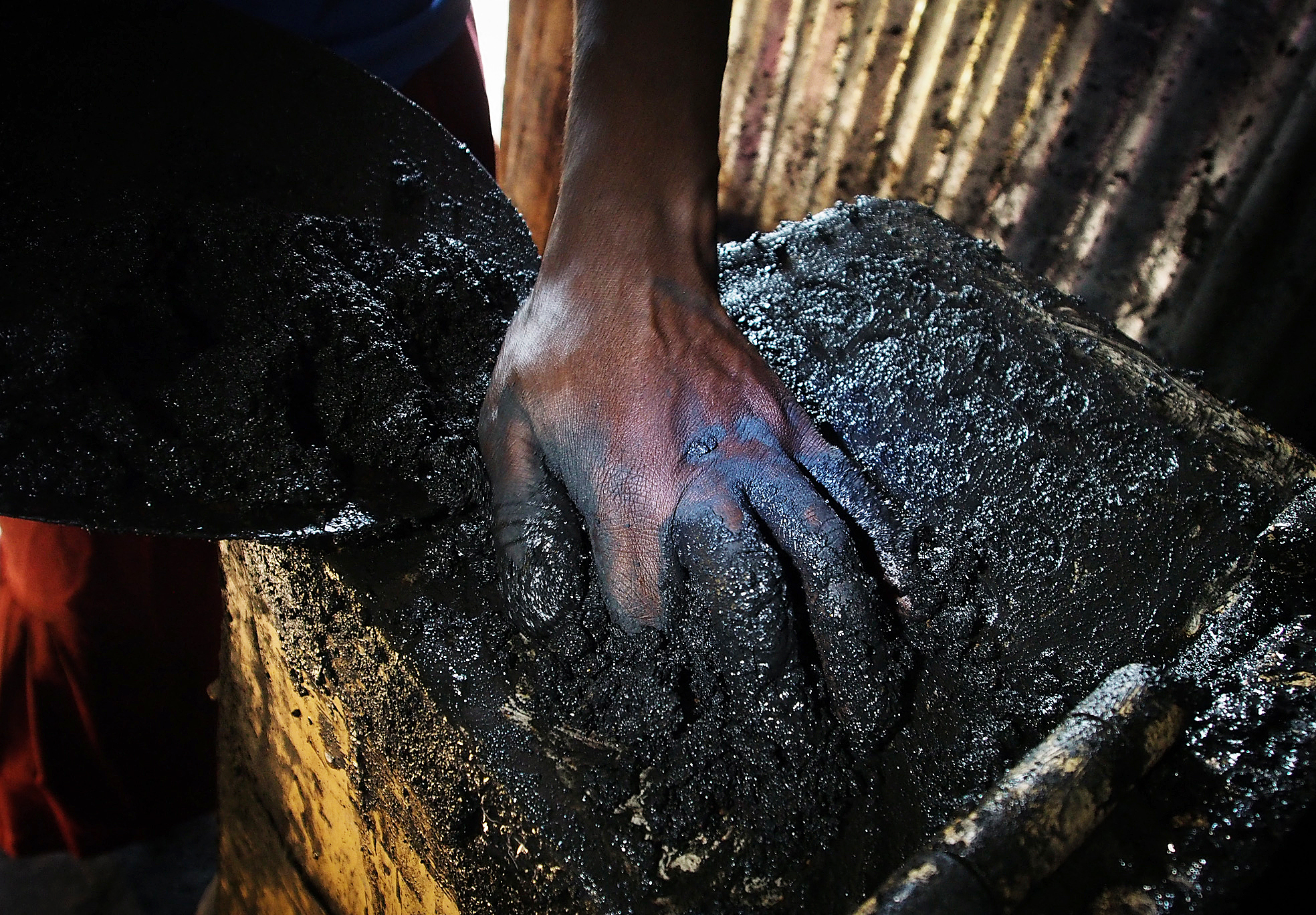
When applied to soil, biochar improves water retention, nutrient cycling, and soil structure, ultimately increasing crop yields, trapping carbon, and reducing the need for chemical inputs.
“Biochar promotes a circular economy by transforming agricultural waste, which was previously burned, into a value-added product that farmers can use themselves,” emphasized Abdelaziz Baçaoui, a university professor in Marrakech specializing in waste valorization, in a statement to Hespress EN.
Biochar also has potential applications in water purification, odor control, livestock feed supplementation, and even as a component in building materials and energy storage systems.
“By buying this waste from farmers at a fair price, Biochar Maroc not only cleans up their land but also provides them with a lifeline,” explains El Hemer, founder of Biochar Maroc. “With these funds, they can invest in new seedlings, drill deeper wells, and rebuild their farms.”
Unprecedented drought conditions in Kelaa Sraghna over the past four years have resulted in the catastrophic loss of olive trees,
Once the business scales up, El Hemer plans to extend his operation across Morocco. But for now, his main clientele are researchers and scientists investigating biochar’s applications in water filtration and soil improvement.
His company, which also designs and builds biochar machines tailored to local conditions, benefits its operations and presents a potential business opportunity for others, like Ismail Jebbour, an expert in green hydrogen and biochar who is exploring the possibility of importing a biochar production machine.
His project aims to produce biochar primarily from dead date palm trees in the region of Errachidia and Ouarzazate, but operations have yet to begin.
They are now seeking a Swiss NGO with expertise in carbon management to partner on this initiative.
Morocco’s over five million palm trees generate a massive amount of underutilized date palm waste, typically burned or discarded, “despite its potential to be transformed into valuable biochar,” Jebbour said.
They can produce organic manure through composting and biochar via pyrolysis by repurposing excess palm residues in this region. According to research, both compost and biochar have the potential to revitalize Tafilalet’s oasis soils, which are notably lacking in organic matter.
Jebbour and his team conducted a study in Morocco’s Tafilalet region to enhance the sustainability of date palm cultivation.
The research addressed challenges such as the fungal disease of date palms, the underutilization of by-products, and palm grove fires.
The findings, which Hespress EN reviewed, revealed that “62% of the 52,400 tonnes produced yearly is abandoned or burned. This mismanagement leads to disease spread, pest issues, and fires, resulting in significant income loss for farmers.
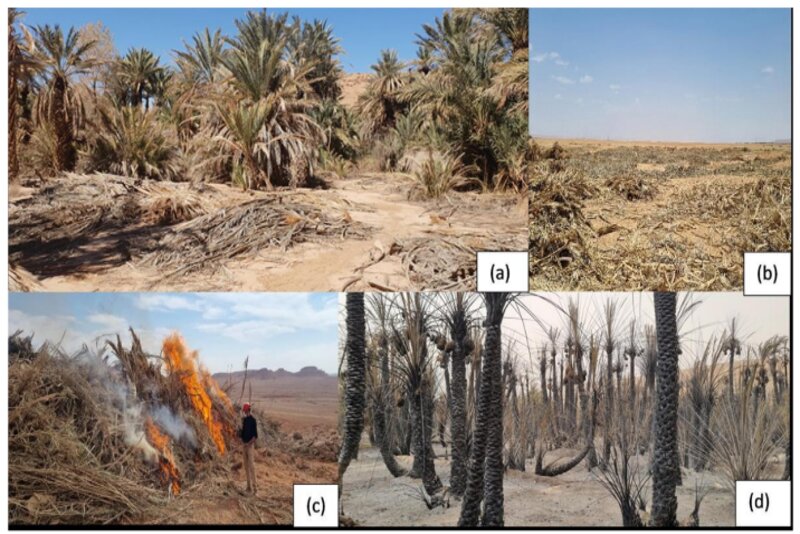
To address this, the team proposed promoting agronomic valorization projects for residual biomass. This includes the production of biochar and compost to compensate for the dearth of organic matter in Tafilalet oases, thereby enhancing the soil’s physical, chemical, and biological qualities.
“Morocco lags in implementing biochar-related policies and requires additional training and resources,” Jebbour said.
The government has yet to fully recognize biochar’s potential.
University professor Baçaoui explained to Hespress EN how biochar aligns with the strategic objectives of both the Ministry of Agriculture and the Ministry of Energy, even though it is not explicitly mentioned in these plans.
He also emphasized its role in job creation, increased farmer income, and the promotion of sustainable agriculture.
However, some, like Jebbour, caution that increased interest in biochar could inadvertently lead to deforestation. People might resort to cutting down trees to produce biochar, undermining the very goal of carbon sequestration.
Baçaoui countered these concerns by explaining that their research focuses on producing biochar not solely from trees but also from agricultural residues and organic waste.
This approach, he emphasized, eliminates the risk of deforestation.
Baçaoui, who is also working on a biochar project, aims to utilize the biochar produced to support afforestation efforts in Tiguit, Azilal province.
“We will employ biochar to foster forest development, produce green charcoal, and mitigate forest degradation,” he disclosed. The professor added that this project, alongside another initiative in Ait Mohammed, is slated for a September 2024 launch, with unit installations currently underway in both locations.
Research has consistently shown that biochar significantly enhances crop productivity.

Research has also found that biochar is one of a variety of carbon removal methods aimed at reducing carbon dioxide (CO2), the primary greenhouse gas contributing to global warming due to human activities.
Simply put, plants absorb CO2 from the atmosphere and use the carbon to form their tissues, producing biomass. When plants die and decompose, this carbon is typically released back into the air.
Instead of letting unused agricultural residues decompose and emit CO2, pyrolysis converts about half of this carbon into a stable form called biochar, which can remain stored in the soil for extended periods.
This process effectively turns plants into a mechanism for carbon removal, capturing CO2 from the atmosphere and sequestering it in the ground.
Biochar production also mitigates emissions of other potent greenhouse gases, including methane and nitrous oxide.
Research indicates that large-scale biochar development could potentially offset a substantial portion – at least 12% – of anthropogenic greenhouse gas emissions annually. With a carbon sequestration potential equivalent to approximately 2.7 tons of CO2 per ton of biochar.
Biochar is a durable and effective carbon sink because it can store carbon in the soil for millennia.






add your comment
Terms of publication : Not to offend the writer, people, sacred things, or attack religions or the divine self, and refrain from racist incitement and insults.