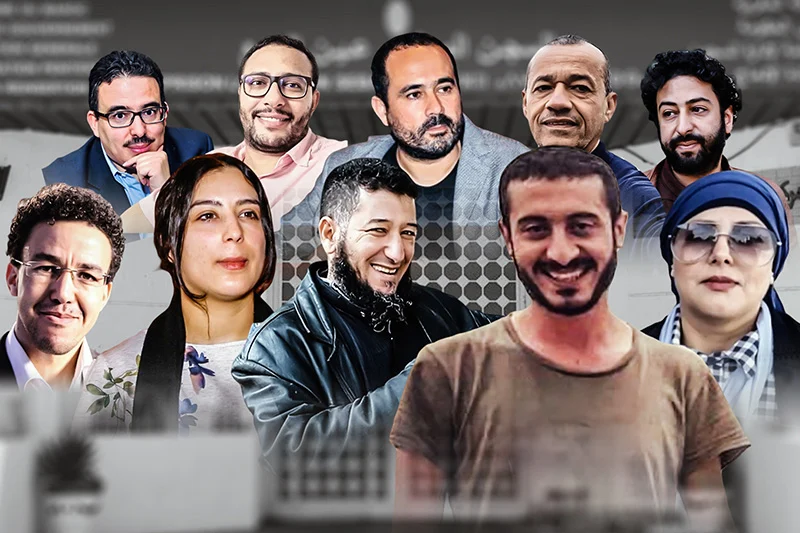
King Mohammed VI’s recent announcement of a royal pardon, coinciding with the annual Throne Day celebrations, has ignited a wave of joy and relief across Morocco.
The decision to pardon 2,476 individuals has been met with widespread approval from all segments of Moroccan society.
Former Minister of Justice El Mostapha Ramid expressed his gratitude for the King’s decision, stating, “Thank God first, then to His Majesty the King, may God preserve him and exalt his status.”
Ramid described the pardon as a long-awaited moment for some and an unexpected surprise for others.
The former minister added, “It is the right of His Majesty’s admirers, and I am one of them, to be proud of his wisdom. It is the duty of others to acknowledge his sagacity.”
Former head of government Saad Dine El Othmani expressed his immense joy at the release of Toufik Bouachrine, Omar Radi, Soulaimane Raissouni, and activists Reda Taoujni and Youssef Lhirech, who had served varying lengths of prison sentences.
“The royal pardon, on the occasion of #ThroneDay, also extended to 16 individuals convicted under anti-terrorism laws. It is a great national holiday that brings joy to human rights defenders and all patriots. First, all praise is due to God, and thanks to His Majesty the King, may God protect him,” added El Otmani
Amina Maelainine, a member of the General Secretariat of the Justice and Development Party, welcomed the royal decision, describing it as a positive sign for the future. She expressed hope that the pardon would lead to a new era of unity and reconciliation in Morocco.
“This is a remarkable historic day, marked by a clear royal signal that we hope everyone will heed, to embrace wisdom and prudence and to reject divisive and hateful practices,” she said.
Mohamed Nabil Benabdallah, Secretary-General of the Socialist Union of Popular Forces, praised the royal initiative as a strong signal of the King’s commitment to human rights and democratic reforms.
He expressed his gratitude for the King’s responsiveness to the calls of democratic and human rights forces.
“The Moroccan people are experiencing an outpouring of celebration on the occasion of the Throne Day and the passage of 25 years filled with achievements under His Majesty’s rule,” said Benabdallah, adding, “Our aspiration will always be, under His Majesty King Mohammed VI, towards a Morocco with a brighter tomorrow, characterized by development, democracy, and the expansion of freedoms and human rights.”
Abelkebir Khchichne, the president of the Moroccan Journalists’ Union and a prominent human rights defender, said that the royal pardon, which extended to journalists and activists, is a significant humanitarian gesture and a clear signal of the government’s commitment to reform.
“This move will help restore the dignity of the profession and promote higher standards of journalism,” Khchichne said.
The president added that this pardon aligns with Morocco’s broader reform agenda and reflects its positive engagement with the international human rights community.
“The Moroccan Journalists’ Union has consistently highlighted the negative impact of the challenges faced by the media sector on our country’s image. It is now our collective responsibility to build on this progress and ensure that journalists have the necessary protections to carry out their work freely and ethically,” said Khchichne.
Fatima Zahra Chaoui, a lawyer and president of the Moroccan Association Against Violence Against Women, highlighted the significance and symbolism of the royal pardon for individuals convicted of public law offenses.
Chaoui said that the right to pardon is exclusively the King’s, as stipulated in Article 58 of the Constitution, and is not subject to debate.
She added that the importance of the royal pardon lies in the fact that it does not imply forgetting the rights of others, nor does it confirm the innocence of any convict in cases related to public law.
Furthermore, she stated, “We affirm our appreciation for the royal pardon. As a human rights organization, we advocate for freedom as a fundamental human right and cannot wish for anyone to be deprived of it.’






add your comment
Terms of publication : Not to offend the writer, people, sacred things, or attack religions or the divine self, and refrain from racist incitement and insults.