
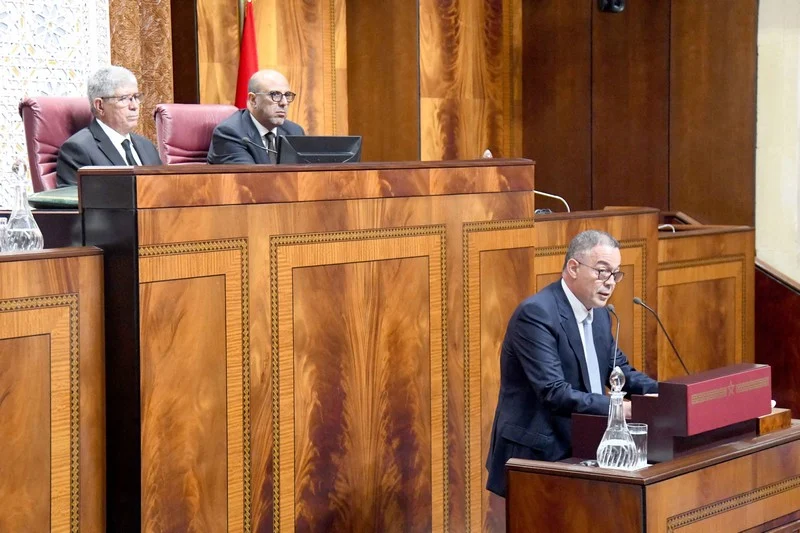
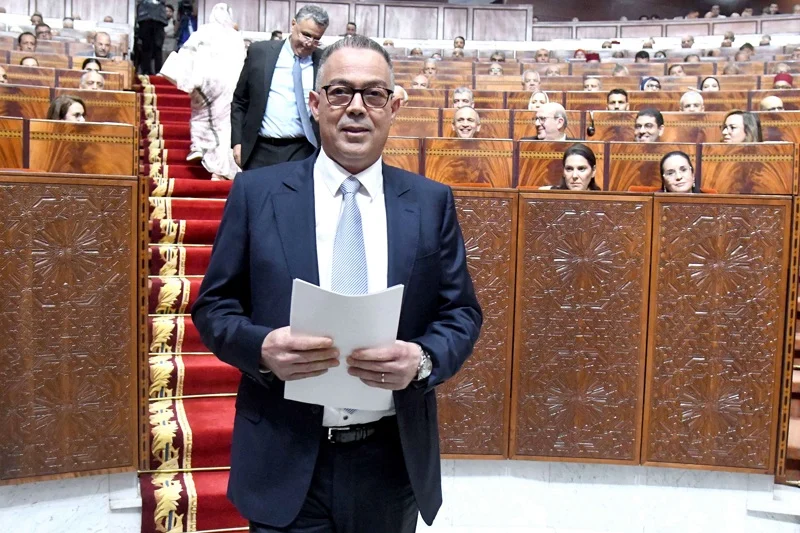
During a session with parliamentary advisors on Tuesday evening, Faouzi Lekjaa, the Minister Delegate to the Minister of Economy and Finance overseeing the budget, provided updates on Morocco’s tax reforms, highlighting significant milestones and future initiatives.
Lekjaa reported that income tax collection at source has reached 78%, with the remainder reliant on voluntary payments by individuals for outstanding levies. He underscored that this progress is part of a comprehensive reform process initiated since the 1980s, culminating in the approval of a framework law in 2021 following extensive debates in 2019.
“The essence of our tax reform strategy is to broaden the tax base, alleviate tax burdens, and combat various forms of tax fraud and evasion,” Lekjaa emphasized. Looking ahead to 2024, he outlined ongoing reforms in value-added tax (VAT) and continued efforts in withholding tax at source. The Minister Delegate credited recent measures targeting corporate tax, income tax, and VAT for expanding the tax base while maintaining sustainable revenue growth.
Responding to concerns raised by parliamentary advisors, Lekjaa acknowledged the high income tax rate in Morocco, currently at 22% with exemptions for many wage earners who do not meet taxable income thresholds.
“In collaboration with social partners, the government is preparing revisions to the income tax regime in the upcoming draft law to reduce the burden on wage earners, particularly in the public and private sectors,” he stated. This revision aims to streamline tax declaration processes, promoting efficiency and equity among taxpayers.
Said Chaker, a parliamentary advisor from the Social Justice Group, highlighted concerns over income tax levels, advocating for a reduction to a maximum of 30% to support the middle class and address disparities. Lekjaa responded by reaffirming exemptions for farmers earning below five million dirhams annually, while emphasizing the government’s commitment to fair taxation principles.
Lekjaa also addressed progress in social protection initiatives, noting that since its launch, the direct social support program has disbursed 17.5 billion dirhams to 3.8 million families by July this year. He underscored the program’s role in advancing social welfare as part of a broader agenda set by the framework law.
Looking forward, Lekjaa assured advisors of the government’s commitment to sustaining social programs through fiscal measures outlined in the current finance law, with plans to review and optimize these initiatives in the coming year.








add your comment
Terms of publication : Not to offend the writer, people, sacred things, or attack religions or the divine self, and refrain from racist incitement and insults.