
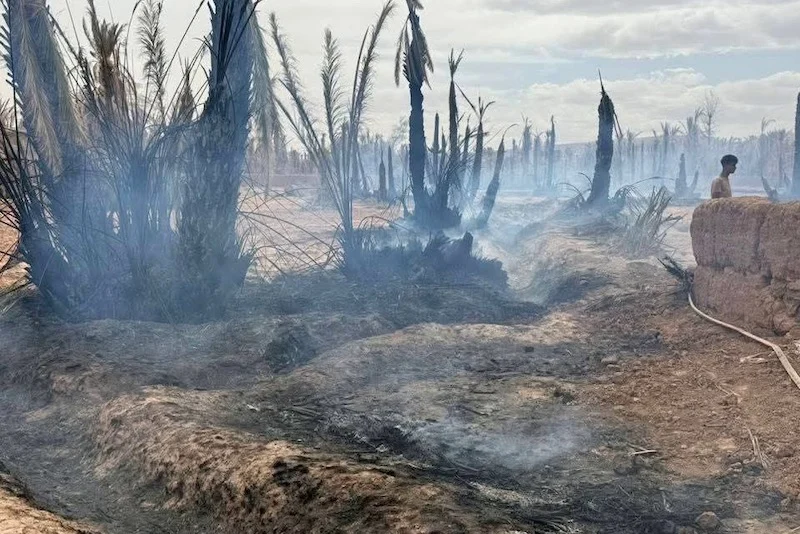
Between 2009 and June 2024, 2,393 fires ravaged vital ecosystems, leaving behind a trail of destruction that claimed over 172,000 palm trees across an area of 1,423 hectares, according to the National Agency for the Development of Oasis Zones and Argan Tree (ANDZOA),
The provinces of Tata, Errachidia, and Guelmim are the most affected by this devastation, accounting for 82% of the total burned areas, and each fire on average scorches 0.6 hectares and decimates around 72 palm trees, highlighting the devastating impact of these blazes on the region’s delicate ecology.
Despite the grim situation, hope emerges from the palm trees’ remarkable resilience, and studies indicate that approximately 83% of burned palm trees recover.
The ANDZOA has constructed three fire prevention units, established over 100 equipped watchtowers, and deployed 45 rapid response teams.
Additionally, ANDZOA is working closely with local communities to raise awareness and foster a culture of fire prevention.
These measures, however, must be complemented by broader strategies that address the underlying factors contributing to the fires, such as climate change, shifting local practices, and inadequate infrastructure, and how they all play a role in exacerbating the fire risk.
The preservation of Morocco’s oases extends beyond environmental concerns. These ecosystems are deeply intertwined with the region’s cultural heritage and economic well-being, and palm cultivation forms the backbone of many oasis communities, providing livelihoods and sustenance.
Sustainable land management practices and economic diversification initiatives can help ensure the long-term viability of these precious ecosystems.






add your comment
Terms of publication : Not to offend the writer, people, sacred things, or attack religions or the divine self, and refrain from racist incitement and insults.