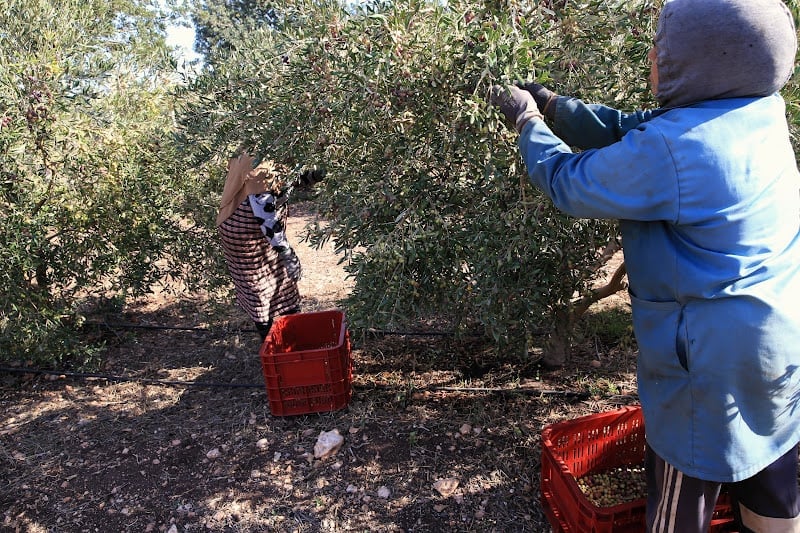
With drought becoming a structural factor in the Kingdom, olive cultivation in a number of regions is on the verge of becoming another “victim” of this climatic factor.
This comes as farmers find themselves facing an unprecedented situation as the olive harvest approaches in October, which could reduce overall olive production for the current agricultural season.
In the case of the Sraghna region, the situation has been deemed catastrophic this year due to the cut-off of water from the nearby dams.
This is attributed to factors related to the reservoir filling levels, affecting a number of farms that lack adequate private wells and rely heavily on water provided by the region’s dam infrastructure.
However, the impact has been less severe for farmers who have access to private water facilities.
Farmers in the region are reporting losses exceeding 60% of their production, “which will have a significant cost on the regional economy as a whole and increase the likelihood of them completely abandoning the activity.”
This is because achieving profitability has become difficult in the face of challenging climatic conditions and the scarcity of water resources. This, they warn, “heralds a reduced olive harvest this year, leading to higher prices.”
According to the farmers who spoke to Hespress Ar, “the fate of thousands of olive trees that were damaged this year will be to be used as firewood and sold at low prices, marking the region’s gradual disengagement from this activity.”
For this reason, professional call for exploring ways to save these areas from the crisis caused by the decline in the water levels of the Ait Adel and Sidi Idris dams, which had been providing the water resources needed for local agriculture.”
The Sraghna province remains one of the leading producers of olives and olive derivatives, with olive trees covering an area of up to 60,500 hectares of the province’s land.
This contributes to an annual production of between 60,000 and 230,000 tons, representing approximately 28% of national production.
However, units linked to this activity have been shutting down in recent years due to a decline in production in the region.
Abdelatif Ouled Hamadi, a farmer in the eastern Zemrane region of the Sraghna province, stated that “what is happening today in the region is catastrophic after it became clear that olive cultivation, which is the backbone of the region’s economic development and the sole provider for families there, has been affected by damage at unofficial rates exceeding 60%,” considering that the percentage “precisely exceeds that.”
Ouled Hamadi told Hespress Ar that “the damage was particularly severe for those who relied primarily on water from local dams, which have been inactive for over four months.”
The farmer explained that “while their return this week came too late to salvage the situation,” he added, “drilling activity remains completely ineffective given that the region’s water table is nearing depletion.”
Ouled Hamadi pointed out that “even olive traders this year have found it extremely difficult to source olives, unlike in the past.”
He added “there is talk today of record-breaking purchase prices at the tree level, which bodes ill for the scarcity of olives and their oil in the domestic market in the coming periods,” considering that “the fate of all olive trees affected by this climate catastrophe is the market to be sold as firewood.”
Abdel Salam Al-Qadiri, another farmer, confirmed that “what the region is experiencing is unprecedented after olive cultivation has been affected by more than 60%.”
“Some of us are now resorting to selling the wood of this crop to bakery and bathhouse owners after it has become unprofitable and can no longer yield fruit with the arrival of the harvest season,” he added.
The farmer explained that “the groundwater table is still at its lowest level today, as wells need to be dug to a depth of over 100 meters to find enough water to support the needs of olive trees, which always require abundant water.”
Al-Qadiri highlighted, “this situation is widespread across the entire Sraghna province, which is considered one of the most important olive producers in the kingdom.”
He concluded by saying, “Moroccans will be facing record price increases for olive oil in the coming months, a staple that is never absent from Moroccan tables.”






add your comment
Terms of publication : Not to offend the writer, people, sacred things, or attack religions or the divine self, and refrain from racist incitement and insults.