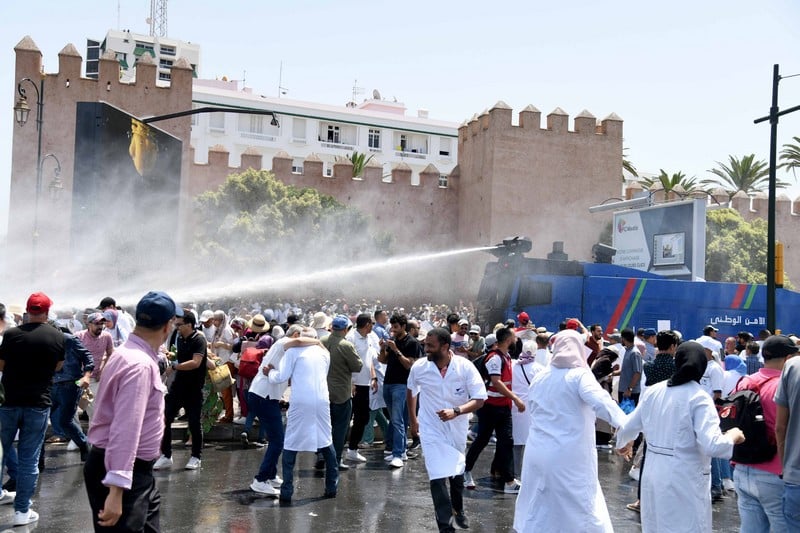
Despite multiple rounds of negotiations, congestion in Morocco’s health sector continues to escalate, prompting forceful responses from authorities attempting to quell demonstrations by medical and health professionals demanding the respect of signed and anticipated agreements.
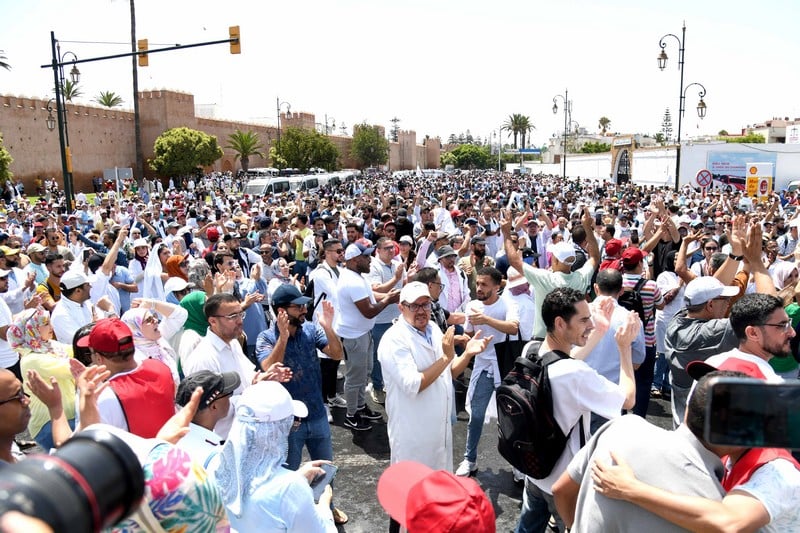
In an escalation of tensions, medical professionals staged a sit-in today in front of parliament in Rabat, protesting the government’s handling of working conditions and unfulfilled promises.
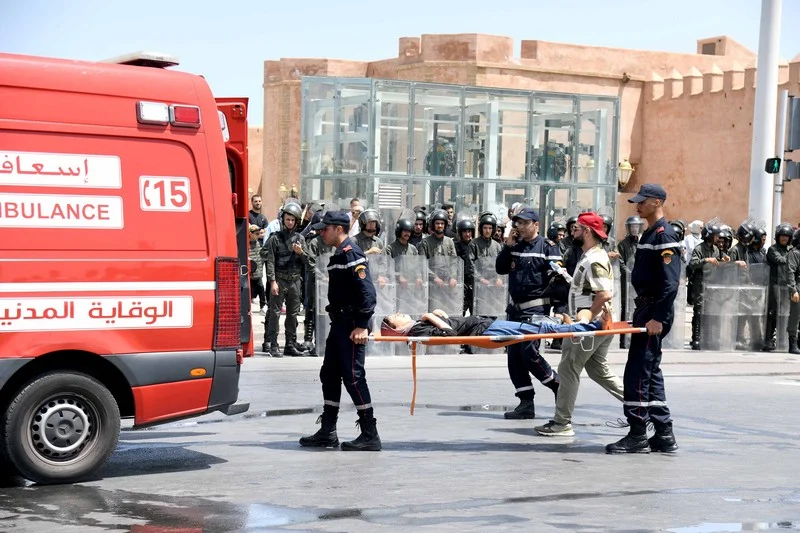
The peaceful demonstration turned turbulent as law enforcement deployed water cannons, batons, and verbal confrontations to disperse the gathering. Videos of the clashes quickly circulated on social media, sparking widespread public outrage.
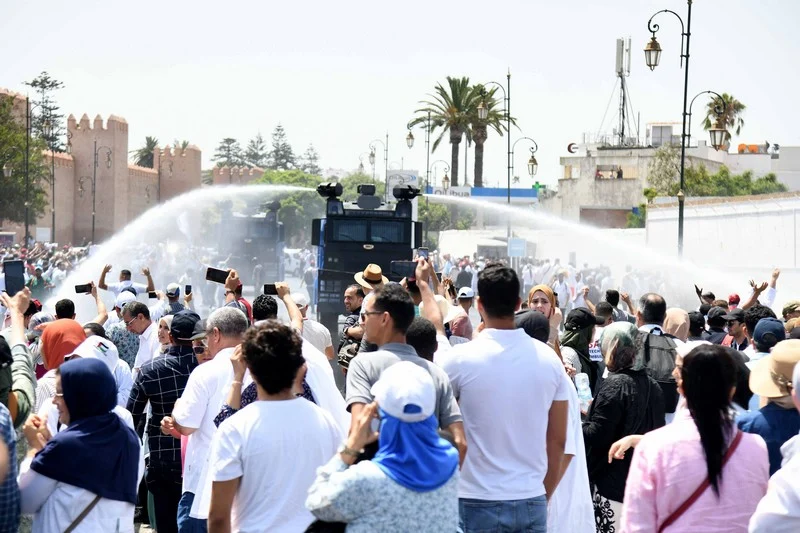
The intervention led to a number of injuries among the protesters, who insisted on carrying out their protest despite the authorities’ notification that the march was unauthorized, which inflamed the situation and led to skirmishes between security personnel and angry doctors and health sector employees.
Authorities resorted to using water cannons to disperse the protesters, which led to injuries among a number of women participating in the demonstration.
The angry protesters chanted slogans denouncing the “excessive use of force,” which led to a number of injuries among the protesters. Protestors threw water bottles during the intervention, as the atmosphere seemed charged and the march, which was scheduled to head towards the parliament building, was prevented.
The angry protesters singled out Health Minister Khaled Ait Taleb for criticism and slogans calling for his departure, accusing him of failing to manage the sector.
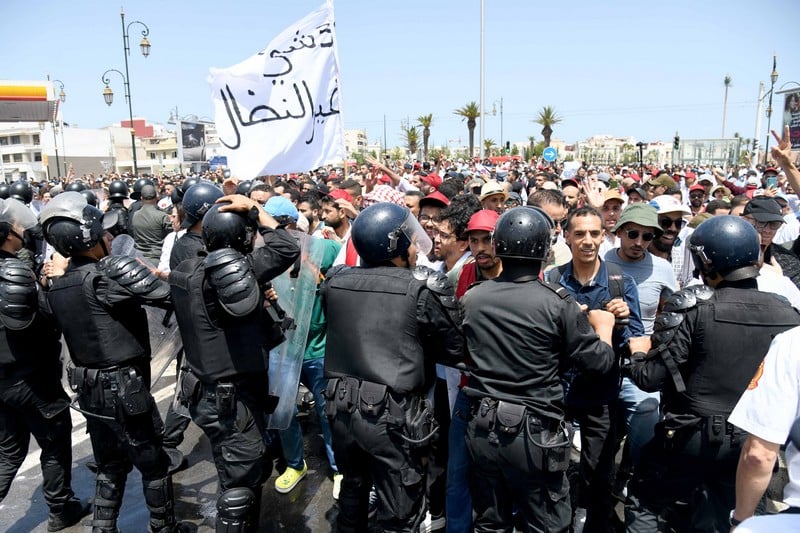
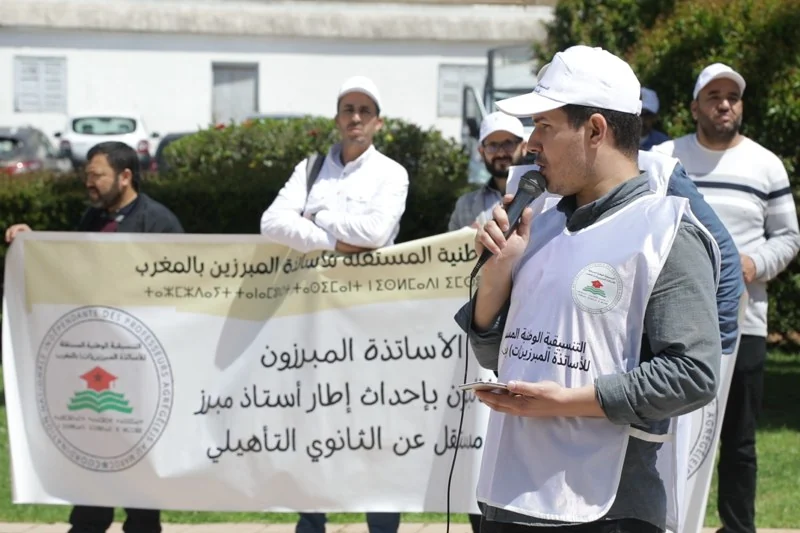
The National Coordination of Health Sector Unions, made up of the eight unions represented by the Ministry of Health and Social Protection, had called for a national march for health workers, which was scheduled to start from Bab al-Hed Square towards the parliament, to protest the government’s handling of health professionals’ demands and its failure to implement agreements signed after long negotiations with a government committee, a march that was prevented.
Sectoral protests
Health professionals are not alone in their protests. Morocco’s medical faculties also remain embroiled in a prolonged crisis for over six months, as students continue to boycott courses, internships, and exams in protest.
Efforts by the government to resolve the crisis suffered a setback when students overwhelmingly boycotted spring exams on June 26, with participation rates plummeting to just 1%, underscoring their rejection of proposed reforms.

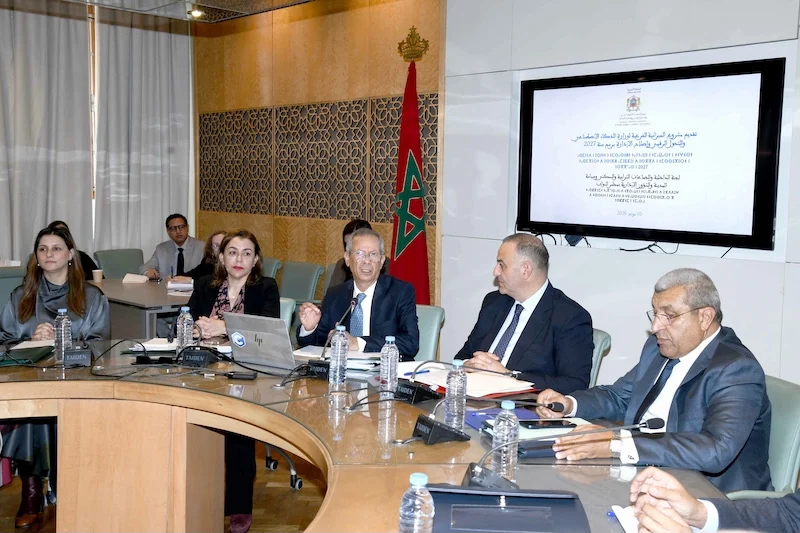
After a prolonged period of silence, Ministers Abdellatif Miraoui of Higher Education, Scientific Research, and Innovation, and Khalid Ait Taleb of Health and Social Protection, emerged to address the escalating unrest. Speaking before joint social sector and culture commissions, Ait Taleb acknowledged a breakdown in communication that eroded trust between students and the government.
“We urge students to engage constructively with the reform efforts,” Ait Taleb urged. “As educators, we are committed to ensuring the quality of their training and have addressed concerns regarding internships. The proposed 4+2 system will only apply to new students.”
Ait Taleb emphasized the government’s willingness to address students’ immediate concerns, promising to remove failing grades and reinstate expelled students. He assured flexibility in exam scheduling, with deans empowered to accommodate student needs.
“The reforms are responsive to current healthcare demands and align with global advancements in medicine,” Ait Taleb argued. “We need students to trust the process and resume their studies.”
Highlighting the urgency of the situation, Ait Taleb appealed for students’ cooperation to prevent further disruption to academic calendars and professional aspirations. He emphasized the government’s commitment to fostering a new generation of healthcare leaders who can meet both domestic and international demands.
In response to the government’s perceived inaction, the National Coordination of Medical Students (CNEM) outlined a series of nationwide protests across medical faculties, starting with a local rally in Rabat on July 7 and culminating in demonstrations in cities including Agadir, Marrakech, Tangier, Casablanca, Fez, and Oujda throughout July.
The protests underscore mounting tensions within Morocco’s healthcare sector, with stakeholders calling for renewed dialogue and decisive action to address students’ grievances and safeguard the integrity of medical education.
The government, under Aziz Akhannouch’s leadership, has convened multiple meetings to devise solutions, emphasizing the pivotal role of education in shaping Morocco’s future and international standing.






add your comment
Terms of publication : Not to offend the writer, people, sacred things, or attack religions or the divine self, and refrain from racist incitement and insults.