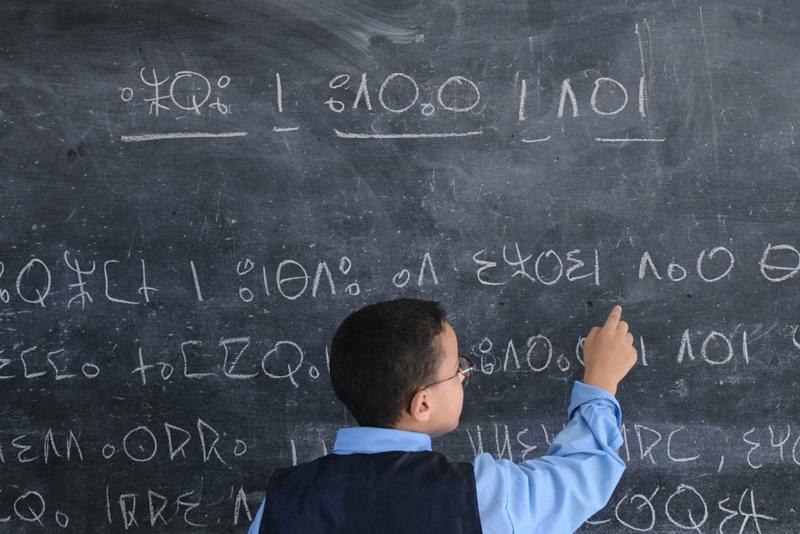
Google Translate announced its largest language expansion ever, adding support for 110 new languages, including Tamazight (Amazigh).
This inclusion marks a significant step towards breaking down communication barriers for Amazigh communities across North Africa.
According to Google’s blog post, Tamazight (Amazigh) is a “Berber” language in North Africa. Although there are many dialects, the written form is generally mutually understandable. It’s written in Latin and Tifinagh, both of which Google Translate supports.”
This is the largest language update in Google Translate’s history, aiming to further the company’s mission to break down language barriers and improve global communication.
The expansion leverages Google’s PaLM 2 large language model, which allows the translation tool to efficiently handle languages with limited data or close relationships, such as Hindi dialects and French creoles.
This builds upon previous efforts, including the 2022 addition of 24 languages via zero-shot machine translation and the ongoing 1,000 Languages Initiative, which aims to develop AI models for the world’s most spoken languages.
The new languages encompass a wide range, from widely spoken languages like Cantonese and Punjabi (Shahmukhi) to lesser-known languages undergoing revitalization efforts, like the Tamazight language (including both Latin and Tifinagh scripts).
Notably, Afar, a tonal language spoken in East Africa, received significant contributions from the volunteer community to facilitate its inclusion.
“Now, we’re using AI to expand the variety of languages we support. Thanks to our PaLM 2 large language model, we’re rolling out 110 new languages to Google Translate, our largest expansion ever,” said Google in a press release.
It is worth noting that in the late 1900s, Morocco had a heated debate over the Amazigh language. Elites disagreed on its written form, with some advocating for an Arabic alphabet adaptation and others preferring the Latin script used by French speakers.
This tug-of-war halted in 2003 thanks to the Royal Moroccan Institute of Amazigh Culture, which embraced the historical Tifinagh script as the official way to write Amazigh.
As of June 27th, Google Translate now supports their language, a big step towards wider communication and cultural exchange.


add your comment
Terms of publication : Not to offend the writer, people, sacred things, or attack religions or the divine self, and refrain from racist incitement and insults.