
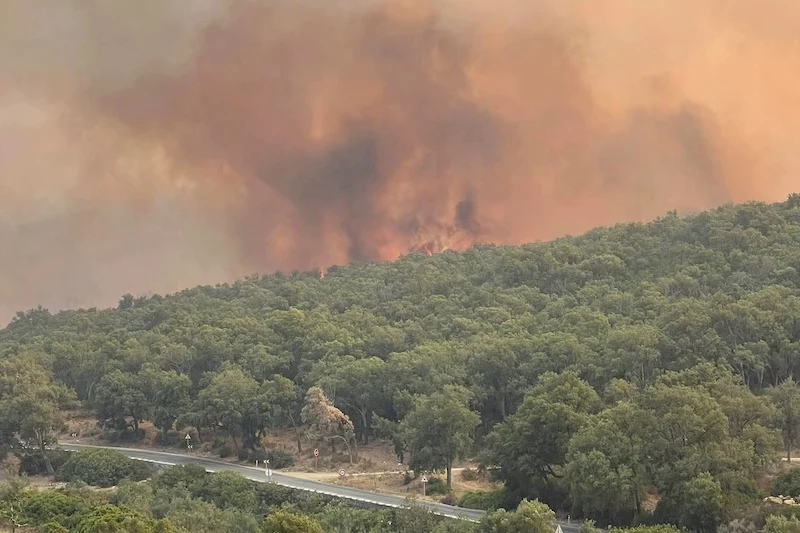
The frequency and intensity of extreme wildfires has more than doubled worldwide over the past two decades as human activity has warmed the planet, said a new study published Monday.
For the first time, researchers were able to plot a global trend for the most destructive types of fires responsible for major economic damage and loss to animal and human life.
The study was published in the journal Nature Ecology & Evolution.
Using satellite records, they studied nearly 3,000 wildfires of tremendous “radiative power” between 2003 to 2023 and established a 2.2-fold increase in their occurrence over that period.
The intensity of the 20 most extreme blazes in each year had also more than doubled — a rate that “appears to be accelerating”, the study said.
“I expected to see some increase, but the rate of increase alarmed me,” said the study’s lead author Calum Cunningham from the University of Tasmania in Australia.
“The effects of climate change are no longer just something of the future. We are now witnessing the manifestation of a drying and heating atmosphere,” he told AFP by email.
The six most extreme years in terms of intensity and frequency of wildfires have occurred since 2017, the study said.
2023 witnessed “the most extreme wildfire intensities” of the period studied.
– ‘Feedback effect’ –
The areas seeing a rise in extreme fires were clustered geographically — notably North America, northern parts of Eurasia, and Australia.
Temperate conifer forests, which cover the western United States, saw an 11-fold increase in extreme fires over the two decades.
Earth’s northermost forests that cover Alaska, Canada and Russia saw a more than seven-fold rise.
The increasingly tinder-dry conditions that fuel massive fires have been linked to a changing climate.
But forests also absorb carbon from the atmosphere and the loss of trees to fire releases that CO2 back into the atmosphere where it contributes to global warming.
This creates a “feedback effect” on the planet, said Cunningham.
“It also blankets large regions in smoke, causing major health effects including many more premature deaths than are caused by the flames themselves,” he said.
The study highlighted “the urgency with which we must adapt to a climate that is more conducive to extreme wildfires”.
Cunningham said that included better forest management at a local level to try and prevent major wildfires.








add your comment
Terms of publication : Not to offend the writer, people, sacred things, or attack religions or the divine self, and refrain from racist incitement and insults.