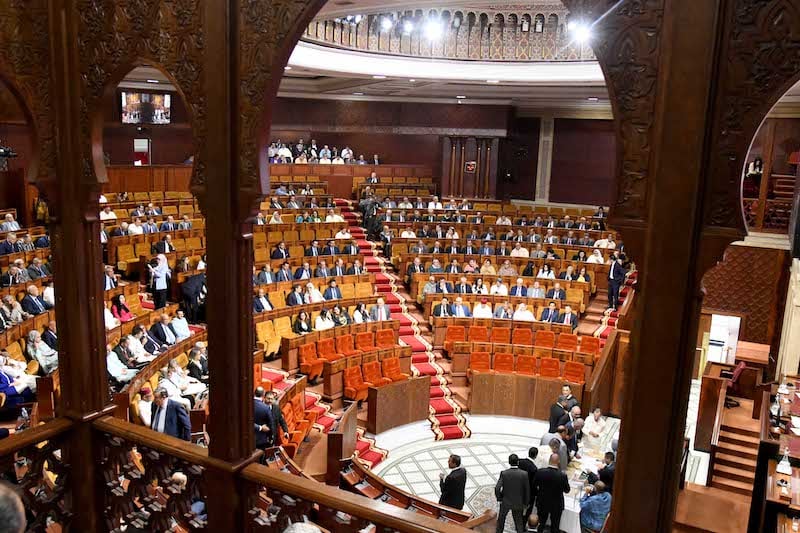
Did verbal clashes in Parliamentary Sessions become a necessity? Has this behavior been normalized? These questions have arisen with public sessions marked by severe disagreements among members during sessions in both the House of Representatives and the House of Councilors.
Once an environment for legislation and evaluation, the two parliamentary chambers became an arena for ‘’verbal battles’’. This can be interpreted as either an ‘’outscore defense’’ or ‘’decontextualized criticism’’.
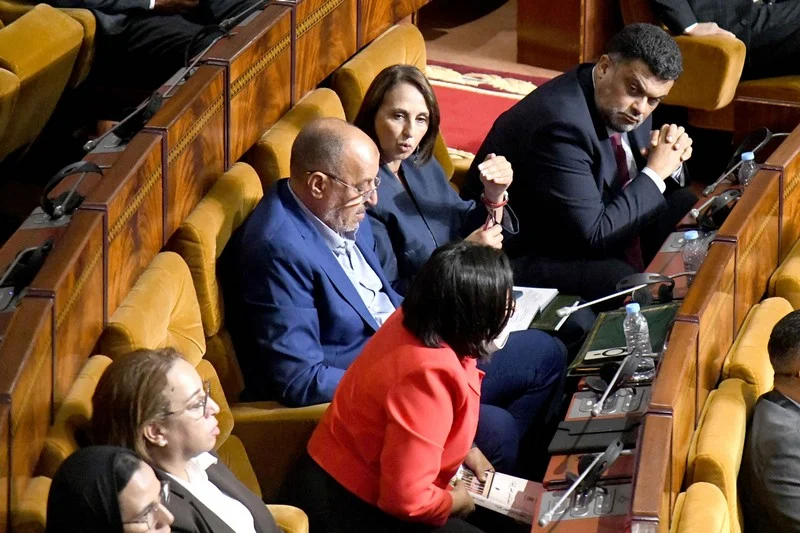
Recently, this “phenomenon” has intensified with the evaluation of the government’s performance, which sparked quarrels among deputies, causing occasional disruptions in the sessions.
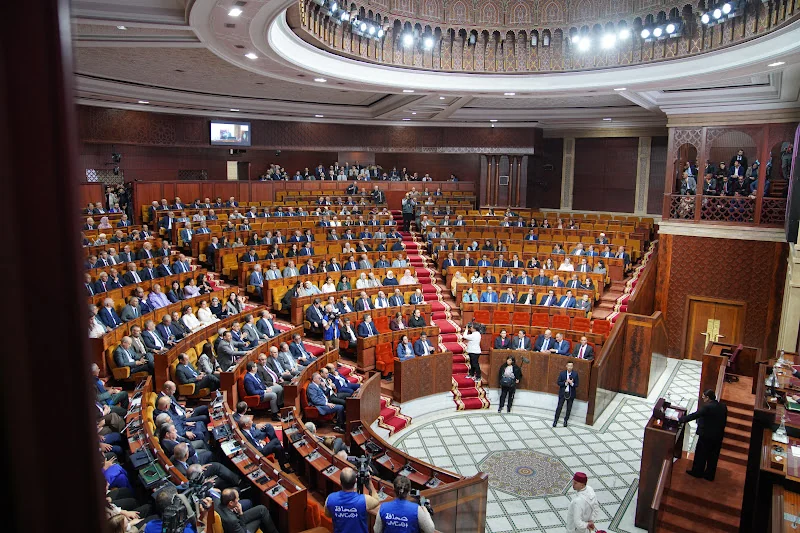
For instance, debates between Speaker Idris El Chtaybi and other deputies were out of control, disrupting shortly the oral question session in the House of Representatives on Monday, May 20. Thereafter, another heated talk took place between the opposition and majority members on the absence of ministers and provided justifications.
Experts in parliamentary law and constitutional affairs told Hespress that this has to do with ‘’the comportment of the representatives of the nation’’ and ‘’deputies who step beyond their exclusive mandates, introducing extraneous conducts to the legislative sphere.’’
Professor of parliamentary law at the Faculty of Law in Mohammedia Rachid El Medour highlighted such occurrences as familiar throughout parliamentary bodies worldwide, considering the inherently controversial essence of politics. However, he noted that this raises several questions when such conduct escalates, exceeding the boundaries.
“These incidents should not turn into habits, making a rule out of an exception. Deputies should maintain their awareness of fairness and should express their opposition only when necessary. And, while parliament scrutinizing the government is within their remit, they must do that with respect to a minimum ethical standard,” he said.
El Medour has also stated that these contexts play on the strings of the ordinary functioning of parliamentary sessions and the general legislative and observatory practices. “Deputies often exasperate one another due to their different political belongings. In fact, the dialogue is supposed to take place between the parliament and the government, as legislative and executive institutions.’’
Deputies should individually address the government directly and institutionally rather than their colleagues. Behaviors of such nature infuse extraneous conducts into the parliamentary sessions, which go against the kind of civilized conduct expected of deputies as representatives of the nation who are to be an example for others,” he further stated.
‘’What is currently witnessed in the parliament during the public sessions is mainly intertwined with deputies’ level of political awareness and the extent of their adherence to the provisions organizing the sessions and the parliament’s observance of the government,’’ he concluded.
Researcher in parliamentary law, Mariam Abelil, stated that ‘’this has nothing to do with legal or regulatory gaps but with the characteristics of those elected. Majority deputies sometimes perform beyond their scope for the sake of the government and its performance, causing quarrels with the opposition, who take every opportunity to provoke the governmentalmanagement of public affairs.”
Abelil also noted that opposition deputies seize procedural points, which are not time-bound, to express their views and continually point fingers at the government’s actions. They cling to their belief that the House of Representatives Bureau is an entity that doesn’t express their perspectives but instead aligns with the government, despite its role as a mediator between deputies, parliamentary groups, and the government.
‘’Weekly sessions are also subject to these practices due to many deputies who debate government performance rather than focusing on discussions related to governmental management. Citizens excitedly expect observatory debates to manifest their concerns through the government’s take on different societal issues,” she remarked.
Aboulil highlighted the Presidents’ Conference as an outlined partition in the House of Representatives internal regulations, whose role is to trigger debates on effective observation mechanisms rather than discussions over internal council disputes.




add your comment
Terms of publication : Not to offend the writer, people, sacred things, or attack religions or the divine self, and refrain from racist incitement and insults.