
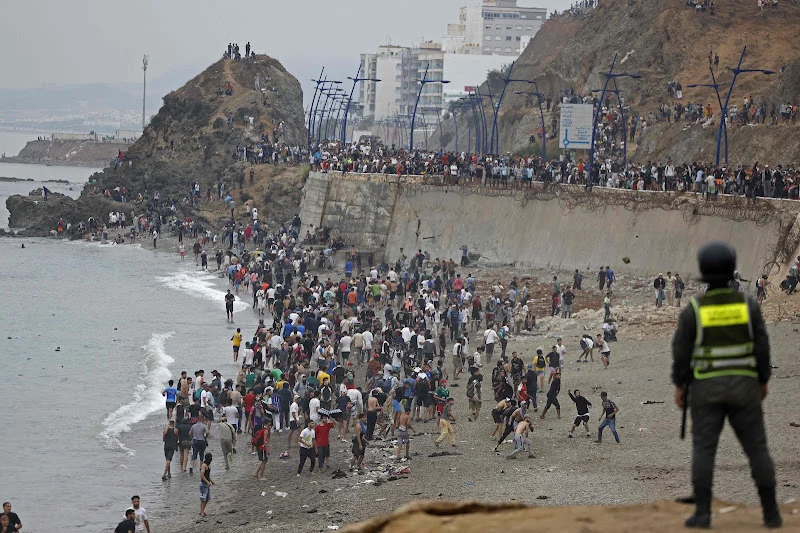
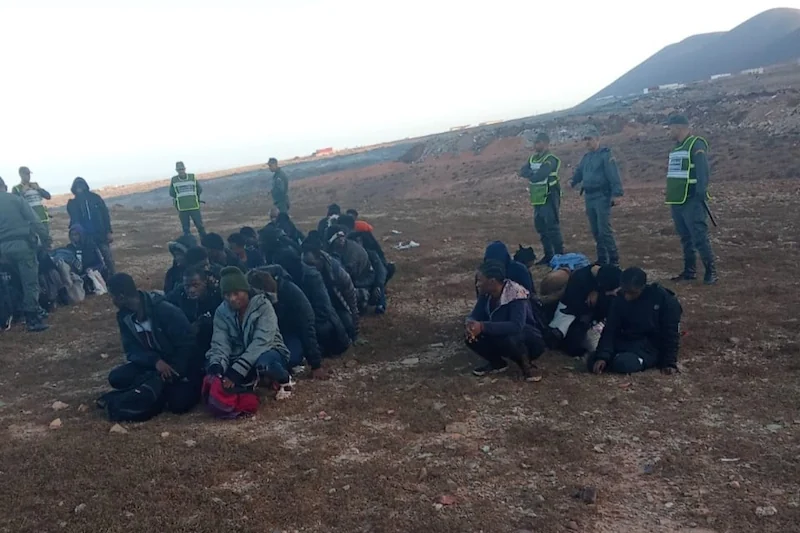
The Spanish Interior Ministry denied claims that Moroccan authorities have been refusing to accept the return of adult migrants who arrived irregularly in Ceuta.
The ministry’s statement came in response to a written question from a group of deputies from the far-right Vox party, who inquired about the reasons for Morocco’s “refusal to return its citizens immediately upon arrival in Ceuta for more than a month.”
The ministry, headed by Fernando Grande-Marlaska, said that “the difficulties of effective return are diverse and not all are attributable to the country of origin, since in most cases it is not possible due to migrants’ use of the right to asylum.”
In his response, the minister defended Morocco’s cooperation, stating that “with regard to current migration flows from Morocco, it should be noted that migratory pressure from Africa is structural and is fundamentally due to social and economic factors.”
“In recent years, these factors have been added to other temporary factors that have a double impact on affecting the preventive capacity of our partners and increasing migratory pressure towards the European Union,” said the minister.
The ministry recalled that in 2023 the enhanced preventive cooperation between Spain and Morocco led to a 41.6% decrease in the number of illegal arrivals in Ceuta and Melilla.”
The ministry also considers that cooperation between the two countries has been particularly effective in monitoring the perimeter of the external borders of the two autonomous cities, which requires a reinforced effort from Morocco.
The Spanish ministry reported that the government is currently working to strengthen its preventive cooperation with Morocco to face the general increase in migratory pressure, emphasizing that this form of cooperation is the only truly effective policy to combat illegal immigration.
In January, Interior Minister Fernando Grande-Marlaska met with his Moroccan counterpart, Abdelouafi Laftit, in Rabat, where they agreed to intensify existing means of assistance, including joint patrols, continuous exchange of operational information, and high-level meetings.
In mid-March, the Spanish government delegate in Ceuta, Cristina Pérez, informed the Secretary General of the Unified Civil Guard in Ceuta, Rachid Sebhi, that “the Moroccan authorities are starting to accept their deported citizens” who were intercepted in an illegal situation in Ceuta.






add your comment
Terms of publication : Not to offend the writer, people, sacred things, or attack religions or the divine self, and refrain from racist incitement and insults.