
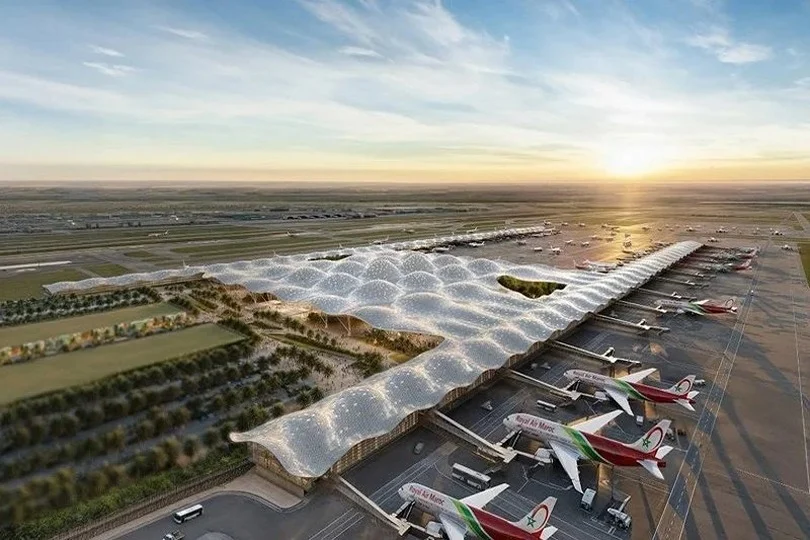
The Moroccan National Airports Office (ONDA) has entrusted Ineco, a leading Spanish engineering firm, with the development of a masterplan for Casablanca Mohammed V International Airport, Morocco’s busiest air hub.
This selection is a significant step towards modernizing Morocco’s aviation infrastructure and reflects the growing cooperation between Morocco and Spain.
Ineco, renowned for its expertise in transportation infrastructure, will conduct a comprehensive analysis of the airport’s current state, encompassing passenger terminals, runways, and other critical aeronautical facilities.
The company’s primary objective is to devise a strategic roadmap for infrastructure development and equipment upgrades, ensuring the airport’s capacity efficiently accommodates future surges in passenger traffic.
This partnership comes in the context of the continued strengthening of diplomatic ties between Morocco and Spain.
Notably, Spain’s recent support for Morocco’s stance on the Moroccan Sahara dispute has resulted in positive bilateral relations, paving the way for collaborative ventures like this one.
Expressing his enthusiasm for the project, Ineco president Sergio Vázquez Torrón said that the project has the potential to significantly enhance Morocco’s transportation infrastructure.
The president said that Spain has an established leadership in airport planning while Ineco has extensive experience in delivering successful airport development projects worldwide.
The company’s plan will include various aspects of future airport operations, including detailed passenger traffic forecasts, baggage handling system analysis, and anticipated aircraft movement patterns.
The plan will also assess the airport’s current capacity limitations and propose strategies to improve efficiency.
Casablanca Mohammed V International Airport, strategically located southeast of Casablanca, serves as the cornerstone of Morocco’s air travel network, handing over a third of the country’s air traffic volume.
With passenger numbers steadily increasing, exceeding nearly 10 million in 2023, the airport’s significance continues to grow.
This initiative aligns perfectly with Morocco’s ambitious goals of hosting the 2030 FIFA World Cup.
By prioritizing infrastructure development, specifically within the aviation sector, Morocco is strategically positioning itself to cater to the influx of visitors and participants anticipated during the global sporting event.







add your comment
Terms of publication : Not to offend the writer, people, sacred things, or attack religions or the divine self, and refrain from racist incitement and insults.