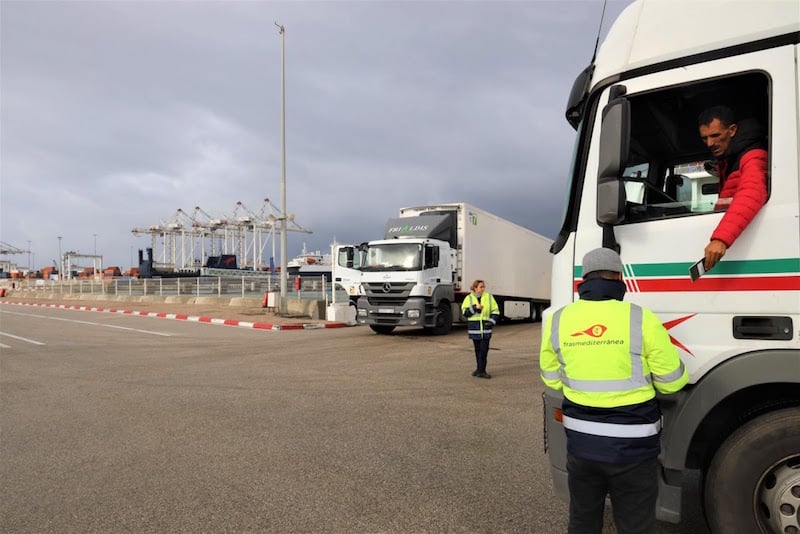
Moroccan agricultural export is facing double trouble, with its exports encountering challenges in both Europe and Africa.
In Europe, Moroccan trucks transporting fruits and vegetables have been targeted by vandalism in Spain and France, while in Mauritania, neighboring authorities have imposed increased customs duties and transit fees.
In response to recent incidents of vandalism targeting Moroccan trucks transporting produce to the EU, Lhouceine Aderdour, exporter and Head of the Federation of Exporters, reassured that the losses incurred are not significant and should not be exaggerated.
Aderdour added that while there have been instances of minor damage during protests by European farmers, it has not impacted the overall exportation to the EU, with the percentage of exported produce remaining the same.
“Insurance companies and importers will address any damages,” explained Aderdour.
Although acknowledging isolated cases of vandalism affecting exporters, Aderdour said that in comparison to the total volume of exports, the damage is minimal.
The exporter explained that there is no immediate need for drastic measures, and authorities are monitoring the situation closely for any developments.
Addressing concerns about the quality of Moroccan produce compared to European counterparts, Aderdour refuted such claims, asserting that “Moroccan products are consumed widely in the European markets.”
Aderdour noted that resolving the vandalism issue falls under the jurisdiction of concerned countries and is not within the purview of Moroccan exporters or authorities.
Since late January, European farmers have expressed their discontent with Moroccan produce through violent means. ]
Trucks carrying fruits and vegetables have been raided, with their cargo dumped or destroyed. While no injuries have been reported, the financial losses for Moroccan exporters might become significant if the issue persists.
European farmers perceive Moroccan produce as unfair competition due to lower production costs, earlier harvest seasons, and concerns about quality and safety standards.
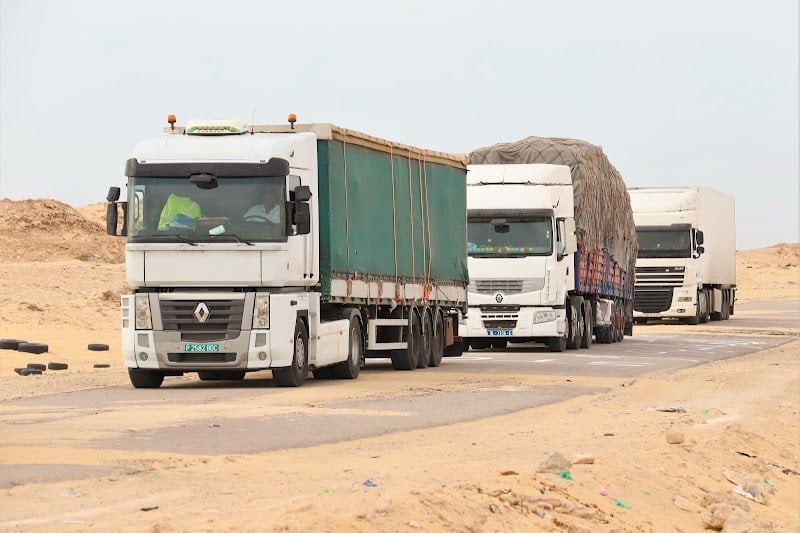
Closer to home, Morocco’s relationship with Mauritania has entered a period of trade tension. In January, Mauritania tripled transit fees for Moroccan fruits and vegetables, followed by a February increase in customs duties.
While Mauritania justifies these actions as efforts to boost their domestic agriculture, they have severely impacted Moroccan exports and raised concerns about affordability for Mauritanian consumers.
In response to the recent tariff hike imposed by Mauritania on Moroccan exports, Aderdour proposed alternative shipping routes to overcome the increased costs.
Aderdour suggested that Moroccan exporters could opt for sea transportation instead of going through the Mauritanian customs checkpoints.
While this alternative is generally cost-effective, Aderdour noted that it may result in slightly longer transit times for exports, particularly for perishable goods like vegetables and fruits that require swift delivery to prevent spoilage.
Despite acknowledging the loss of Mauritania as an importing country due to the high tariffs, the Moroccan exporter expressed skepticism regarding the sustainability of continued exportation under such conditions.
“Even if Moroccan exporters were willing to accept the increased costs, the purchasing power of Mauritanian markets cannot support the higher prices of Moroccan produce”
Explaining the structured nature of Moroccan exports, Aderdour stressed that export activities adhere to a specific program and are not arbitrary.
He suggested that Moroccan farmers could adapt to changes in export destinations by adjusting their production accordingly.
The exporter said that he’s confident that Moroccan exports would continue to meet international demand.




add your comment
Terms of publication : Not to offend the writer, people, sacred things, or attack religions or the divine self, and refrain from racist incitement and insults.