
The self-declared “Berland State” in the Bir Tawil region, unclaimed by Egypt or Sudan, has formally petitioned the Kingdom of Morocco for recognition, urging Rabat to greenlight the establishment of a representation or liaison office in the Sahara.
In a letter seen by Hespress AR, Berland State outlines the potential for future diplomatic ties across various sectors such as culture, tourism, sports, trade, education, technology, and medicine.
Founded in 2015 by “King Prince Amir Hayawi,” a Belgian national married to a Moroccan woman, Berland claims Bir Tawil, one of the world’s smallest “countries” with an area under 2,060 square kilometers, adopting English as its official language.
The patch of desert, larger than London and New York, has been a source of contention for over six decades and is the product of a complex legal challenge that intertwines with the history of imperial maneuvers and the Scramble for Africa.
The roots of the Bir Tawil issue trace back to the British occupation of Egypt in 1882, a move initially intended to protect monetary interests but evolving into a broader strategy to control trade, weaken the Ottoman Empire, and fortify British positions around the Suez Canal.
The subsequent division of Sudan and Egypt, marked by straight-lined borders drawn with minimal consideration for local nuances, set the stage for the emergence of the Bir Tawil as terra nullius – a territory with no sovereign claim.
As Sudan gained independence in 1956, the border dispute resurfaced, with Egypt recognizing the 1899 border and Sudan opting for the redrawn 1902 boundary. The more resource-rich Hala’ib Triangle led to a stalemate, leaving the Bir Tawil unclaimed and largely forgotten.
Hayawi says Berland has established representative offices in several countries and seeks broader international recognition.
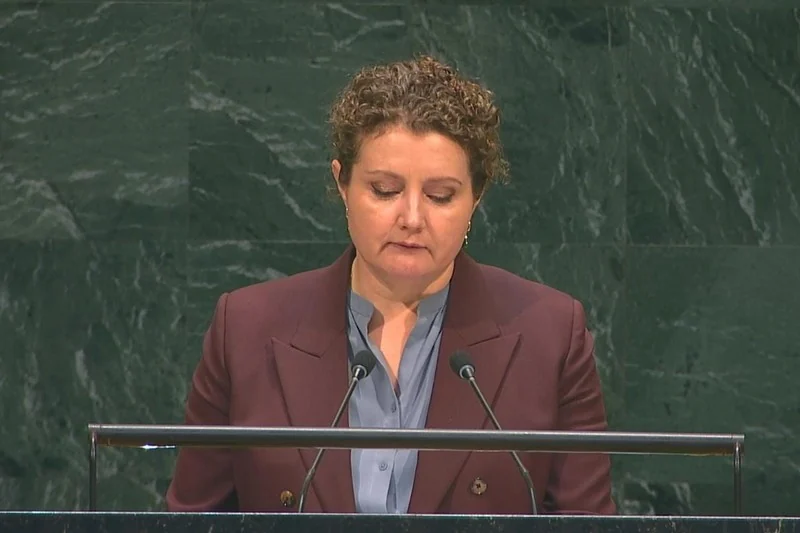
The diverse government of Berland, striving for international recognition, features individuals from various nationalities, including a Filipino prime minister and a Moroccan woman overseeing child care and animal conservation. Berland’s stateless population is estimated to be between 3,000 and 5,000.




add your comment
Terms of publication : Not to offend the writer, people, sacred things, or attack religions or the divine self, and refrain from racist incitement and insults.