
Spain’s Minister of Foreign Affairs Jose Manuel Albares reaffirmed his country’s support for Morocco’s presidency of the United Nations Human Rights Council (UNHRC), and revealed both kingdoms are discussing Western Sahara airspace management.
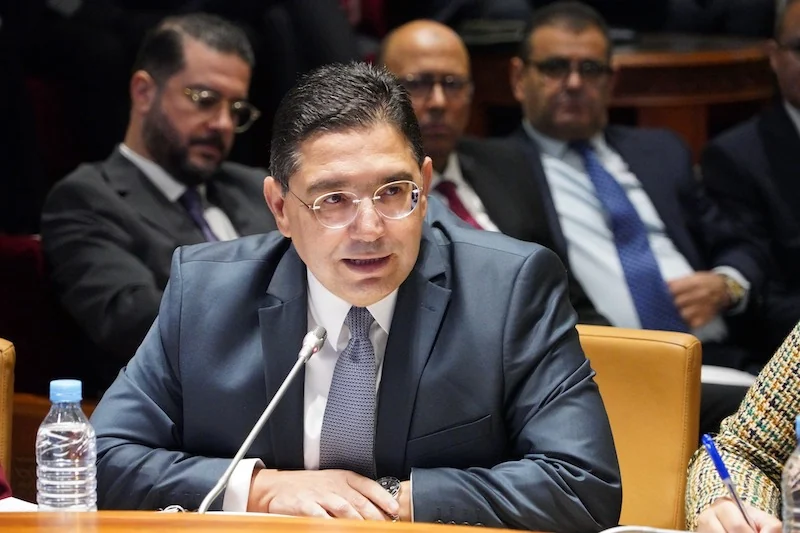
In a recent interview with El Periodico, Albares underscored the importance of friendly and neighboring nations occupying international positions, emphasizing the significance of Morocco’s election.
Regarding the ongoing diplomatic dialogue between Spain and Morocco, particularly concerning the customs offices in Ceuta and Melilla, Albares addressed the alleged technical problems raised by Morocco.
“I cannot answer on behalf of the Moroccan Government. What I can tell you…is that everything is ready for these customs to start working,” said the minister.
Albares indicated that Morocco had decided to initiate operations, with only some remaining technical aspects to be resolved.
Responding to questions about the transparency of agreements between the two countries, Albares defended the public nature of the agreements and criticized the opposition’s stance, particularly the People’s Party.
The minister expressed surprise at what he termed a “dangerous anti-Moroccan turn” by the People’s Party and emphasized the Spanish government’s commitment to fostering friendship and positive relations with neighbors.
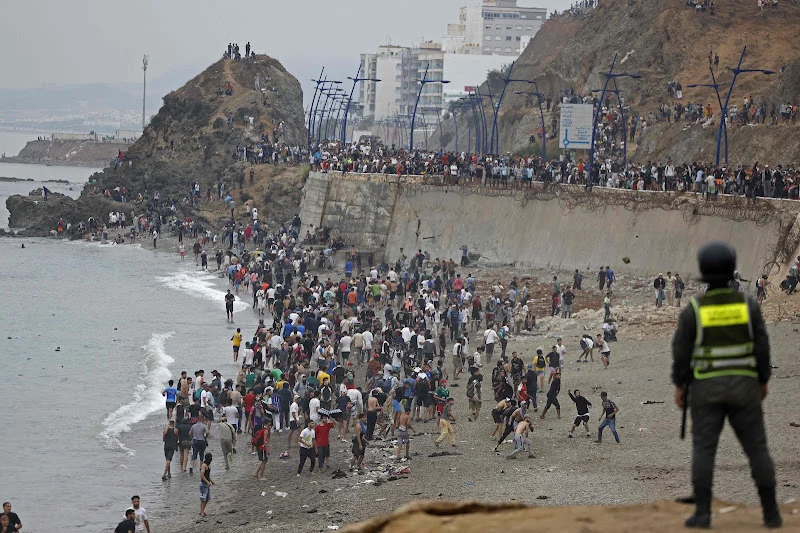
Addressing the issue of irregular migration, Albares acknowledged the challenges and highlighted Morocco’s role as a strategic partner in combating human trafficking.
Albares noted that while the development gap between Africa and Europe exists, achieving zero irregular migration is improbable.
The minister credited Morocco’s cooperation in keeping migration figures lower, especially when compared to other Mediterranean routes.
“Morocco continues to cooperate and, without Morocco’s collaboration, these figures, I am convinced, would be much higher. At the moment, the bulk of immigration does not come from Morocco, but from sub-Saharan Africa,” the minister said.
Responding to questions about control of airspace over Western Sahara, Albares emphasized the joint statement’s focus on improving management, stating, “there is a point in the joint statement that is public and that talks about improving management and that is what we are doing. There is no ambiguity about that. It is in Spanish-Moroccan legislation.”
In addressing the perceived pace of progress, Albares contended that the roadmap between Spain and Morocco has been successful, pointing to achievements in various areas, including the fight against human trafficking, the dismantling of jihadist networks, and a robust bilateral trade relationship.






add your comment
Terms of publication : Not to offend the writer, people, sacred things, or attack religions or the divine self, and refrain from racist incitement and insults.