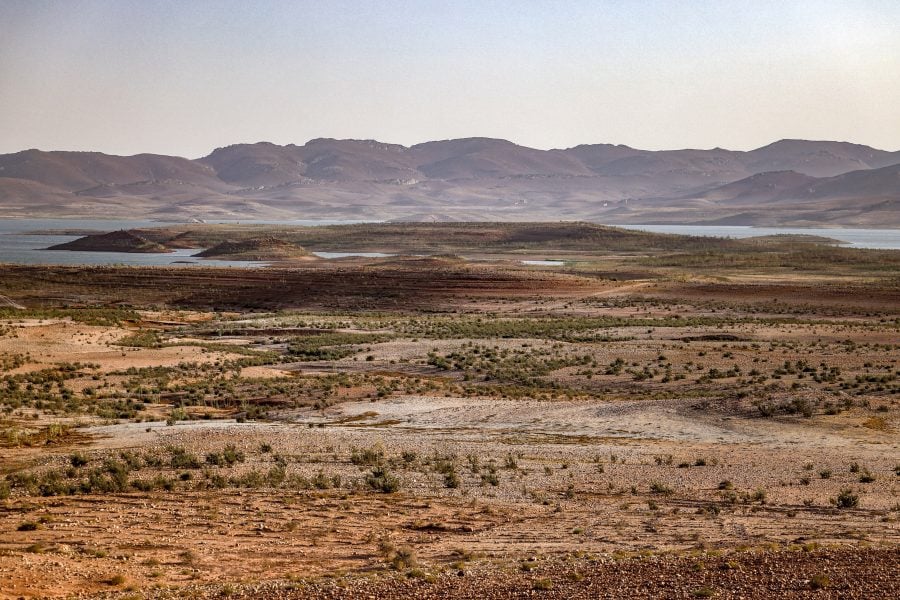
For days now, various regions of Morocco witnessed a noticeable rise in temperatures.
This rise comes at an inappropriate customarily cold time, as the norme would be for temperature to drop during this period of the year.
The General Directorate of Meteorology, affiliated with the Ministry of Equipment and Water, confirms that this rise in temperatures will continue until Tuesday.
Communications officer at the General Directorate of Meteorology Houssein Youabed said that “the rise in temperatures over the end of this week resulted from a southerly current that pushed warm, humid tropical air masses to rise toward the south and center of the country, as well as the coastal areas.”
“This led to a rise in temperatures, particularly in coastal areas, at a rate of 3 to 6 degrees above average.”
Youabed added, in a statement to Hespress: “As for the forecast, the weather will remain stable with a noticeable rise in temperatures during the day, with relatively warm weather in the northern, central and southern plains and the northeast, and local fog on the Mediterranean coast, with relatively cold weather recorded during the night in the Atlas highlands and southern east.”
Regarding maximum temperatures, the official stated that they will range between 13 and 22 degrees Celsius in the Atlas, the Rif, the Tangier region, the Mediterranean coast, the east and the southeast, and between 28 and 33 degrees Celsius in the center and southern regions, and between 23 and 28 degrees Celsius in the rest of the regions.
Regarding Monday, Youabed assured that “the weather will remain relatively warm in the northern, central and southern plains and the northeast of the country. The upper temperatures will gradually decrease, starting Tuesday.”
For his part, Ali Charoud, a climate expert, tells Hespress that “What is certain is that the general context that the Earth in general witnessed in the year 2023 is an increase in temperatures,” pointing out that “last year was the hottest ever in a number of countries, and Morocco in particular.”
“At the same time, Morocco and a number of European and Scandinavian countries witnessed last week a drop in temperatures that broke cold records, and they are also considered weather disturbances,” said the expert.
Charoud concluded: “It is an increase unusual for its season, and it falls within the general context associated with successive years of drought and high temperatures.”




add your comment
Terms of publication : Not to offend the writer, people, sacred things, or attack religions or the divine self, and refrain from racist incitement and insults.