
Moroccan feminists are calling for “the secularization of Morocco’s family code,” as reform efforts advance for the third month.
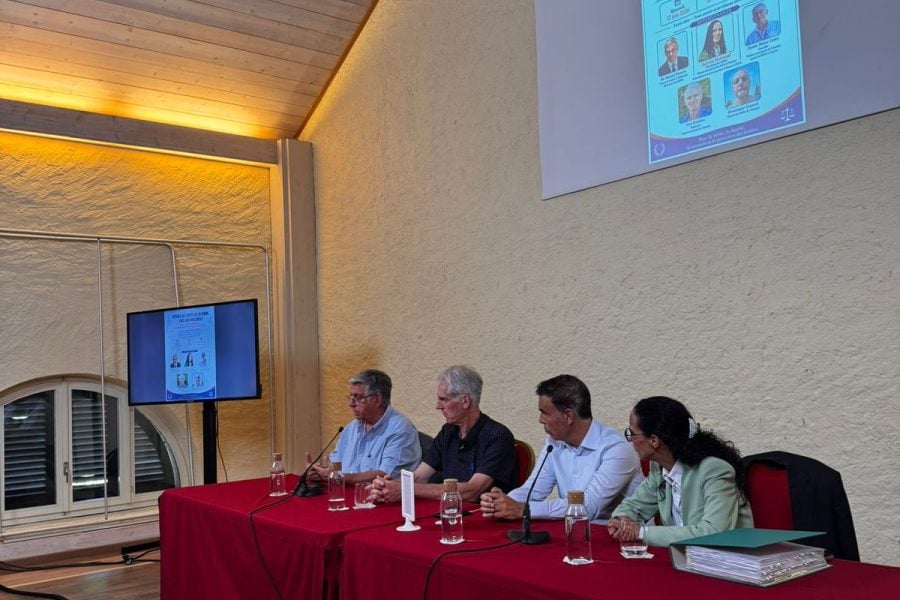
These demands were made during a Conference of Feminism held on Saturday in Rabat, where various stakeholders discussed the reform of family law and issues related to it.
The call for secularization echoed through the conference, with several speakers expressing their views on the matter. During the session dedicated to discussing inheritance, Yasmine Chami, a novelist and social activist, urged the need to distinguish between family law, which governs family relationships, and religious principles.
The activist emphasized the importance of reconsidering the societal attachment to religious traditions, stating, “when we talk about obedience, it not only reinforces male dominance over women, but women also feel like they are giving up a part of their identity.”
Chami further stressed the dogmatism faced by the advisory committee tasked with amending family law in 2003, stating that it posed a significant obstacle to any amendments aimed at liberating women.
Khaoula Benomar, the president of “Josour: Women’s Forum,” said that the feminist movement’s struggle to amend family law stems from the existing imbalance between men and women in society.
Benomar said that the movement’s goal is achieving gender equality and rectifying the current situation through legal amendments.
Despite the ongoing amendments to the family law initiated by the king-appointed authority, Benomar believes that these changes require active involvement from intellectuals and awareness campaigns to promote the values advocated by the feminist movement.
“The activists do not advocate for the amendment of the family law merely for personal enjoyment; rather, their goal is to mobilize efforts towards bringing about a fundamental change in society,” said Benomar.
Representatives of the “Women’s Labor Union” strongly endorsed a secular approach in their interventions at the feminist conference. They criticized certain religious concepts embedded in the current family law, such as “Muta’a” (marriage enjoyment compensation) and “Wilaya” (guardianship), considering them as diminishing the value of women and treating them as mere objects.
Amina Lotfi, the president of the “Democratic Association for Moroccan Women,” said that there is a need for a comprehensive approach to amending family law, aligning it with the constitution and international commitments.
The president stated that, “the amendment of the law should not be isolated, changing family law this year and criminal law the next; instead, all laws should be amended comprehensively to achieve gender equality.”
On her part, Rabiaa Naciri, a university professor and former member of the National Council for Human Rights, pointed out that the shift to the current family law in 2004 was a significant turning point.
However, the professor expressed dissatisfaction with the cautious approach of the legislative changes, asserting that it lacked the necessary boldness required for substantial reform.
Naciri said that the current family law perpetuates a patriarchal system, particularly in the realm of inheritance, where there is discrimination in favor of males.
The university professor highlighted issues such as inheritance by agnation (Ta’asib), the prohibition of inheritance between Muslims and non-Muslims, and the denial of inheritance rights to children born out of wedlock.
Naciri explained that there is a dilemma as the constitution emphasizes prioritizing international conventions, indicating that precedence should be given to these agreements. However, the opposite occurs due to a commitment to national identity, leading to the depletion of the constitutional provision’s intended meaning.








add your comment
Terms of publication : Not to offend the writer, people, sacred things, or attack religions or the divine self, and refrain from racist incitement and insults.