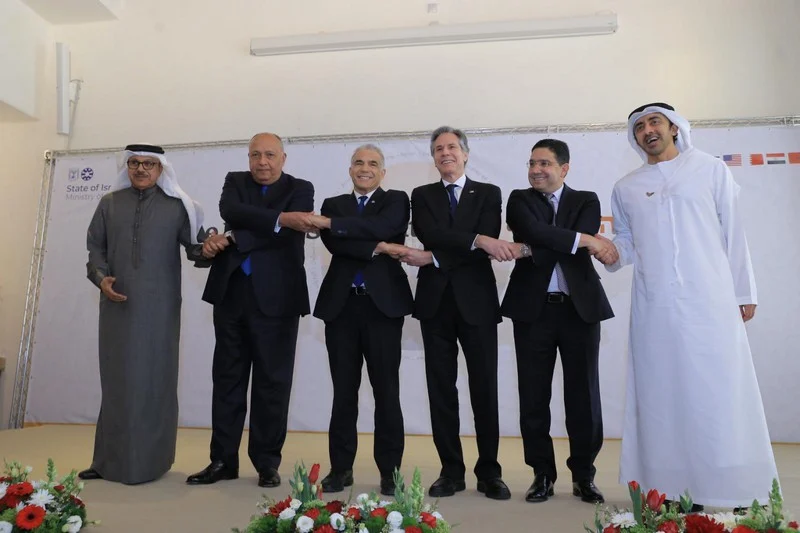
In the midst of escalating tensions between Israel and Arab nations, strained relations face a severe test as the conflict in Gaza deepens, according to a recent report by Lowy Institute.
The report provides insights into the dynamics influencing Arab nations and Israel, noting that Israel’s actions have put the normalization process under stress.
Arab governments, notably Egypt and Jordan, face growing public pressure to sever ties with Israel due to the rising civilian death toll in Gaza. Morocco, Bahrain, and the UAE, signatories of the Abraham Accords, also witness demands from their citizens to cease normalization efforts amid the dire humanitarian situation.
The report states that while Jordan has recalled its ambassador and Egypt’s President Abdel Fattah Sissi criticizes Israel’s actions, diplomatic ties remain largely intact.
Bahrain, initially signaling a suspension of relations, has refrained from concrete steps. Israel, Egypt, and Jordan maintain full diplomatic relations, and Saudi Arabia and the UAE express commitment to pursuing normalization.
The report says that shared antipathy towards Hamas, common security concerns, and a shared stance against Islamist political forces contribute to the resilience of diplomatic ties.
The report delves into the nuanced perspectives of Arab nations, exploring their desire to eliminate Hamas for security reasons and prevent spillover into regions like the Sinai, where Egypt battles insurgents.
The shared apprehension of Iran’s influence and the potential for regional escalation in the Gaza conflict also unite these nations, as detailed in the report.
Despite public criticism, Egypt remains cautious about accepting Palestinian refugees, fearing spillover across its border. The Gaza conflict poses a broader security threat, particularly with Iran’s use of proxy actors like Hamas and Hezbollah.
The report emphasizes long-term strategic and economic benefits promised by the Abraham Accords as a significant factor in maintaining normalization efforts.
The UAE, in particular, views the Accords as a transformative platform for regional stability and prosperity. For Saudi Arabia, the normalization process is tied to a crucial defense security pact with the United States.







add your comment
Terms of publication : Not to offend the writer, people, sacred things, or attack religions or the divine self, and refrain from racist incitement and insults.