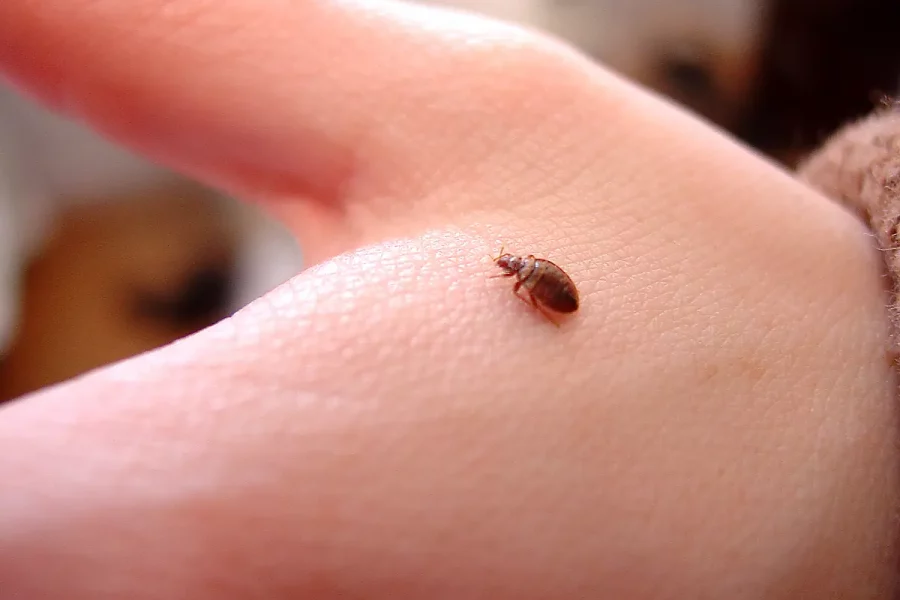
Concern has spread as officials registered suspicions of bed bugs on board a passenger ship that recently arrived from the French port of Marseille . While bed bugs themselves are generally not carriers of diseases, their presence can trigger allergic reactions or severe skin responses in certain individuals.
Abdel Aziz Bakhtar, a medical expert, told Hespress English that there are no in-depth studies on bed bugs and their long term health effects, although they have been around for so long. France has been grappling with bed bugs since 2017, according to the same source, but has only recently reported a massive infestation.
According to the available data on bedbugs, they are small, wingless insects that are reddish-brown in color. Their bites are infamous for causing discomfort but usually heal without treatment in one to two weeks
These blood-sucking pests are roughly the size of an apple seed and are known to hide in the crevices of beds, box springs, headboards, and other objects in proximity to sleeping areas. They predominantly emerge at night to feed on their preferred host: humans.
Bedbugs themselves are not considered dangerous in terms of disease transmission. But their bites can be intensely itchy and may lead to infections if scratched excessively. Some individuals are allergic to these bites, experiencing hives, blisters, or severe itching.
Bed bugs’ bites can impact people’s mental health, causing issues like anxiety, insomnia and overall discomfort.
While mosquitoes and ticks are known to spread diseases, there’s no solid scientific evidence that bed bugs do the same.
There are some who believe that bed bugs might be able to transmit around 41 human diseases. For instance, HIV can survive for up to 8 days inside a bed bug after it has fed on HIV-positive person, and Hepatitis B can persist for about 9 weeks inside a bed bug that has fed on someone with Hepatitis B.
Many people, driven by desperation to eliminate bed bugs from their homes, have inadvertently harmed themselves. During the years of 2003 to 2010, there were reports of 111 illnesses linked to the use of insecticides against bed bugs in seven states.
The likelihood of encountering bedbugs increases in places where overnight guests frequently come and go, such as hotels or hospitals. Adult bed bugs, measuring approximately 5 to 7 millimeters in length, have flat, oval-shaped bodies, which can make them adept at squeezing into narrow spaces—about as thin as a credit card. Consequently, they can be found virtually anywhere as long as there’s a source of blood to feed on.
Bed bugs differ from insects like ants or bees, as they don’t construct nests but rather live in groups within concealed locations.
Female bed bugs can lay hundreds of tiny, white eggs over their lifetime, each resembling a speck of dust.
Immature bedbugs, known as nymphs, undergo five stages of development, molting and shedding their skins before reaching maturity.
A blood meal is essential before each shedding. Under optimal conditions, bedbugs can complete their life cycle in as little as a month and produce three or more generations per year. Their lifespans typically range from 10 months to a year.










add your comment
Terms of publication : Not to offend the writer, people, sacred things, or attack religions or the divine self, and refrain from racist incitement and insults.