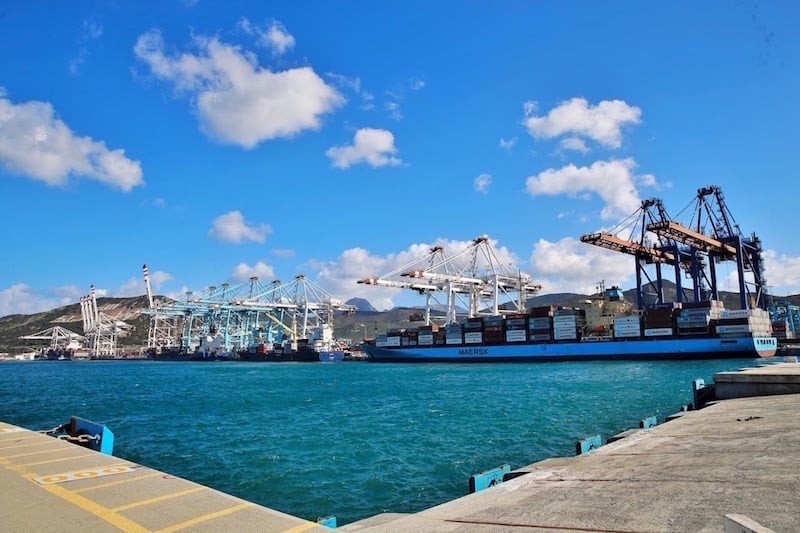
Morocco plans to install early alert systems in across coastlines, as the country moves to ensure safety of coastal communities and mitigate the potential devastation caused by tsunamis.
Following a successful implementation of a similar system in Jorf Lasfar, El-Jadida, Morocco envisions deploying early warning systems across the northeast of the Atlantic Ocean and the Mediterranean Sea. These systems will form an international network capable of accurately measuring and assessing the risks of tides and tsunamis of all sizes, as part of a broader initiative supported by UNESCO.
“We are looking forward to installing the same warning system in other ports as part of this network, which will be an international network to gauge tides of tsunami –be they short, medium, or high. All types of tides, whatever their magnitude could be monitored,” Nasser Jabour, Director of the National Institute of Geophysics in a statement to Hespress EN.
Jabour confirmed that Morocco has already taken significant steps towards this goal, as the alert system installed in Jorf Lasfar was not the first. More than 5 years now, the port of Saidia Marina is already equipped with a tide gauge that can send warnings about possible coming tsunamis.
“We have several ports in the list that we would like to equip with similar alert systems, but we haven’t decided which is nexryet.” He said that Jorf Lasfar was their only focus for this year, and promised that starting from next year, other ports will be equipped with similar alert systems.
He added, “We study the different choices that we have, but there are some ports that have already some warning systems, which belong to the port itself or to the meteorology institute.”
Jabour emphasized the importance of selecting ports that meet specific criteria for installing these alerting systems, including the ability of the systems to work automatically without disruption, reliable power, and internet connectivity, and other essential conditions to ensure the effectiveness of the early warning infrastructure.
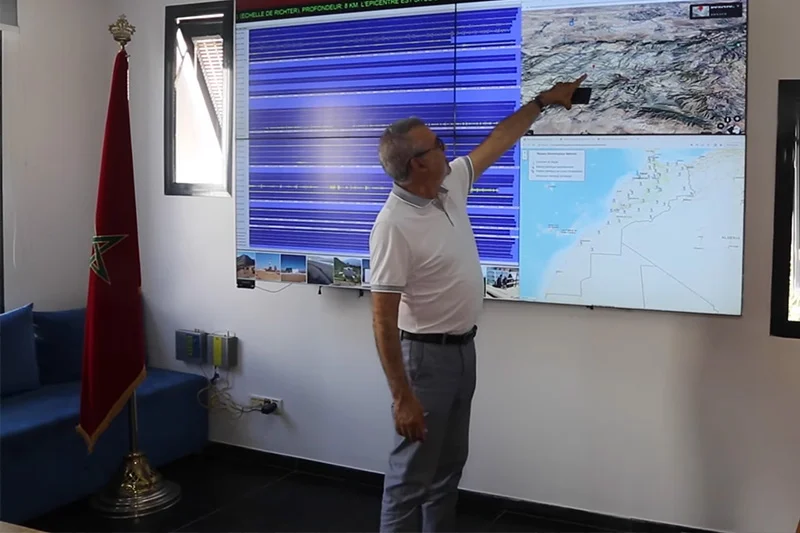
The Director of the National Institute of Geophysics explained that tsunami warnings can be received locally through the National Seismic Monitoring Network since significant undersea earthquakes can generate tsunamis, or be confirmed through UNESCO.
“UNESCO has at its disposal a set of warning methods that be notified to local authorities at the times,” said Jabour.
He explained that the Manegraph, which was installed in Jorf Lasfar to monitor sea level changes along coastlines and detect potential tsunami events, can be found in several countries worldwide, including Spain and Portugal.
The installation of similar alert systems in different countries is part of the global effort to enhance early warning capabilities and improve coordination in addressing the threat of tsunamis.
“The first tool that detects the tsunami and changes in sea waves will send confirmation alerts,” he added.
In addition to expanding the alert network, Jabour emphasized that Morocco is adopting some accompanying measures that are meant to ensure the safety of coastal communities.
This includes the development of emergency plans for coastal areas, raising awareness among the public living near the coastline, and establishing designated safe zones and evacuation procedures.
Starting with raising awareness, the country has already started sensitizing people in Tanger and Teouane. He said, “We conducted surveys to see people that were aware of the danger of a tsunami, and we found out that some people were not aware of it.”
As to emergency plans, Jabour explained that each coastal area is developing plans for evacuation routes and procedures to be followed in the event of a tsunami warning.
He said, “Installing early alerting systems or tide gauges is not enough, there should be accompanying measures. We need to prepare an emergency plan. Each coast area should be prepared to have an emergency plan to alert about the coming tsunami.”
Jabour insisted that the objective of this plan is to facilitate a rapid and coordinated response within a 15-minute window.
“The project aims to conduct an evacuation operation on the beach. People should be aware of the evacuation operation as quickly as possible. We determined the evacuation routes and now we are working on other different routes,” Jabour told Hespress EN.
The Director of the National Institute of Geophysics underscored that they are conducting realistic drills to simulate tsunami events and evacuation operations to familiarize coastal communities, including factories, ports, and electric plans, with emergency procedures and ensure they can react accordingly when a tsunami warning is issued.
So far, people can be warned about possible tsunami events only by feeling the tremors of undersea earthquakes or hearing the alarms. Jabour promised, “We are working on the possibility of sending warning alarms via SMS to the phones near the beach.”
Throughout history, Morocco’s coasts have been devastated by the impact of tsunamis. Notably, in 1755 Lisbon Earthquake generated a tsunami that affected the Atlantic shores of Morocco, causing widespread destruction in its wake. “The waves were about 10 meters high,” said the expert.
Jabour added that there was another destructive seismic event that occurred in 1522 on the Mediterranean coast and generated a tsunami. However, he said that the latest tsunami event that occurred in the country was in 1969, and the waves were only 1.5 meters high.
Even if Tsunami events don’t happen very frequently in our country, vigilance, and preparedness are paramount to safeguarding coastal communities against the fury of future tsunamis, he insisted.
Last week, the Jorf Lasfar port was equipped with a tide gauge to alert in the event of a risk of a tsunami with the aim of minimizing the damage from such natural disasters.
This initiative was part of the Coastwave project by the marine geosciences and soil science laboratory of Chouaib Doukkali University (UCD), and the National Center for Scientific and Technical Research, in partnership with the Intergovernmental Oceanographic Commission (IOC-UNESCO).
The project aims to continuously measure the sea level and transfer the data in real-time, which is useful for research work on climate change and sea level changes and will strengthen the country’s preparedness for potential tsunami events in the future.






add your comment
Terms of publication : Not to offend the writer, people, sacred things, or attack religions or the divine self, and refrain from racist incitement and insults.