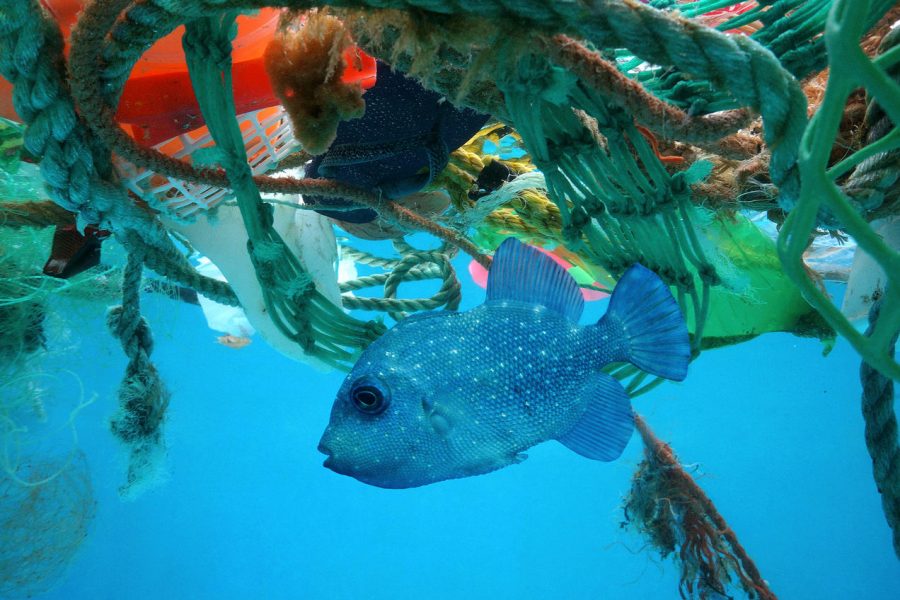
Plastic pollution could be reduced by 80% by 2040 if countries and businesses make profound shifts in policies and markets, reveals a recent United Nations Environment Program report.
The report stated that “in order to reduce plastic pollution by 80%, plastic materials whose use involves problems and are considered unnecessary must be eliminated to reduce this scourge.”
The document highlighted “the need to bring about transformations in the market as it moves towards a circular approach to plastic products, represented by recycling and reuse, in addition to reorientation and distribution of products.”
“Plastic pollution can be reduced by 20% if the recycling process becomes a more stable and profitable project in the future, in addition to enhancing options for reusing plastic materials, including refillable bottles, bulk dispensers, and plastic packaging retrieval programs,” said the same source, adding: “This process alone can reduce plastic pollution by 30 percent by 2040.”
“Despite these measures being taken, 100 million metric tons of single-use plastics, in addition to products with a short shelf life, will still need to be handled safely annually by 2040,” sid the UN body.
“Transitioning to a circular economy will result in $1.27 trillion in savings, factoring in costs and revenue from recycling, with another $3.25 trillion in avoided externalities such as health, climate, air pollution, and marine ecosystem degradation; In addition to providing more than 700,000 jobs by 2040, most of them in low-income countries, which will improve the livelihoods of millions of workers in informal environments,” states the document.
The report also emphasized that “the highest costs of the waste-based economy and the circular economy are related to operation,” adding that “if regulations ensure that plastics are designed with a circular approach, then extended product responsibility plans can cover these operational costs that ensure that the system follows a circular approach, by claiming Producers fund the collection, recycling and responsible disposal of plastic products at the end of their life.”
“Internationally agreed policies help to overcome the limitations of national planning and commercial action, maintain a circular and prosperous global plastic economy, and unleash the creation of new job opportunities.”
In conclusion, the report focused on “the necessity for policy makers to adopt an approach that covers both regulatory tools and policies that target actions related to the life cycle of plastics, as they reinforce each other to achieve the goal of transforming the economy.”









add your comment
Terms of publication : Not to offend the writer, people, sacred things, or attack religions or the divine self, and refrain from racist incitement and insults.