
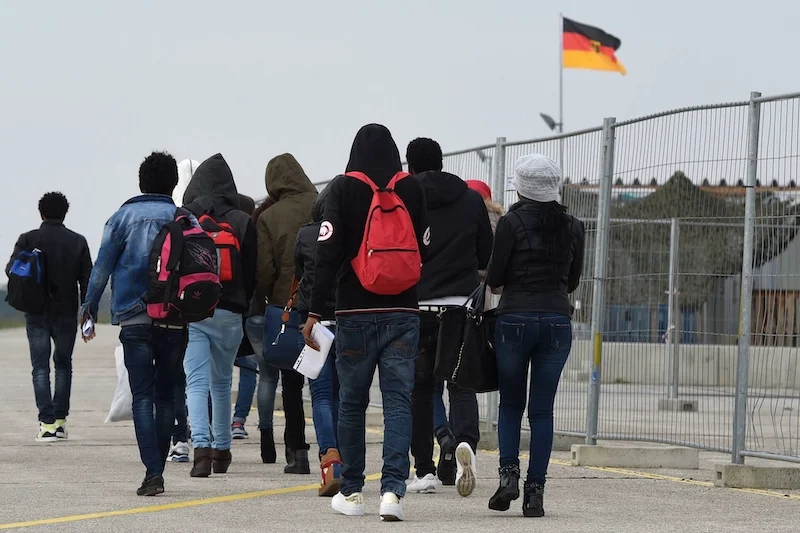
Germany is looking into launching a massive campaign recruitment in Morocco, as part of the German government’s plans to address a severe manpower shortage.
In 2022, the Federal Employment Agency (BA), has identified an average of 845,000 positions to be filled.
As baby boomers (1950/60) reach retirement age (nearly 7 million future pensioners by 2035), and the birth rate keeps falling since the 1990s, resulting in a reduction in the working population, the first effects of which are already being felt.
That said, there are currently an estimated two million job vacancies in Germany. According to the Federal Ministry of Economics and Climate Protection, there is no general shortage of skilled workers, but there are sectoral and regional shortages. These currently affect 352 out of 801 job categories. More than half of the companies in Germany see this shortage as the main risk to their business.
Projections by the same ministry indicate that the working age population (20-65 years) is expected to fall by 3.9 million by 2030 and by 10.2 million by 2060.
According to official data, the labor shortage is estimated at 240,000 people by 2026, which seems to indicate an imminent need for immigration. The Federal Employment Agency estimates the need for 400,000 new immigrant workers per year to cover the need for skilled labor that cannot be absorbed by domestic means.
In addition to nationals of other European Union (EU) countries, who can settle freely, skilled workers from third countries (i.e. outside the EU) can benefit since 2020 from the European Blue Card to come and work in Germany.
The German government is taking the next step by relaxing the conditions for labor immigration for third-country nationals.
Last fall, it presented the outline of a new law on labor immigration. According to a ranking dating back to 2022 by the Institute of German Economy (IW) on the basis of official data, the most affected sectors are the medical-social sector, the education sector, the craft industry (especially in the energy renovation sector) and IT.
The scientific professions (related to mathematics, computer science, science and engineering) are also highly impacted, as is the restaurant and hotel industry, which is a major victim of the pandemic.
In fact, some companies in this sector were shut down and laid off their staff in 2020. In the meantime, the employees have found a job elsewhere, often with better pay or better working conditions. This phenomenon also affects services and craft trades.
For the recruitment of workers that Germany is planning to carry out in about ten countries, one-stop shops will be set up to make direct contact with the people concerned.
If there is an agreement, it is then an offer of multiple benefits: travel costs, transportation and assistance to settle once on site. According to the German authorities, this recruitment campaign will bring him a fortune of 150 million euros.






add your comment
Terms of publication : Not to offend the writer, people, sacred things, or attack religions or the divine self, and refrain from racist incitement and insults.