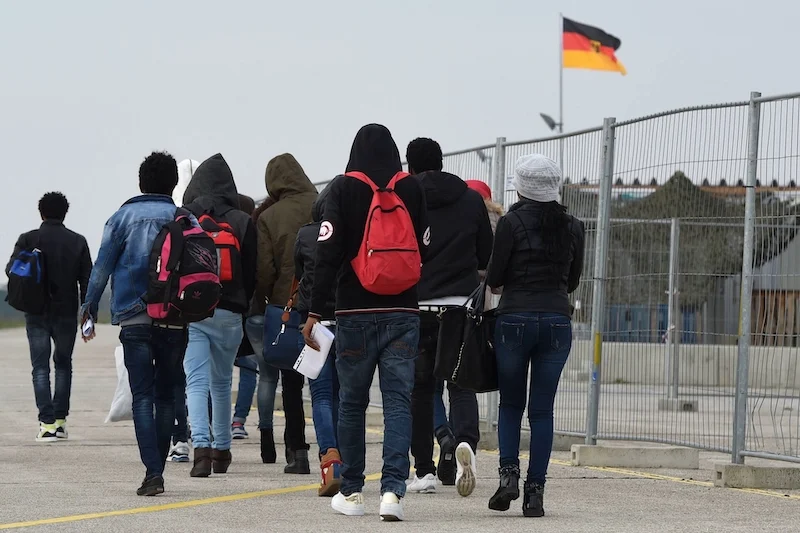
Germany deported 390 Moroccan nationals during the first half of 2026, including 60 people returned under the European Union’s Dublin rules, as authorities continued enforcing deportation orders, according to figures released by the federal government.
The figures were provided in response to a parliamentary question from the opposition Left Party, or Die Linke, on deportations and voluntary departures during the first six months of the year.
The Dublin system allows participating European countries to return asylum seekers to the country deemed responsible for processing their asylum claims, helping prevent people from submitting multiple applications in different countries.
Moroccan nationals accounted for a relatively small share of Germany’s deportations during the period. Turkish nationals topped the list with 1,565 deportations, followed by Georgians, Algerians, Syrians and Afghans.
Germany carried out 2,390 deportations under collective removal procedures during the first half of 2026. Of those, 2,217 people were returned to their countries of origin, while 168 were transferred to other EU countries and five were sent to non-EU countries that were not their countries of origin.
The federal government said the number of deportations during the first half of 2026 was lower than in previous years, largely because asylum applications in Germany have declined since the beginning of 2025.
Forced removals, however, have increased over the longer term. Germany carried out more than 16,000 deportations in 2023, about 20,000 in 2024 and more than 22,000 in 2025. Turkish and Georgian nationals accounted for a significant share of those removals last year.
The government also said physical force was used against about 786 people during deportation procedures, either while they were being handed over to federal police or during flights.
Another 734 deportations were halted or canceled for reasons including strong resistance, sudden health problems or late legal challenges against removal.
More than 1,900 women were deported during the first half of 2026, while some cases involved children with developmental disorders and people with chronic illnesses.
The government also reported that 18 people were deported to Iran and 793 to Iraq, despite what it described as serious human rights concerns in those countries. It noted that deportations to Iraq can include members of the Yazidi community who survived persecution.
Meanwhile, more than 16,000 people voluntarily returned to their countries of origin in 2025 with financial assistance through a program backed by Germany’s federal and state governments to support departures and reintegration.






add your comment
Terms of publication : Not to offend the writer, people, sacred things, or attack religions or the divine self, and refrain from racist incitement and insults.