
As the holy month of Ramadan draws to a close, Muslims around the world are preparing to celebrate Eid al-Fitr, but a rare “hybrid eclipse” has made the century old tradtion of observing the moon harder than usual.
The exact date of Eid al-Fitr is determined by the sighting of the crescent moon, which marks the beginning of the new lunar month of Shawwal. Morocco, like many other countries, relies on a group of trained observers to confirm the sighting of the new moon.
“On the 29th of each Islamic calendar month, Muslims go out after sunset looking for the moon,” the director of the New Crescent Society, Imad Ahmed, explained. “If you can see the crescent moon on the 29th, that month has 29 days. If you cannot, it means that month has 30 days. That’s why, for example, in some years Ramadan has 29 days and in others years it has 30.”
The practice of sighting the crescent moon in the sky after sunset on the 29th day of Ramadan has been an age-old tradition. This process is crucial in determining the first day of the new month of Shawwal and the beginning of Eid al-Fitr.
However, this year, the task of moon sighting has been made even more challenging due to a rare astronomical event. Astronomers have predicted a “hybrid eclipse” that is taking place on Thursday evening, the 29th day of Ramadan.
The crescent moon is already a difficult sight to behold, as it is very thin and can be easily obscured by clouds. The hybrid eclipse, which occurs when the moon partially blocks the sun, has further reduced the visibility of the crescent moon, making it nearly impossible to see.
This type of eclipse is exceptional in that it involves the moon blocking out the light from the sun while transitioning between a total solar eclipse and a ring-shaped annular eclipse depending on one’s location.
Moon observes in Morocco rely on a combination of traditional methods and modern technology to increase the chances of sighting the moon. The Ministry of Religious affairs, and Royal Armed Forces Units use telescopes and other advanced equipment to detect the presence of the crescent moon in the sky. They also rely on the testimony of trustworthy witnesses who have sighted the crescent moon.
There was no sighting of the moon on Thrusday night.
As confirmed by the Ministry of Habous and Islamic Affairs, Morocco will celebrate Eid Al Fitr on Saturday, April 22.
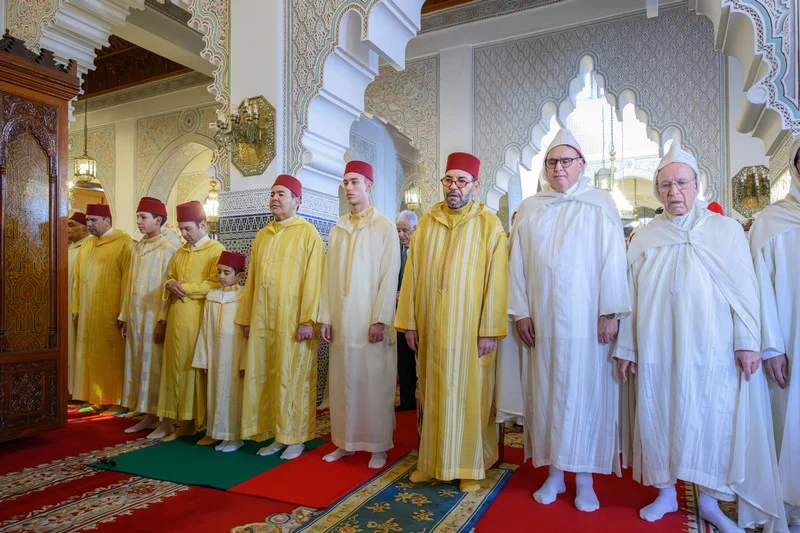
Moroccan families and friends will gather Saturday to offer prayers, exchange gifts, and enjoy festive meals. It is a time of joy, gratitude, and renewed faith, as Muslims reflect on the blessings of Ramadan and the spiritual lessons they have learned during the holy month.






add your comment
Terms of publication : Not to offend the writer, people, sacred things, or attack religions or the divine self, and refrain from racist incitement and insults.