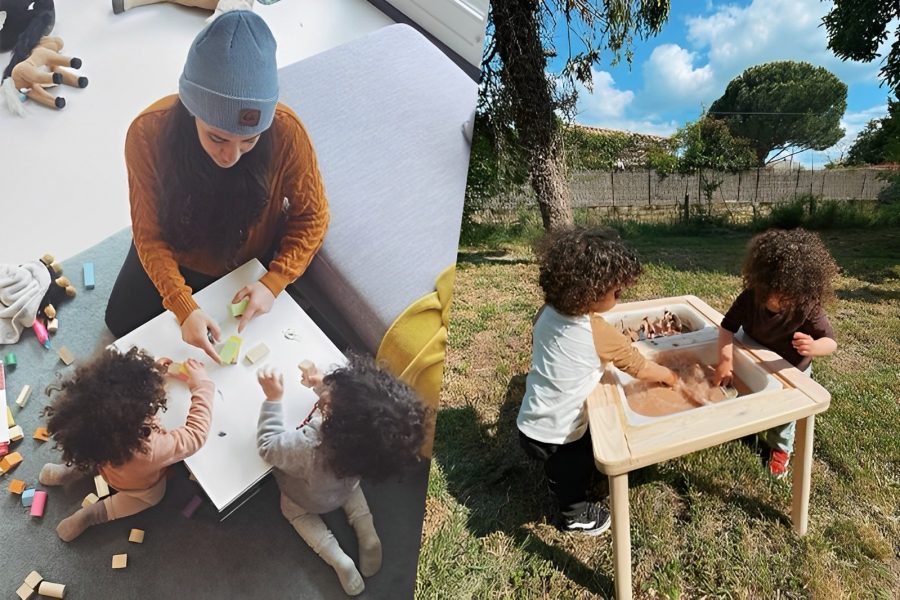
In the face of rigid and inflexible traditional parenting methods, many Moroccan have adopted alternative parenting techniques, such as gentle parenting, to overcome old habits and stop patterns of trauma and distress from continuing.
It started with a book:
“I remember when I first found out that I was having a girl; I was very young, very clueless but very excited. I frequently went to libraries and borrowed many books to learn how to do things right. The extra preparation taught me how one can guide their children and discipline them without punishing them”, said Ghita, who agreed to talk to us using a pseudonym.
“We internalize our trauma in different ways,” said the mother of two, then explained how her childhood shaped her mindset and made her consider being a ‘gentle’ parent.
Ghita feels fortunate to have grown up with an older brother who was anything but stereotypical; he never treated her in a derogatory or belittling manner because of her gender, which inspired her to want to give her children the same experience: being treated fairly.
Ghita said that even in Western civilizations, which have had a significant influence on modern Morocco and profess to support gender equality in all spheres of life, the egalitarian upbringing of children only takes place in a particular social class.
“We can’t blame the Western influence, but trying not to perpetuate what our parents embedded in us is hard since we were not subjected to gentle parenting.”
Although she acknowledged the existence of Western society’s influence, she asserted that Moroccans still had a long way to go before it spread.
“The true dilemma is who am I raising this kid for?” she questio ned.
ned.
“The more our kids are aware of gender differences the more disgusted they are by the anomalies and differences,” declared Ghita, as a mother of two girls, she adopted a parenting method that won’t make them feel belittled by a mostly misogynistic society.
Gentle and gender-neutral parenting:
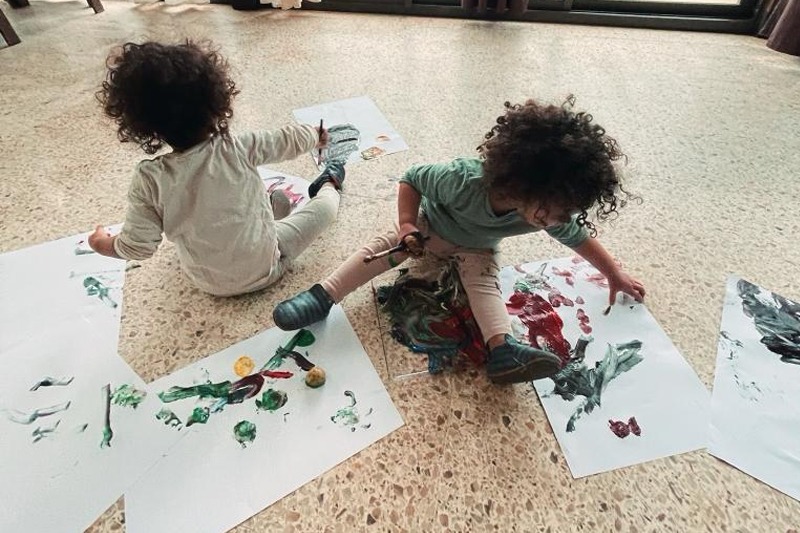
Rabab, a mother of twins, Ayla and Noah had decided to follow a gentle and gender-neutral parenting style that stems from what she observed in society.
This parenting method encourages children of all genders to explore all interests and behaviors, which means that everyone can wear pink and blue, play with cars and dolls, help with cleaning, participate in different sports, and express their emotions openly.
“Violence against children was somewhat normalized as a discipline tool when I was growing up.”
Rabab informed us that although the numbers are still quite concerning, there is a significant movement among parents who were raised in strict environments to try and change things and raise their children in a nonviolent, respectful manner.
Physical or psychological punishment is not something the young mother thinks can be used to teach children anything.
She believes that traditional parenting is mostly based on a connection where the child must fear and adhere to the parent. She does not want this to be how she and her children interact.
Instead, she says that her job is to gently guide them in navigating the world, social interactions as well as navigating their emotions.
It takes two to Tango:
Ghita believes that the first step to breaking the stigma around gender-neutral parenting is to find a partner with the same aligned principles. “Mine was on board for this!” said Ghita proudly.
She pointed out that in our society, if we see children who have little or no “hetero-respective” behaviors, such as overly sensitive boys or manly girls, the world reacts strangely.
Ghita finds it unfortunate that the Moroccan mother is always blamed when something bad happens to her child.
“Mothers get called out for their ‘failure to conform’ to what society expects from them,” she said.
Rabab has twins, a little girl and a little boy. With them, she practices gender-neutral parenting simultaneously.
Adults tend to behave differently around boys and girls from the moment they’re born leading to differences in the way children are socialized, she said.
She recalls growing up amid massive gender inequalities, which is why she now believes that to address them, we should empower our boys and girls equally when they are children.
Gender-neutral parenting consists in treating each child uniquely, not considering his/her gender in their education.
“We also try to be mindful of the words we use and avoid stereotypical phrases like ‘crying like a girl or ‘boys be boys.’”
This couple pays close attention to how men and women are portrayed in the books and media they read and watch: how are all the girls portrayed? Are all the women in the kitchen and all the men returning from work?
Rabab and Ghita both firmly believe that it is their role to deconstruct whatever gender stereotype they might have to interact with their kids mindfully.
Gentle parenting two girls:
Ghita has two girls; her youngest is a “very girly girl” who chose to play basketball and soccer with her dad as a hobby. She goes from princess dresses to sports fits, and she has fun in both.
She knows that both of her parents support her, which is why she is encouraged to do what she wants. The unity of couples makes or breaks a parenting technique.
“In my couple, we have different specialties that have nothing to do with gender roles! It is about us as humans. We are a team tackling parenting together,” explains Ghita.
As opposed to some parents, this couple tries to explain everything, including the reasons behind every decision of theirs.
Ghita believes that a child will always identify with a present parent, regardless of gender.
Gentle and non-gender conforming parenting can get challenging, and as a very honest mother, Ghita admits that parents are only human and that if anyone claims to be a gentle parent ‘all the time’, they’re lying!
“We all make mistakes, recognizing them will only help us manage things better. We should ‘desacralize’ apologies and talk to our kids because they will understand.”
Ghita explains that apologies are a very important layer of gentle parenting. By being apologized to, it teaches kids how to apologize.
Children hate being lied to, they can sense it and they will probably adopt the behavior and repeat it, which is why parents should be transparent with their kids to a certain extent.
Gentle parenting toddlers:
Rabab’s kids are almost three years old, which makes the whole parenting process harder since they are still developing and learning.
When asked about how she maintains her methods, Rabab says that research has helped her maintain a certain consistency.
Parenting out of ‘conviction’ is a plus because she’s always thinking ahead of what might happen to never stay stuck in a heat of a moment.
“For example, I have scripts ready for the things that can be quite triggering, like what to do when they throw food, what to do when they hit each other and I try to follow through with these scripts each time the behavior happens,” Rabab added that she loves routines and finds that it helps her stay consistent while getting the children used to different situations.
Challenges:
Moving to the subject of defying, there are two types of defying, as a response to something, or to affirm one’s existence in society, says Ghita who has both a teenager and a younger child and has experienced different situations with both.
“If the parents latch on to the second type, it will create conflict. If they let go, it will result in good things,” she explained.
This defiance needs to be met with admiration. It can be turned into something nice. When dealing with adolescents, we are dealing with a huge influx of hormones and feelings. This is the biology of it.
When kids are about two or three, they have tantrums, their parents don’t blame them. But they’re slightly older, and their parents start blaming them.
What they don’t know, is that it’s all related to the development of their frontal lobe. We should validate their feelings, added Ghita.
Exchanging with the two mothers to present vogue parenting techniques that are being adopted in Morocco resulted in uncovering many mysteries of how these ‘gentle’ parents keep their composure, stay consistent, and treat their children without gender discrimination.
To end this on a positive note, Rabab said that there is a lot of parenting advice out there, but this doesn’t make all of them good.
Addressing her words to future parents, she said that “not everything will suit your needs and your family’s needs so it’s important to stay flexible, think critically, and choose whatever works and aligns with your values.”
You’re not required to do gentle parenting by the book or strictly follow Montessori, emphasizes Rabab, “but whatever the philosophy, it is necessary to reflect on our posture towards our children, our role as parents of the new generation and what we can do to help make the world a better place.”






add your comment
Terms of publication : Not to offend the writer, people, sacred things, or attack religions or the divine self, and refrain from racist incitement and insults.