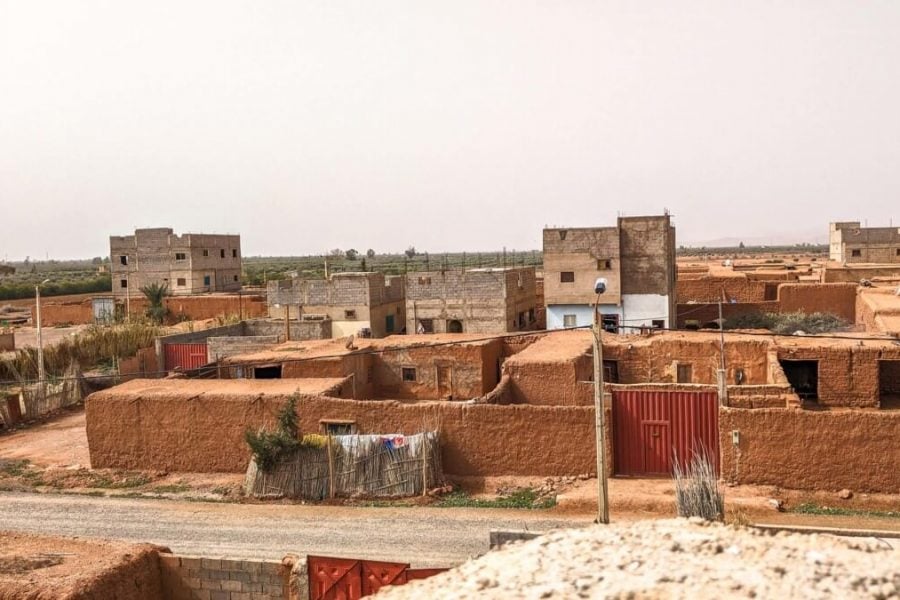
Architect Steven Ehrlich, who was serving in the Peace Corps in Morocco in the early 1970s, discovered years later that his plans for simple housing developments for displaced villagers had become a reality in the city of Marrakech.
According to The Architect’s Newspaper, Ehrlich was a member of the first group of architects sent by the Peace Corps to Morocco in 1969.
The group of young designers worked for the Moroccan government’s Department of Architecture and urban planning, and they were all based in different cities where they took on projects.
Ehrlich spent the majority of 1970 and 1971 working on a project called Habitat Rural that involves designing a rural community intended to shelter people who had been displaced by the building of dams.
The architect studied regional living patterns and housing practices with the help of an interpreter and a draftsman.
During his research, he developed ideas for two rural settlements, one outside of Marrakech and the other in Ouarzazate, south of the High Atlas Mountains.
He was inspired by regional Berber vernacular architecture.
“I completed these designs, and I was then off to further adventures,” said Ehrlich, “And I never found out if those projects were built. I tried.”
Eight years ago, the architect visited Morocco to inquire about his work. The government’s architecture office had no idea what he was talking about.
A curator of architecture at the Getty Research Institute named Maristella Casciato started compiling an archive of Ehrlich’s work, which included his African designs, and this eventually led to the discovery of aerial view images showcasing Ehrlich’s designs. It wasn’t until then that he learned that his creation had come to life.
Since hearing the good news, Ehrlich has not yet traveled to Morocco, but he plans to do so soon.
He is eager to visit Sidi Moussa and Skoura II/Idelsane, considering that his original draftsman is still living in the region.






add your comment
Terms of publication : Not to offend the writer, people, sacred things, or attack religions or the divine self, and refrain from racist incitement and insults.