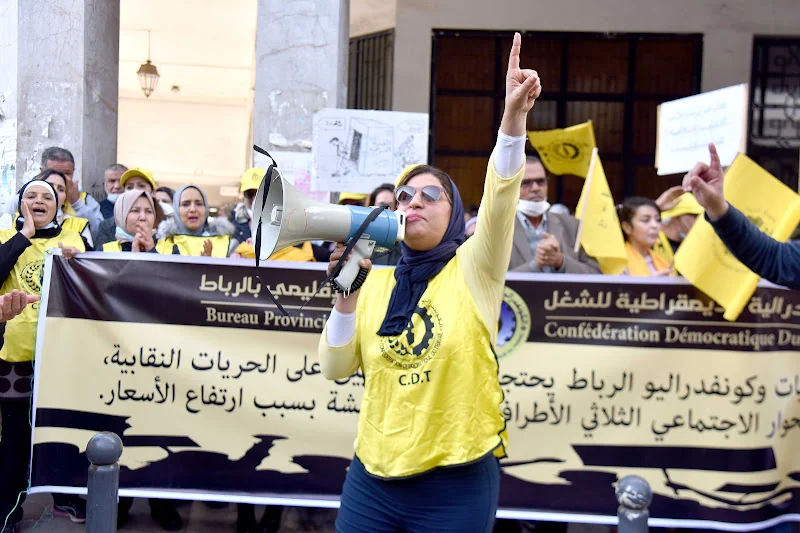
Rising prices and calls for wage increases are among the main priorities the Democratic Confederation of Labor (CDT) plans to raise during a meeting between Head of Government Fatima Zahra Mansouri and Morocco’s most representative trade unions scheduled for Tuesday.
Younes Firachine, secretary-general of the National Education Union affiliated with the CDT, said Moroccan households are struggling with soaring prices, making urgent measures necessary to curb inflation and improve workers’ incomes.
“This is the main issue that will be presented to Mansouri at Tuesday’s meeting,” Firachine told Hespress.
He argued that the tax measures included in the 2027 Finance Bill would be introduced gradually and would take considerable time to produce an impact. He therefore called for immediate wage increases, as well as higher pensions, particularly for retirees whose pensions exceed the threshold covered by the government’s current measures and who would consequently receive no benefit from them.
Firachine also called on the government to honor commitments made under previous administrations, invoking the principle of institutional continuity. These obligations include both nationwide agreements and sector-specific commitments, he said.
Several sectors have yet to see those commitments implemented or their respective employment statutes issued, he added, citing higher education, equipment and National Cooperation employees, as well as outstanding commitments in the education sector.
The union official also raised concerns about restrictions on trade union freedoms, describing them as a key issue amid what he said were increasing constraints in several workplaces, particularly in the private sector.
The debate over the draft strike law also remains unresolved, Firachine said, stressing the need to take into account the International Court of Justice’s opinion on the matter before reaching a final decision.
On institutionalizing social dialogue, he said the demand had already been included in previous commitments through the signing of a charter intended to give the process a formal institutional framework. However, the charter has not been implemented, he said.
The document explicitly calls for social dialogue to be governed by binding legislation rather than relying on commitments that remain unenforced in practice, Firachine added.
He identified the adoption of a framework law on social dialogue as the union’s main demand, saying it should establish a binding institutional structure and ensure that agreements reached through negotiations are implemented.
The CDT’s priorities come ahead of the preparatory meeting with trade unions, after Mansouri sent official invitations to the country’s most representative labor organizations to discuss preparations for the next round of social dialogue, according to sources cited by Hespress.
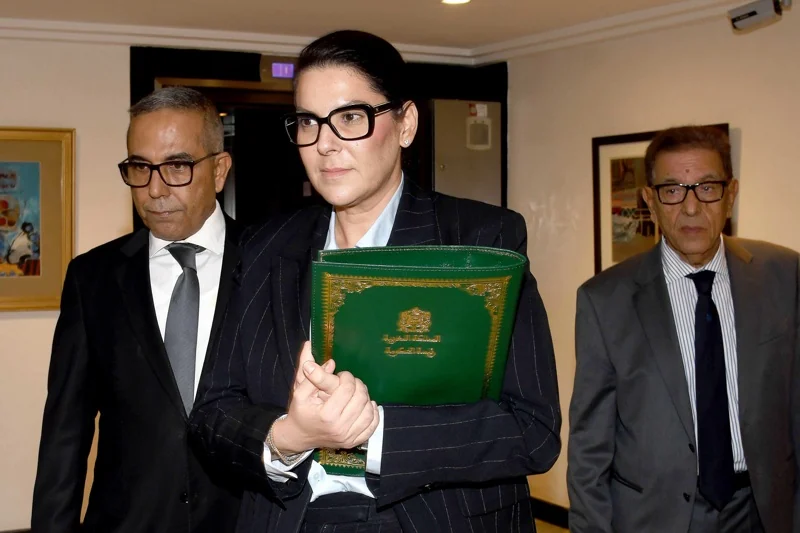
Meanwhile, Finance and Public Finance Efficiency Minister Fouzi Lekjaa said the total cost of gains resulting from previous rounds of social dialogue would reach MAD 50 billion in 2027.
Speaking before the House of Representatives’ Finance and Economic Development Committee on October 30, 2026, during discussions on the 2027 Finance Bill, Lekjaa said the amount was linked to the implementation of commitments reached in earlier rounds of negotiations.
During a plenary session on November 14, Lekjaa also addressed wage increases and efforts to improve the income of the middle class, saying MAD 21 billion had been mobilized for that purpose.
His remarks came as the government outlined the financial cost of social measures and commitments arising from previous social dialogue rounds.






add your comment
Terms of publication : Not to offend the writer, people, sacred things, or attack religions or the divine self, and refrain from racist incitement and insults.