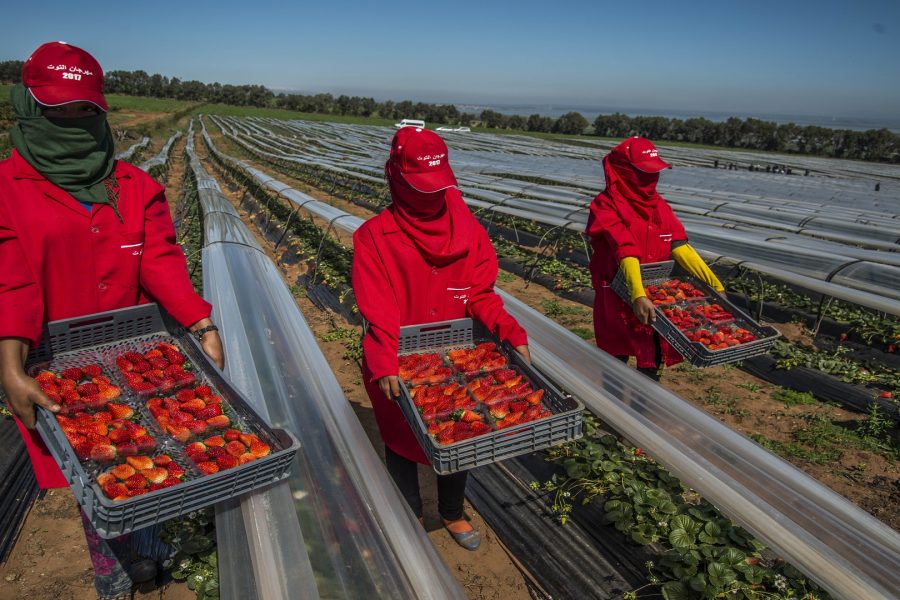
Levelling the playing field for women working in the food and agriculture sectors can bring growth and help feed millions, the UN’s Food and Agriculture Organization (FAO) said on Thursday.
Over one third of the world’s working women are employed in agrifood systems, which include the production of food and non-food agricultural products, as well as related activities from food storage, transportation and processing to distribution.
But in a new report, FAO says that gender inequalities such as less access for women to knowledge and resources, and a higher unpaid care burden, account for a 24 per cent gap in productivity between women and men farmers on farms of equal size.
Women employees in the agricultural sector are also paid nearly 20 per cent less than their male counterparts.
“If we tackle the gender inequalities endemic in agrifood systems and empower women, the world will take a leap forward in addressing the goals of ending poverty and creating a world free from hunger”, said FAO Director-General Qu Dongyu.
According to FAO, closing the gender gap in farm productivity and the wage gap in agricultural employment would “increase global gross domestic product by nearly $1 trillion and reduce the number of food-insecure people by 45 million”, at a time of growing global hunger.
The report shows that women’s access to land, services, credit and digital technology lags behind men’s, while a higher burden of unpaid care limits their opportunities for education, training and employment. FAO points out that discriminatory social norms reinforce gender barriers to knowledge, resources and social networks – holding women back from making an equal contribution in the agrifood sector.
“In many countries there still is much to do to ensure that women own land in equal proportion to men and that legal frameworks protect their rights”, says the report. Its authors describe as “alarming” the slow pace of change in terms of women farmers’ access to ownership of livestock and essentials such as irrigation and fertilizers.
The report also notes that in agrifood systems, “women’s roles tend to be marginalized and their working conditions are likely to be worse than men’s –irregular, informal, part-time, low-skilled, or labour-intensive”.




add your comment
Terms of publication : Not to offend the writer, people, sacred things, or attack religions or the divine self, and refrain from racist incitement and insults.