
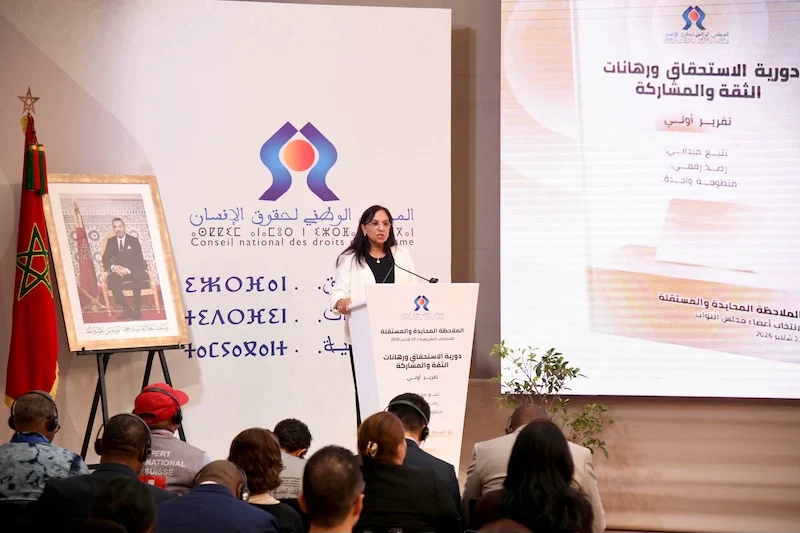
Moroccan women are increasingly reporting violence compared to a few years back, according to a recent report by the National Council for Human Rights (CNDH).
The number of complaints filed with the Public Prosecution Office in the past few years for violence against women rose, which could either single a rise in violence against women, or increased ability of women to come forward with complaints.
According to the report, titled “Violence and injustice demolish women’s human will,” Morocco has accomplished many major achievements in this area.
The most significant of them is the automatic or immediate involvement of law enforcement in launching investigations into violent incidents reported in media today.
The number of complaints filed with the Public Prosecution Office in 2020 totaled 64,251, split between 53,552 regular complaints and 10,699 digital complaints.
According to the report, there were 96,276 total complaints recorded in 2021, and there were roughly 75,240 complaints registered in 2022.
The same source attributed the rise in the number of registered complaints to the efforts made by supporting cells in favor of women victims of violence, as these cells promote reporting violent occurrences, helping the victims, and guiding them.
The report also noted that after the Criminal Court of Appeal overturned a preliminary decision regarding reconditioning and convicting the accused for the felony of rape resulting in defloration instead of the misdemeanor of marital violence, the first case law enshrining the principle of criminalizing marital rape was issued.
A variety of court orders that mandated the execution of waivers in cases of sexual assault in the case of marriage to the victim were overturned, and some courts designated a special session for cases of violence against women, according to the document, which listed these as successful accomplishments.
The Council also applauded the developments mentioned in the new Judicial Organization Law, which included demands related to facilitating access to the judiciary and the release of a circular by the Public Prosecution Office recommending that taking photographs or recording statements made by others in private space should not be criminalized if the goal is to present them as evidence before the judiciary based on comparative jurisprudence.
The report notes the existence of a reporting process gap between the number of complaints registered at the judicial police level and the number of complaints that reach the judicial system, as well as the weakness or utter lack of a reporting culture in Moroccan society, with regard to the challenges and problems learned based on the monitoring and the sample of judgments.
The CNDH report criticized the unending stereotypes that uphold the normalization of violence against women and regard it as a private matter and a typical behavioral pattern, pointing out that there is a general tendency to categorize crimes of violence against women as misdemeanors within the framework of a “criminal policy” that tends towards an expanded implementation of the decriminalization mechanism.
In the absence of a clear legal text criminalizing the illegal marriage of girls or participation in it, the Council noted that both the marriage of girls and their participation in it are not punishable by law. This results in various court adaptations and occasionally the issuance of acquittal rulings based on suspicion.
In this regard, the report draws attention to the lack of a specific text that criminalizes marital rape, the courts’ varying treatment of the act—either as a misdemeanor of domestic violence or a felony of rape—and their tendency to lighten sentences when this crime occurs.
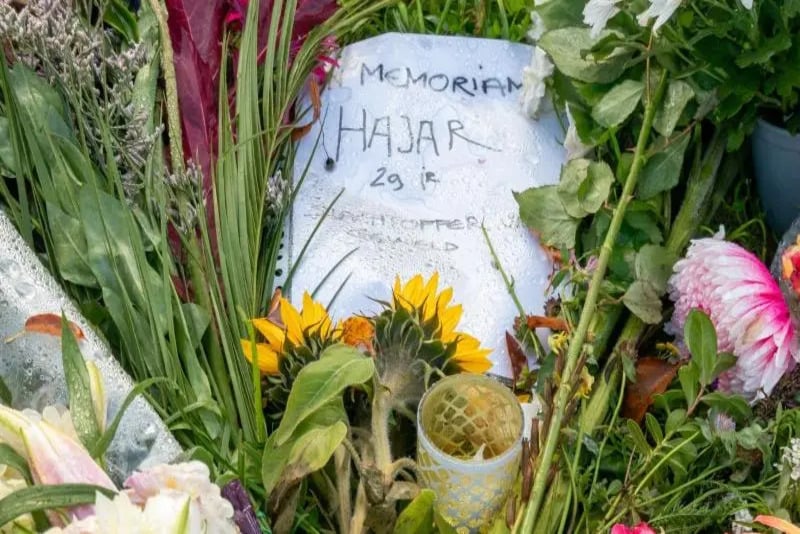
The report considered that there is an upward development in the murders of women in Morocco (their number increased from 29 cases in 2018 to 54 cases in 2021), and the majority of those involved are males, from the families of the victims, led by husbands and third parties.
The document also noted the widespread use of waiver in cases of sexual assault against women and girls in which the accused entered into marriage contracts with the victims and waived their complaints, highlighting the tendency of the majority of judicial rulings within the sample of the report to reduce the penalties prescribed for those convicted of crimes of violence against women, especially when it is practiced in a family or marital context.




add your comment
Terms of publication : Not to offend the writer, people, sacred things, or attack religions or the divine self, and refrain from racist incitement and insults.